
Sign up to save your podcasts
Or

By Dn. Jerome Atherholt, and Ancient Faith Ministries


4.8
139139 ratings


The podcast currently has 7,832 episodes available.
The most played episodes among Podcast App listeners.
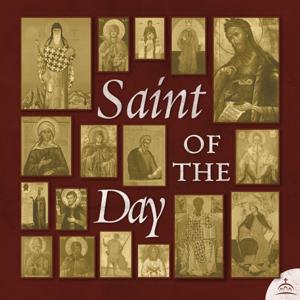
They were three sisters, raised in the Christian faith in Bithynia. Together they withdrew from the world and lived together in virginity on a lonely mountain, devoting themselves to prayer, fasting and labor. Though they wished only to live unknown to the world, their wonderworking gifts were discovered, and many people began to come to them for healing of ailments. In this way word of them reached the governor Fronton, who had them arrested and brought before him. Struck by their beauty (which had only increased despite their fasting and hard labor), the governor tried to flatter them, promising that he would send them to the Emperor to be given in marriage to noblemen. When he saw that this had no effect, the governor threw the sisters into prison. First he had Menodora tortured to death, then brought her two sisters to view her mutilated body, commanding them to deny Christ or meet the same fate. When they refused, they were subjected to the same fate. Christians recovered and buried the bodies of the three holy martyrs.

He lived for many years as a monk at the Monastery of St Cyril of White Lake, where his ascetic struggles won him the respect of his brethren. To flee from the admiration of men he moved further north to Valaam Monastery. But he still attracted the good opinion of his community, so he secretly headed still further north, planning to reach the uninhabited Solovki Island in the White Sea (a large bay of the Arctic Ocean). When he reached the coast, everyone who might take him tried to dissuade him from living in such a harsh place. He answered 'My children, I have a Master who has the power to renew the strength of the old and to enfeeble the young if He so wills. He makes the poor rich, clothes the naked, provides for the destitute and satisfies the starving with a measure of food as he fed five thousand men in the desert.' While waiting for seasonable sailing weather he met St Germanus (July 30) who lived nearby as a hermit. Together they found a fishing boat and, casting all their trust on the Lord, made the dangerous two-day voyage and set up a hermitage on the island. It became known as a holy place, and thenceforth those living in the world knew not to settle on Solovki, or even to set foot there without good reason. After six years, St Germanus departed, and Sabbatius was left alone. When he was old, he began to fear that he would die without receiving the life-giving Mysteries, of which he had not partaken since he left Valaam. So he returned to the mainland where he met an abbot Nathanael just as he was taking Holy Communion to a sick man. Sabbatius persuaded the abbot to hear his confession and grant him the priceless gift of Holy Communion. He then settled in a nearby chapel and made ready for his departure from this life. A wealthy merchant from Novgorod visited him to ask for his blessing. The Saint said to him, 'Spend the night here and you will see the grace of God.' The next morning the merchant came to Sabbatius' cell and found that he had reposed during the night; his cell was suffused with a beautiful scent. The following year, St Germanus, along with St Zosimas (April 17), returned to Solovki island and founded a monastery there, which proved to be the nurturing ground of many Saints.
The holy Apostle was, by the world's reckoning, the nephew of our Savior, since his mother Salome was the daughter of St Joseph the Betrothed. Called 'the beloved disciple,' St John was the only one of Christ's disciples to follow Him to the Cross. He was entrusted by the Savior with the care of the most holy Theotokos, and became like another son to her, providing for her care until the day of her repose. He preached the Gospel of Christ throughout Asia Minor, especially in Ephesus. During the persecutions of the Emperor Domitian, he was taken in bonds to Rome, where he was subjected to various tortures; but when he emerged from these miraculously unharmed, he was exiled to the island of Patmos, where he wrote the book of Revelation. After the death of Domitian, he returned to Ephesus and there wrote his Gospel and Epistles. He reposed in peace at a great old age. When his disciples later opened his grave, they found that his body was not there. He is called the Theologian because of the sublimity of theological expression in his New Testament writings.
'Our righteous Father Sergius was born in Rostov, north of Moscow, about the year 1314. Named Bartholomew in baptism, he was brought up in Radonezh, and at the death of his parents he withdrew to the wilderness to become a monk. It is notable that without having been trained in a monastery, he was of such a spiritual stature as to be able to take up the perilous eremitical life from the beginning, without falling into delusion or despondency. When he had endured with courage the deprivations of the solitary life, other monks began to come to him, for whom he was made abbot against his will. On the counsel of Philotheus, Patriarch of Constantinople, he organized his monks according to the cenobitic life, appointing duties to each. While Anthony and Theodosius of Kiev, and the other righteous Fathers before Sergius, had established their monasteries near to cities, Sergius was the leader and light of those who went far into the wilderness, and after his example the untrodden forests of northern Russia were settled by monks. When Grand Duke Demetrius Donskoy was about to go to battle against the invading Tartars, he first sought the blessing of Saint Sergius, through whose prayers he was triumphant. Saint Sergius was adorned with the highest virtues of Christ-like humility and burning love for God and neighbor, and received the gift of working wonders, of casting out demons, and of discretion for leading souls to salvation. When he served the Divine Liturgy, an Angel served him visibly; he was also vouchsafed the visitation of the most holy Theotokos with the Apostles Peter and John. He was gathered to his Fathers on September 25, 1392. At the recovery of his holy relics on July 5th, 1422, his body and garments were found fragrant and incorrupt. His life was written by the monk Epiphanius, who knew him.' (Great Horologion)
He was a Russian peasant who traveled to Mt Athos and became a monk in the Russian Monastery of St Panteleimon. He lived so simply, humbly and quietly that he might be forgotten had not Fr Sophrony (Sakharov) become his spiritual child and, after the Saint's repose, written a book describing his life and teaching: St Silouan of Mt Athos, one of the great spiritual books of our time. It was through Fr Sophrony's efforts that St Silouan was glorified as a Saint. Following a vision of Christ Himself, St Silouan withdrew to a hermitage to devote himself entirely to prayer; but he was called back to serve as steward to the monastery. Though he now supervised some two hundred men, he only increased his prayers, withdrawing to his cell to pray with tears for each individual worker under his care. For more than fifteen years he struggled with demonic attacks during prayer until he was almost in despair. At this point Christ spoke to him in a vision, saying 'The proud always suffer from demons.' Silouan answered 'Lord, teach me what I must do that my soul may become humble.' To this he received the reply, Keep thy mind in hell, and despair not. Silouan made this his discipline in every moment of his life, and was granted the grace of pure prayer. He said that if he ever let his mind wander from the fire of hell, disruptive thoughts would once again plague him. In his humiliation he was filled with a pervasive love for all — he said many times that the final criterion of true Christian faith is unfeigned love for enemies, and that 'to pray for others is to shed blood.' St Silouan demonstrates that the Church's true Theologians are those who manifest in their own lives the fruits of the Church's hesychastic spirituality, however insignificant they may appear to the eyes of the world.
The podcast currently has 7,832 episodes available.
105 Listeners
108 Listeners
552 Listeners
61,773 Listeners
193 Listeners
1,208 Listeners