
Sign up to save your podcasts
Or

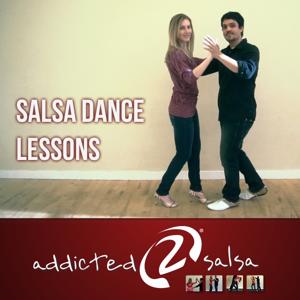


This salsa dance video lesson will encourage you to add multiple spins in your salsa dance patterns. A lot of dance follows like spinning, and taking your regular moves and adding double or triple spins in them will make them seem 'new' and more complex. This simple pattern will have your follow doing a double spin followed by a third free spin in place.
Start small and organized. Better posture, cleaner preparation, and calmer head placement will improve your turns faster than trying to spin harder.
On the social floor, control matters more than quantity. One stable, well-prepared turn is usually more effective than multiple rushed ones.
Here is a short salsa dance pattern to get you gives you something different to do after a double handed in-n-out (copa) salsa dance move. After an in-n-out salsa move, you can keep both hands near the follow's shoulder, and flick the hand into a hammerlock. From there, you can proceed with a simple reverse cross body lead. We called it "Patternito" as a play on the phrase of 'Short Pattern' because I ran out of creativity.
Practice the move in sections and keep the lead-follow communication controlled and compact. Once the transition points feel obvious, it becomes much easier to use the pattern naturally on a crowded social floor.
Use the cleanest section first and save the full version for moments when the floor and your connection can support it.
And now something for the ladies! This salsa dance video will provide the ladies a few styling tricks when social dancing with a good lead. Jocelyn will show the ladies how to take advantage of specific dance cues from your lead in order to perform clean salsa styling. Using this in your social dancing will help you enjoy playing with the instruments in a song much more enjoyable.
As a note to leads, you do not have to fill in an entire song of back-to-back patterns. Always remember to leave some room for the ladies to style and enjoy the salsa song.
Build the structure first, then add styling. The styling layer should make the move look more musical, not make the timing harder to follow.
In real dancing, styling should support the partnership and the music. Use the cleanest moments from the lesson and keep them proportional to the space you have.
In this salsa dance lesson video, we teach you how to dance the famous DPS lock combo but on the New York / Puerto Rican "On2" timing. In addition, Jocelyn explains some of the dance styling that the ladies' can perform even when they have both arms behind their back.
Practice this material with counts first and music second. Once the rhythm feels steady, add expression without letting the timing drift.
Stronger rhythm awareness helps every other part of salsa. Even if the move itself is simple, better timing makes the whole dance look calmer and more confident.
Embark on a rhythmic journey with our latest video on Addicted2Salsa, where I guide you through the intricacies of the captivating 'Short-Stride' salsa dance move. Designed for dancers of all levels, this tutorial unveils the magic behind this elegant yet dynamic step, making salsa accessible and enjoyable for everyone. As we delve into the art of the 'Short-Stride,' you'll discover the perfect blend of simplicity and flair that defines this versatile dance move.
In this tutorial, we not only break down the 'Short-Stride' but also explore the nuanced differences between New York and Puerto Rican style salsa dancing. Each style boasts its unique charm, footwork, and musical interpretation. New York style tends to be more linear and structured, emphasizing complex turn patterns and intricate hand movements. On the other hand, Puerto Rican style is characterized by its circular patterns, smooth transitions, and a strong connection between the dancers and the music.
As you navigate through the tutorial, you'll gain insights into these distinct styles, allowing you to tailor your dance to your preference. Our goal at Addicted2Salsa is to empower you with the skills and knowledge to dance with confidence and expressiveness. So, whether you're new to salsa or looking to refine your technique, join us in mastering the 'Short-Stride' and uncovering the rich tapestry of New York and Puerto Rican style salsa. Let the rhythm guide you as you embrace the joy of dancing with finesse and distinction. Your salsa journey is about to reach new heights – start dancing with us on Addicted2Salsa today!
In honor of our 5 year anniversary since we started Addicted2Salsa on August 30th, 2005, we decided to teach you the short stride salsa combination move that has become very popular on YouTube. However, given that we have new fans that don't dance On1, we are teaching it on the On2 (New York / Puerto Rican) timing. I'd like to also introduce our special guest Addicted2Salsa co-host, Jocelyn Rosero. See if you can spot her "wink" at the beginning of the video!
Practice this material with counts first and music second. Once the rhythm feels steady, add expression without letting the timing drift.
Stronger rhythm awareness helps every other part of salsa. Even if the move itself is simple, better timing makes the whole dance look calmer and more confident.
This salsa dance move is composed of doing a simple hand juggle (which looks like you are doing uppercuts when boxing) in front of the follow, then quickly leading a ladies' left turn into a basic reverse slingshot. Take your time with the move at first so you don't injure your partner! Enjoy!
Start small and organized. Better posture, cleaner preparation, and calmer head placement will improve your turns faster than trying to spin harder.
On the social floor, control matters more than quantity. One stable, well-prepared turn is usually more effective than multiple rushed ones.
This is a short reference video on how to perform the cross body lead 180 that we had shot previously. The video will take you through the steps on how to do the cross body lead 180 in salsa dancing for on1 counts.
Drill the rhythm in place before traveling with it. Once the weight transfer feels clear, test it in short bursts during a full song.
Compact footwork is valuable because it adds personality without demanding a lot of floor space. That makes it practical for clubs, socials, and live-music settings.
Puerto Rican Salsa Slide Step is a short lesson, but it solves a common social-dancing problem: too many dancers rely only on partnerwork and never develop enough solo movement or footwork personality. A simple slide step gives you a cleaner way to add flavor without overcommitting to a full shines sequence.
The move is compact, musical, and realistic for live social dancing. That matters because many footwork ideas look good in practice but never actually get used once the floor gets crowded.
Use this slide step:
The main risk is making the movement too large. The step works because it is controlled and rhythmic. If it starts drifting too far or dragging behind the beat, it loses the sharp social feel that makes it useful.
Keep the timing clean first. Then add attitude, body motion, or styling once the rhythm is secure.
Drill the slide step for one song at a time and alternate between basic timing and the slide variation. That trains you to enter and exit the footwork naturally instead of treating it like a separate routine.
Small footwork ideas like this are often what make a dancer look more musical and more confident in social settings.
The cross body lead with turn is one of the most useful upgrades you can make to basic salsa partnerwork. It keeps the familiar structure of the regular cross body lead, but adds a cleaner visual finish and a more complete feeling phrase.
Because the pattern is short, the details matter even more. If the setup is early and the slot stays clear, the turn feels easy. If the lead arrives late or the pathway closes down, the same move starts to feel rushed.
That makes it a strong bridge move between beginner fundamentals and more layered salsa combinations.
Many dancers treat the turn as a separate trick added at the end. It works better when you think of the turn as part of the cross body lead itself. The opening, travel, and rotation should feel like one connected action.
If the follow has to guess whether she is walking through or turning, the lead came too late.
Run this move slowly with a partner and focus on two things: keep your shoulders quiet, and make the pathway obvious before asking for rotation. Once that feels easy, try using it naturally between basics and right turns during a social.
Simple changes like this are what make salsa look smoother without making it look busy.
This short salsa dance video will teach you how to do the basic salsa dip. Normally salsa dips are done in the end and are usually NOT recommended for crowded salsa dance night clubs. We kept the salsa dance lesson short since there are several salsa videos out there with the same content.
Practice the move in sections and keep the connection simple and readable. Once the setup and transitions feel obvious, the pattern becomes much easier to use socially.
Start by using one reliable section of the lesson in social dancing, then expand it once it feels natural.
From the publisher's feed