
Sign up to save your podcasts
Or

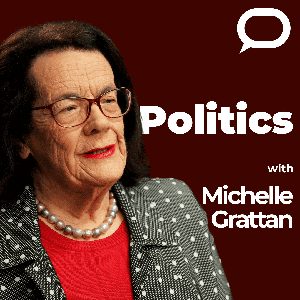

As the devastating war in Ukraine continues, Michelle Grattan speaks with ABC journalist Sarah Ferguson about her experiences in reporting her Four Corners episode Despair and Defiance – how she was able to capture this story – and her views on where the conflict is likely to go from now.
Sarah and her team presented a raw portrayal of the conflict and its human toll in Kyiv and elsewhere.
“[In reporting] so much of these things comes down to simple practicalities. Can you get food? Can you get a driver? Can you get out? And once we’d got all of those things in place, we were good to go.”
Ukranian officialdom knows how vital it is to get its story to the world. Ukranian president Volodymyr Zelenskyy “has understood the importance of telling people the story of what’s happening.”
“The Russians actually shelled people during the evacuations and fired on people. […] The Russians aren’t observing the sort of conventions of war where civilians are able to be evacuated. So getting them out and witnessing that was unquestionably dangerous. It was a dangerous place to be.”
Caught in this horrific situation, ordinary Ukrainians can do little but just think “from day to day” rather than contemplate the future. “‘If I can get through today, what is my plan for tomorrow?’ […] The fear of what lies ahead is so grim that the human can’t – you can’t live with that amount of fear. So in order to function, you keep your horizon nearer.”
Mentioned in this episode:
The Making of an Autocrat
Search: "The Conversation Weekly" for our new series.
Your support matters
Support non-profit journalism you can trust.
Donations 2025
 View all episodes
 By The Conversation

4.8
55 ratings
As the devastating war in Ukraine continues, Michelle Grattan speaks with ABC journalist Sarah Ferguson about her experiences in reporting her Four Corners episode Despair and Defiance – how she was able to capture this story – and her views on where the conflict is likely to go from now.
Sarah and her team presented a raw portrayal of the conflict and its human toll in Kyiv and elsewhere.
“[In reporting] so much of these things comes down to simple practicalities. Can you get food? Can you get a driver? Can you get out? And once we’d got all of those things in place, we were good to go.”
Ukranian officialdom knows how vital it is to get its story to the world. Ukranian president Volodymyr Zelenskyy “has understood the importance of telling people the story of what’s happening.”
“The Russians actually shelled people during the evacuations and fired on people. […] The Russians aren’t observing the sort of conventions of war where civilians are able to be evacuated. So getting them out and witnessing that was unquestionably dangerous. It was a dangerous place to be.”
Caught in this horrific situation, ordinary Ukrainians can do little but just think “from day to day” rather than contemplate the future. “‘If I can get through today, what is my plan for tomorrow?’ […] The fear of what lies ahead is so grim that the human can’t – you can’t live with that amount of fear. So in order to function, you keep your horizon nearer.”
Mentioned in this episode:
The Making of an Autocrat
Search: "The Conversation Weekly" for our new series.
Your support matters
Support non-profit journalism you can trust.
Donations 2025

89 Listeners

19 Listeners
5 Listeners

41 Listeners

19 Listeners

29 Listeners

17 Listeners

91 Listeners

53 Listeners

66 Listeners

2 Listeners

8 Listeners

1 Listeners

351 Listeners

78 Listeners

0 Listeners
26 Listeners

128 Listeners

5 Listeners

183 Listeners

0 Listeners

0 Listeners

0 Listeners

12 Listeners

70 Listeners

0 Listeners

0 Listeners

0 Listeners

0 Listeners

53 Listeners

5 Listeners

61 Listeners

3 Listeners

0 Listeners