
Sign up to save your podcasts
Or

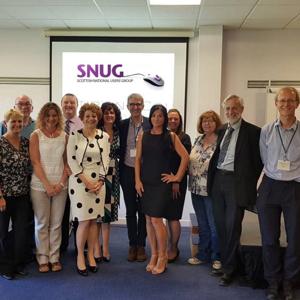


Dr David Cooper, GP in Aberdeen, SNUG co-chair, and chair of the NHS Grampian Primary Care IT group, joins us for an update on digital general practice in Scotland. Naturally, we start with the EMIS-to-Vision migration: half of Grampian's practices have already switched, and David talks through the learning curve practices are facing, why the transition has been pushed back at his own practice, and what he's hopeful the "one system for Scotland" approach could eventually deliver, from reduced training needs to better integration with Docman and Adastra.
We briefly ponder some of the recent worries around the future capabilities of AI before returning to use in primary care, where David gives his current take on AVT, Copilot, and where he does and doesn't see AI changing the GP's role, including how his trainees are already using AI tools for both admin and self-directed feedback on their consultations. We close with a look at Microsoft 365 and Copilot more broadly, and a consider whether SNUG has a role to play in helping primary care staff get more out of the M365 tools that remain underused across the health board.
Old Machar Practice, Aberdeen
Adopting new tech and AI in general practice (GPonline podcast)
Microsoft 365 Guided learning Modules (use NHS Scotland account details to log in)
16+ things to do in Aberdeen
The Genesis of Skynet [Terminator 2]
Jonathan Underhill, pharmacist and long-standing advocate of evidence-informed and shared decision-making, discusses why applying clinical guidelines mechanically does not always produce the best outcome for an individual patient. Drawing on his work at the National Prescribing Centre and NICE, he explains how population-level evidence needs to be balanced against comorbidity, adverse effects, diminishing returns from additional medicines, and, importantly, the patient’s own values and preferences. He describes the “three-talk” model of choice, options and decision. We get into how clinicians actually make decisions, with heavy reliance on rapid pattern recognition and mental “mindlines”, why good practice requires knowing when to switch from intuitive “system one” thinking to slower, more deliberate checking, and ponder whether prescribing decisions are analogous to whether the patient is getting a hat, a haircut or a tattoo, and how more time is usually needed to make a good decision.
We learn about information mastery and the usefulness equation, which states that information is most useful when it is relevant and valid while requiring relatively little work to obtain, and consider how AI could dramatically reduce the effort involved in finding clinical information. While there is considerable potential for AI to compensate for clinicians’ limited ability to remember an ever-expanding evidence base, particularly when it is grounded in trusted sources such as NICE or Cochrane, clinicians must continue to question validity, think critically and retain the human role in complex decisions and reassuring anxious patients. We also discover a shared enthusiasm for Bruce Springsteen, including Jonathan’s memories of seeing him live 44 times and some of his most memorable concerts.
System 1 and System 2 Thinking The Decision Lab.
Muir Gray: Population based and personalised care—two sides of the same coin
Evidence based guidelines or collectively constructed “mindlines?” BMJ Paper by Gabbay and le May
Explainer on Information Mastery
PrescQIPP Talking Meds podcast
Carronbank Medical Search Engine
Brucebase wiki
Alva Medical Practice was the first practice in NHS Forth Valley to migrate from EMIS to Vision, going live on 3 March 2026. Practice manager Steven Ebsworth, one of the local practice manager eHealth champions, volunteered his practice to go first on the basis that if he was going to support colleagues through the transition, he needed to have lived it. In this episode he walks through the preparation that made the technical migration itself go smoothly, the patient-facing groundwork, a two-week prescribing pause announced well in advance, when to close the appointments book, and the benefits of a weekly countdown to keep every member of staff up to speed.
However, we hear a full and honest account of the very real challenges the practice has faced since migration, as since then they have been contending with appointments book navigation taking ten to sixteen seconds per day, slow prescription printing, migrated recall diary dates arriving with no status and therefore requiring manual intervention, a lack of data entry templates, and no formulary management tool. Steven gives us the current situation and tells us about what improvements are still needed and how the practice is trying to get back to the level they were at pre-migration. This episode is well worth a listen for practice managers, GPs and all in EMIS practices who have yet to make the change.
Alva Medical practice home page
OneAdvanced Vision Learning Zone
NSS GP IT site EMIS to Vision GP Practice toolkit (only accessible via SWAN)
Discover Clackmannanshire
Sam Cooke - a change is gonna come
This month we tackle a change heading for every practice in Scotland over the next year or two: the migration from Docman 7 to Docman 10. We have some clips from the OneAdvanced presentation at the recent SNUG Members' Day - Louise Haggerty and Suzanne Millar walk us through the ten-week lead-in, and then a candid interview with someone who's already done it. Russell Hale, assistant practice manager at Tay Court Surgery in Dundee and SNUG's Tayside co-ordinator, took his roughly 10,500-patient practice through the process as the very first pilot site in Scotland, with over 600,000 documents to move across.
Russ talks us through what the practice actually has to do: the e-learning and the up-to-six Docman champions, the orphan documents and the practicalities of the test migration, too-large files and the cloud enabler. He explains the two-day migration and go-live sequence, switching off the EDT scheduler and managing results in the gap, and the new ways of working in Docman 10 - IntelliSense for filing and coding, quick steps, and groups that no longer need everyone to action a task. He's honest about what's still unresolved (who owns those orphan docs) but, a month in, the verdict on speed and usability is encouraging.
One Advanced Docman 10
SNUG Members’ Day Session videos (log in required) – includes Docman 10 workshop
eGP Learning: Which GP Document System is Best? – includes Docman 10 demo
emails, comments or queries: SNUG Business Manager
In this episode, recorded at the recent SNUG Members' Day conference in Cumbernauld, we hear from three companies working at different points along the patient journey in general practice. Barrie Holding from GP Triage talks us through an AI-powered triage system that conducts a real-time conversational assessment with patients, risk-stratifies their presentation, and books directly into the practice appointment book, potentially removing the clinician from the triage loop altogether. Emma Stubbs, Head of Products at OneAdvanced, shares the significant news that Vision Anywhere is no longer the strategic direction for the clinical system, and introduces IQ Health, a new platform whose first major feature is an intelligent consultation form that lets clinicians type notes or use their new Scribe while the system handles coding, within a SOAP GP record structure. And Dave Mills from Think Healthcare explains how cloud telephony and online consultation platforms are really two sides of the same coin, and how their Virtual Care Navigator product integrates with both Vision and DACS systems to let patients self-serve over the phone.
Running through all three conversations is a common theme: the front door of Scottish general practice is overdue a redesign. With new GP contract requirements around cloud telephony now in play, practices face real decisions about how they bring these tools together. We reflect on what these developments mean in practice, from the clinical safety questions around use of AI, to the challenges of bolting a modern interface onto an ageing clinical system, to the question of whether practices are ready to treat phone and online access as a single integrated service rather than two separate problems.
Think Healthcare
GPTriage
OneAdvanced GP Clinical System
In this episode, we speak with Professor George Crooks OBE, Chief Executive of Scotland's Digital Health and Care Innovation Centre and a former GP of 23 years in Aberdeen. He reflects on changes over the years and how the quiet disappearance of proactive home visiting in general practice has contributed to some of today's system pressures, and argues that technology - from passive monitoring to citizen data access - can help restore some of what was lost. He offers a measured take on AI in healthcare, warning against off-the-shelf clinical AI trained on unrepresentative datasets, while advocating for its immediate use in administrative tasks and patient-facing data tools.
We discuss the barriers holding back innovation in Scottish healthcare. Prof Crooks is forthright about information governance being "an absolute nightmare of our own making" and describes a system where excessive layers of risk-averse governance have become a disabler rather than an enabler. He introduces the idea of innovation as a three-legged stool - technical, service, and commercial - and explains why neglecting any one leg leads to failure. He closes with a frank assessment of Scotland's international standing, arguing that while still commanding respect, the country may still be trading on a reputation from decades ago, and issues a direct challenge: stop waiting for excellence and start deploying good.
Digital Health and Care Scotland Innovation centre DHI Scotland
Better health through citizen empowerment TEDx Talk by Professor George Crooks
SCOTCAP
SNUG Annual Members Day and AGM 2026 Wednesday May 20. 2026 Registration link
In this episode, we speak with Dr Iain Cromarty about life as a GP on the island of Hoy in Orkney. Iain shares how he came to work in one of Scotland's most remote practices, the realities of providing care to a population of around 400 on an island steeped in wartime history, and the unique clinical challenges of island medicine - from catching ferries for acute admissions to managing patients when no transport is available. He also reflects on how continuity of care is changing now that the islands rely entirely on itinerant doctors working shorter shifts.
We discuss digital health and connectivity, a subject close to Iain's heart. He describes the frustrations of working without facilities like Order Comms, relying on Word documents and scanned emails for processes that were fully digital in his Norfolk practice 15 years ago, and the ongoing challenges of unreliable broadband and telephony that can sometimes cut doctors and patients off entirely. But it's not all frustration - Iain highlights how Near Me video consultations have transformed outpatient access to Aberdeen specialists, and how a WhatsApp group connecting clinicians across 10 islands has become a lifeline for clinical support, including one memorable case of a video-guided consultation with a patient still trapped in a car.
A beginner’s guide to Orkney’s history
10 Amazing Things to Do in Orkney
What to see and do on Orkney Mainland
Travelling The Orkney Islands For 7 Days (Ruth Aisling YouTube video)
How Did Orkney Change Scottish History? (Scottish History YouTube video)
In this second part of our polypharmacy discussion with Steve Williams, we continue to explore whether large language models like Microsoft Copilot could play a practical role in supporting medication reviews. We consider a real case from a duty day in general practice where Copilot was used to assess prescribing safety and generate a summary of deprescribing opportunities.
This prompt was used: “Review the following medication list using the latest British Geriatrics Society (BGS) guidance and the Scottish Polypharmacy Guidance (7-step approach). For each medicine, identify:
Then provide a concise summary of priority actions and any safety red flags that need urgent review. Here is the medication list: [PASTE MEDICATIONS HERE] Include references to the relevant guideline steps where appropriate.”
The conversation also covers a new study led by Professor Tony Avery, which tested an LLM against an expert clinician to assess medication safety in nearly 300 anonymised GP patient records. While the model achieved 100% sensitivity in detecting clinical issues, it matched the expert's full assessment in under half of cases, with failures arising from overconfidence, lack of contextual reasoning, and occasional hallucinations such as misidentifying medications.
Steve is self-described as a “curious pragmatist” and feels that LLMs are of great interest, and their ability to flag problems with high sensitivity - when guided by good prompts and established clinical frameworks - makes them a genuinely useful preparation tool, provided the clinician still does the thinking. As Steve puts it, the technology looks promising, but "human intelligence is very underrated..."
A Real-World Evaluation of LLM Medication Safety Reviews in NHS Primary Care.
Evidence Based Polypharmacy Reviews and the 7 Step Process: TURAS training
Thinking Critically About AI (Video lecture by Dr Jessica Morley)
How we make decisions – dual process theory and unconscious biases (MeReC Bulletin 2011)
You can subscribe to the SNUG podcast on the following platforms:
SNUG podcast on Apple podcasts SNUG podcast on Spotify
Steve Williams is a senior clinical pharmacist with 35 years of NHS experience, and a co-host of the Aural Apothecary Podcast - a show that takes "an authentic yet light-hearted take on the world of medicines and healthcare in the UK". Steve shares his approach to tackling polypharmacy with us, having moved from acute hospital settings to general practice specifically to address the root causes of medication-related hospital admissions. Working with a 21,000-patient practice, he describes a systematic approach to structured medication reviews - stratifying patients by risk (those on 8+ medications, high-risk combinations, or dependence-forming medicines), allocating pharmacist time to proactive reviews, and combining medication reviews with long-term condition management in single 30-minute appointments.
The discussion explores the scale of the problem in the UK: a thousand pills dispensed per second, a million people on 10 or more repeat medicines, and an estimated million hospital admissions annually due to medication issues. Steve advocates for training and empowering "competent prescribers" - whether GPs, pharmacists, or nurses - to confidently review and deprescribe medications, noting that his Dorset system has successfully incentivised practices to reach targets for reviewing high-polypharmacy patients. The big question is - can AI start to help us tackle and reduce polypharmacy?
Scottish polypharmacy guidance (updated) The latest version 2025 - draft version for consultation, loads of detail, examples of using the 7-step approach
British Geriatrics Society: Pragmatic prescribing to reduce harm for older people with moderate to severe frailty Excellent clear 2-page guidance
Health Innovation Network: The mechanics of tackling overprescribing and problematic polypharmacy Steve’s comprehensive guide to tackling polypharmacy in primary care
Health Innovation Wessex: project Polypharmacy Links to Steve’s training resources.
Manage my meds – for patients and carers to help patients prepare for a medicines review.
The Aural Apothecary: Dr Jessica Morley. Will Artificial Intelligence save the NHS?
Talking General Practice: AI and the future of general practice – Prof Brendan Delaney
In this festive episode, we welcome Dr. Chris Weatherburn back for an annual end-of-year chat, reflecting on a year marked by the news that One Advanced have taken over the Vision system and there have also been many AI products starting to make an impact on general practice. Chris outlines three key areas: ambient voice technologies, workflow automation, and decision support. He notes the tension between AI's exciting potential and the necessary caution required in healthcare, referencing the pause on Project Foresight after ethical concerns and the SG guidance urging practices to hold off on ambient voice tools until proper assessments are completed. We consider how GPs are navigating this complex landscape, with SNUG playing a vital role in helping practices implement new technologies correctly.
Chris also shares book recommendations, highlighting John Kotter's work on change management and Ronnie O'Sullivan's Unbreakable, drawing parallels between elite performance and general practice—particularly around maintaining positivity, managing negative thinking, and finding sustainable success. The conversation turns to the challenges facing Scottish general practice, including the recent funding offer by the Scottish Government for general practice and digital access improvements, the loss of SCIMP's independent guidance role, and the upcoming NSS/NES merger. We reflect on the importance of embracing change while learning from others' experiences, with Chris emphasising that SNUG remains well-placed to support practices through the transitions ahead.
Strategy as Change: Kotter’s New Approach
14 Life Lessons from a Snooker Legend - Unbreakable
NotebookLM Guide: Google's AI Study Hack You Need for Faster Research
Chris’s plenary on AI at the 2025 SNUG conferencee
From Information Overload to Actionable Knowledge: NotebookLM’s AI podcast explaining Chris Weatherburn’s websites
The NHS Digital SNOMED CT Browser
From the publisher's feed

3,019 Listeners