
Sign up to save your podcasts
Or

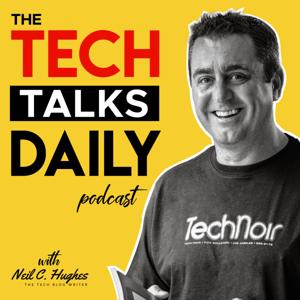

What happens when nearly half of organizations admit they have no AI-specific security controls, yet AI-driven data leaks are accelerating at the same time?
In this episode of Tech Talks Daily, I spoke with Aayush Choudhry, CEO and co-founder of Scrut Automation, about what he sees as a blind spot in the cybersecurity industry. While much of the market continues to design tools for Fortune 500 enterprises with deep pockets and large security teams, Aayush argues that the real existential risk sits with the 99 percent of businesses that cannot survive a serious breach.
Aayush brings a founder's perspective shaped by firsthand pain. Before launching Scrut, he and his co-founder experienced the grind of managing compliance and security as a cloud-native startup trying to sell into enterprises. They were outsiders to GRC and security at the time, forced to learn from first principles. That experience became the foundation for Scrut Automation, a modern GRC platform built specifically for small and mid-sized companies that cannot afford six-month implementations, armies of consultants, or half-million-dollar tooling budgets.
We explore why treating compliance and security as separate functions increases risk for smaller organizations. In the mid-market, the same small team is often responsible for both. When compliance is handled as a box-ticking exercise and security as a separate technical discipline, gaps emerge. Scrut's approach converges governance, risk, and security signals into a unified layer that translates hundreds of technical alerts into context-aware risks that actually matter to the business.
Our conversation also tackles AI complacency. Using the classic confidentiality, integrity, and availability framework, Aayush outlines what minimum viable AI security hygiene looks like in practice. That includes ensuring AI agents are not over-privileged compared to the humans they represent, placing guardrails around sensitive data fed into models, and extending supply chain security thinking to agentic integrations. For resource-constrained teams, these are not theoretical concerns. They are daily realities.
Perhaps most compelling is his view that AI can act as a force multiplier for small teams. By embedding accumulated expertise into agents trained on anonymized patterns and edge cases, Scrut aims to democratize security know-how that would otherwise require multiple full-time analysts. The goal is simple but ambitious: make enterprise-grade security outcomes accessible without enterprise-grade headcount.
If you are leading a small or mid-sized business and wondering how to balance growth, compliance, and AI risk without breaking the bank, this conversation offers a candid look from the trenches.
 View all episodes
 By Neil C. Hughes
5
200200 ratings
What happens when nearly half of organizations admit they have no AI-specific security controls, yet AI-driven data leaks are accelerating at the same time?
In this episode of Tech Talks Daily, I spoke with Aayush Choudhry, CEO and co-founder of Scrut Automation, about what he sees as a blind spot in the cybersecurity industry. While much of the market continues to design tools for Fortune 500 enterprises with deep pockets and large security teams, Aayush argues that the real existential risk sits with the 99 percent of businesses that cannot survive a serious breach.
Aayush brings a founder's perspective shaped by firsthand pain. Before launching Scrut, he and his co-founder experienced the grind of managing compliance and security as a cloud-native startup trying to sell into enterprises. They were outsiders to GRC and security at the time, forced to learn from first principles. That experience became the foundation for Scrut Automation, a modern GRC platform built specifically for small and mid-sized companies that cannot afford six-month implementations, armies of consultants, or half-million-dollar tooling budgets.
We explore why treating compliance and security as separate functions increases risk for smaller organizations. In the mid-market, the same small team is often responsible for both. When compliance is handled as a box-ticking exercise and security as a separate technical discipline, gaps emerge. Scrut's approach converges governance, risk, and security signals into a unified layer that translates hundreds of technical alerts into context-aware risks that actually matter to the business.
Our conversation also tackles AI complacency. Using the classic confidentiality, integrity, and availability framework, Aayush outlines what minimum viable AI security hygiene looks like in practice. That includes ensuring AI agents are not over-privileged compared to the humans they represent, placing guardrails around sensitive data fed into models, and extending supply chain security thinking to agentic integrations. For resource-constrained teams, these are not theoretical concerns. They are daily realities.
Perhaps most compelling is his view that AI can act as a force multiplier for small teams. By embedding accumulated expertise into agents trained on anonymized patterns and edge cases, Scrut aims to democratize security know-how that would otherwise require multiple full-time analysts. The goal is simple but ambitious: make enterprise-grade security outcomes accessible without enterprise-grade headcount.
If you are leading a small or mid-sized business and wondering how to balance growth, compliance, and AI risk without breaking the bank, this conversation offers a candid look from the trenches.

1,296 Listeners

536 Listeners

1,649 Listeners

1,105 Listeners
626 Listeners

1,028 Listeners
306 Listeners

343 Listeners

233 Listeners
212 Listeners

512 Listeners

139 Listeners

355 Listeners

69 Listeners
688 Listeners
0 Listeners
0 Listeners
0 Listeners
0 Listeners
0 Listeners
0 Listeners
0 Listeners