
Sign up to save your podcasts
Or

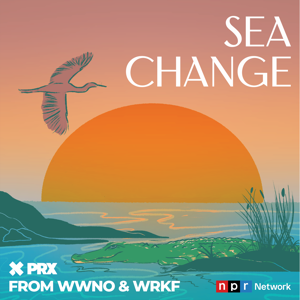


Even though New Orleans has water in every direction, it’s hard to access. And for a city with increasingly sweltering summers, this irony is painful.
In this episode, we’re going to talk about the uncomfortable history of Lincoln Beach, how it led to New Orleans not having any public beaches today, and how a community has rallied together to get their beach back. We start in the era of segregation, where if you were Black, the only place to soak up sun and sand was Lincoln Beach.
This episode was reported and hosted by Eva Tesfaye. Carlyle Calhoun is the managing producer. This episode was edited by Rosemary Westwood and Carlyle Calhoun with additional editing help from Halle Parker, Tyler Pratt, and Ryan Vasquez. Joseph King voiced WEB Dubois. Garrett Hazelwood is our fact-checker. Our sound designer is Emily Jankowski and our theme music is by Jon Batiste.
Special thanks to the Amistad Research Center at Tulane University and Sage Michael Pellet for sharing their archives.
Sea Change is a WWNO and WRKF production. We're a part of the NPR Podcast Network and distributed by PRX. SeaChange is made possible with major support from the Gulf Research Program of the National Academy of Sciences, Engineering, and Medicine. WWNO's Coastal Desk is supported by the Walton Family Foundation, the Meraux and the Greater New Orleans Foundation.
You can reach the Sea Change team at [email protected].
It's summertime! Otherwise known as prime reading season. And in this episode, you're going to meet the people behind a couple of the summer's hottest books.
We talk with Boyce Upholt about his new bestseller, The Great River: The Making and Unmaking of the Mississippi. The book tells the epic story of the Mississippi River, and he writes about how centuries of human meddling have transformed both the river and America.
And we also meet Mary Annaise Heglar, who tells us about her new novel, Troubled Waters. It’s a distinctly Southern story about family, Black resistance, and the climate crisis.
Eva Tesfaye and Carlyle Calhoun Despeaux host this episode. Eva and Garrett Hazelwood interviewed the authors. Sea Change's managing producer is Carlyle Calhoun Despeaux. Our sound designer is Emily Jankowski, and our theme music is by Jon Batiste.
Sea Change is made possible with major support from the Gulf Research Program of the National Academy of Sciences, Engineering, and Medicine. WWNO’s Coastal Desk is supported by the Walton Family Foundation, the Meraux Foundation, and the Greater New Orleans Foundation.
You can reach the Sea Change team at [email protected].
The shrimp industry has a long history on the Gulf Coast. And, today we bring you a story about one of the industry's oldest traditions: the blessing of the boats. This episode is from the podcast Gravy, produced by our friends at Southern Foodways Alliance.
In “A Shrimp Boat Blessing with no Shrimp Boats,” Gravy producer Irina Zhorov takes
listeners to Bayou La Batre, on Alabama’s Gulf Coast. Long known as the seafood
capital of Alabama, Bayou La Batre has hosted a Blessing of the Fleet – a festival to
bless local commercial shrimp and fishing boats – since the 1940s.
Fishing has long been a dangerous and capricious industry, where luck – in harvests,
weather, accidents – has almost as much to do with a captain’s success as his skill. The
annual blessing, an old European tradition established in Bayou La Batre by a Catholic
family of transplants from Louisiana, was a bulwark to ever-present risks. Shrimp boat
captains would decorate their boats with festive flags and parade along the bayou,
receiving a blessing from the Archbishop of Mobile, a little courage to go back out to
sea.
But as the industry changed and evolved, what the Blessing could do seemed less
obvious. Boats were built bigger and with refrigeration, so people could stay at sea
longer and bring in bigger harvests. At the same time, systemic threats emerged to the
shrimping industry. Competition from imports and farm-raised shrimp is keeping shrimp
prices unsustainably low while prices for gas, insurance, and maintenance grow. The
Blessing hasn’t kept up with the changes. Many captains are too busy hustling for
economic survival to show up. Not a single commercial shrimp boat attended the 2023
Blessing of the Fleet.
In this episode, Zhorov talks to Vincent Bosarge, Deacon at St. Margaret’s Church,
which hosts the Blessing, who grew up going to the festival; Rodney Lyons, a fisherman
whose family once supported the Blessing by donating food but who no longer attends;
Jeremy Zirlott, a younger shrimper who says he’s struggled to make ends meet in the
industry’s current state and who’s never put his boats in the Blessing; and Tommy
Purvis and Kimberly Barrow, who shrimp on the side but for whom the Blessing is a vital
tradition.
Listen to more episodes of Gravy and follow the podcast:
https://podcasts.apple.com/us/podcast/gravy/id938456371
Sea Change is made possible with major support from the Gulf Research Program of the National Academy of Sciences, Engineering, and Medicine. WWNO’s Coastal Desk is supported by the Walton Family Foundation, the Meraux Foundation, and the Greater New Orleans Foundation.
You can reach the Sea Change team at [email protected].
Most of the world's biggest cities are on the coast. As sea levels rise and storms worsen, how can we reimagine our coastal cities so that they can survive and thrive in the face of climate change? Today we talk with leaders across 3 continents about how they are fighting for the future of their cities.
Thank you to our panelists:
Dr. Fola Dania - the Chief Resilience Officer of Lagos, Nigeria
Felipe Araujo - the Vice Mayor of Porto, Portugal, and City Counselor for Environment, Climate, Innovation, and Digital Transition
Casi Calloway - The Director of Operations at the Southeast Sustainability Directors Network, and former Chief Resilience Officer of Mobile, Alabama
Janelle Kelman - former mayor of Sausalito, California, founder of Sea Rise Solutions and she's also currently running for Lieutenant Governor of California.
And, to Sheetal Shah, program director of Urban Ocean Lab.
Sea Change is made possible with major support from the Gulf Research Program of the National Academy of Sciences, Engineering, and Medicine. WWNO’s Coastal Desk is supported by the Walton Family Foundation, the Meraux Foundation, and the Greater New Orleans Foundation.
You can reach the Sea Change team at [email protected].
In Vietnamese culture, water and home are so linked that they share a word. The Vietnamese word for water is nước. But nước also means homeland.
Today–how the Vietnamese community has to reimagine its relationship with water as Louisiana’s coastline changes. In this episode, we’ll travel to a shrimp dock, a tropical garden, and a neighborhood surrounded by canals to examine one question: What does it mean to live with water in a place where everything about water is changing?
This episode was supported by the journalism non-profit the Economic Hardship Reporting Project. The episode was reported and hosted by Anya Groner. Sea Change’s managing producer is Carlyle Calhoun. This episode was edited by Rosemary Westwood and Carlyle Calhoun, with additional help from Halle Parker. The episode was fact-checked by Garrett Hazelwood. Our sound designer is Emily Jankowski. And our theme music is by Jon Batiste. Sea Change is a WWNO and WRKF production.
Special thanks to Marguerite Nguyen and Daniel Nguyen.
Sea Change is made possible with major support from the Gulf Research Program of the National Academy of Sciences, Engineering, and Medicine. WWNO’s Coastal Desk is supported by the Walton Family Foundation, the Meraux Foundation, and the Greater New Orleans Foundation.
You can reach the Sea Change team at [email protected].
It started in states like Florida and Louisiana. And, now it's spreading. The home insurance market is crumbling as climate-fueled disasters increase. Premiums are skyrocketing, and already, insurance is playing a role in determining where we can live, and who can afford to live there.
So we decided to host our very first Sea Change Live event dedicated to understanding what is going wrong, and how we can fix it. And, guess what? The event sold out! Join us as we dive deep into the insurance crisis—and possible solutions—with a panel of experts.
PANELISTS
Guillermo Franco: Head of catastrophic risk research for Guy Carpenter, an international reinsurance broker.
Haley Gentry: Senior Research Fellow at Tulane University's Institute on Water Resources, Law and Policy.
Jason Lewis: President of Noah W. Lewis and Associates, an insurance brokerage firm based in New Orleans.
Andreanecia Morris: Executive Director of Housing NOLA and President of the Greater New Orleans Housing Alliance.
Sea Change is made possible with major support from the Gulf Research Program of the National Academy of Sciences, Engineering and Medicine. WWNO’s Coastal Desk is supported by the Walton Family Foundation, the Meraux Foundation, and the Greater New Orleans Foundation.
You can reach the Sea Change team at [email protected].
We have a special episode for you today. We're sharing an episode of the new podcast from APM Studios and Western Sound called “Ripple.”
The largest oil spill in American history captivated the public's attention for the entire summer of 2010. Authorities told a story of a herculean response effort that made shorelines safe and avoided a worst case scenario. Was that really the whole picture?
“Ripple” is a new series investigating the stories we were told were over.
In Season One, the reporting team traveled hundreds of miles across the Gulf Coast to learn the ongoing effects of the 2010 Deepwater Horizon Oil Spill - which are still impacting many coastal residents more than a decade later.
And if you’d like to hear more episodes, you can find “Ripple” wherever you get your podcasts.
https://www.ripplepodcast.org/
Sea Change is made possible with major support from the Gulf Research Program of the National Academy of Sciences, Engineering and Medicine. WWNO’s Coastal Desk is supported by the Walton Family Foundation, the Meraux Foundation, and the Greater New Orleans Foundation.
You can reach the Sea Change team at [email protected].
Today, we hear the story of one fish and its journey to fame: the red drum, or more commonly known as the classic redfish. And whether the decline of this fish is a warning of a bigger collapse.
This episode was produced in collaboration with the Food & Environment Reporting Network, an independent, nonprofit news organization. This episode was reported and hosted by Boyce Upholt. Halle Parker introduces the show. The episode was edited by Carlyle Calhoun and Morgan Springer. Our managing producer is Carlyle Calhoun. Emily Jankowski is our sound designer, and our theme music is by Jon Batiste. Sea Change is a WWNO and WRKF production.
To check out more of Boyce's work: Pick up a copy of his new book about the Mississippi River, coming out in June. It’s called The Great River. And, find other stories on his Substack called Southlands.
Sea Change is made possible with major support from the Gulf Research Program of the National Academy of Sciences, Engineering and Medicine. WWNO’s Coastal Desk is supported by the Walton Family Foundation, the Meraux Foundation, and the Greater New Orleans Foundation.
You can reach the Sea Change team at [email protected].
The ocean is rising across the South faster than almost anywhere else in the world. Today, Eva Tesfaye, a reporter for Sea Change, talks to the two journalists behind the Washington Post’s new series “The Drowning South.” Chris Mooney and Brady Dennis discuss their data-driven reporting, which takes them from Texas to North Carolina. It’s a fascinating conversation about how journalists are finding ways to tell the complicated stories of climate change and offers deep insight into why the south is especially at risk. That’s coming up after the break.
Links to the first stories in the Washington Post’s series, “The Drowning Coast.”
“Where Seas are Rising at Alarming Speed”
“The New Face of Flooding”
Sea Change is made possible with major support from the Gulf Research Program of the National Academy of Sciences, Engineering and Medicine. WWNO’s Coastal Desk is supported by the Walton Family Foundation, the Meraux Foundation, and the Greater New Orleans Foundation.
Sea Change’s series, “All Gassed Up,” exposes the enormous scale of the global expansion of liquified natural gas. Our reporting revealed that this gas expansion not only has big impacts on local communities like Cameron Parish but also on the planetary scale for our future climate. The expansion threatens the effort to slow climate change. And, there's a lot of money at stake. Some countries and companies are investing billions and billions of dollars to make the most of this LNG boom.
Until recently, the growth of the global gas industry has flown under the radar. But we witnessed how that's starting to change. There is a growing global movement opposing LNG. In this episode of Sea Change, we talk with people from around the world who are fighting to stop the LNG expansion. People working on the ground in their communities and countries.
“All Gassed Up” is a special 3-part series from Sea Change. This special series is part of the Pulitzer Center’s nationwide Connected Coastlines reporting initiative. For more information, go to pulitzercenter.org/connected-coastlines.
This episode was hosted, reported, and produced by Halle Parker and Carlyle Calhoun. Our sound designer is Emily Jankowski and our theme music is by Jon Batiste.
From the publisher's feed
Living on the coast means living on the front lines of a rapidly changing planet. And as climate change transforms our coasts, that will transform our world.
Every two weeks, we bring you…
Based in New Orleans, Sea Change is a production of WWNO New Orleans Public Radio and WRKF Baton Rouge Public Radio. Sea Change is a part of the NPR Podcast Network and is distributed by PRX. Hosted by Carlyle Calhoun. Our theme song is by Jon Batiste.
Sea Change is made possible with major support provided by The Gulf Research Program of the National Academies of Sciences, Engineering, and Medicine and The Water Collaborative. The Coastal Desk is supported by the Walton Family Foundation, the Greater New Orleans Foundation, and the Meraux Foundation.

90,849 Listeners

43,825 Listeners

37,945 Listeners
23,755 Listeners

43,356 Listeners

26,180 Listeners

8,421 Listeners

1,472 Listeners

6,430 Listeners

14,660 Listeners

2,224 Listeners
2,212 Listeners

16,315 Listeners

6,584 Listeners
1,737 Listeners