
Sign up to save your podcasts
Or

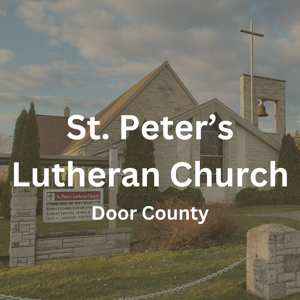


Text: 1 Timothy 2:1–15 | Liturgical Date: Pentecost 15, Proper 20 C | Location: Saint Peter’s Lutheran Church in Door County | Preacher: Rev Dr. Christopher D. Jackson
Saint Peter’s Lutheran Church serves Sturgeon Bay and other areas in Door County.
One thing I’m very thankful for as a pastor is that I’ve had pretty long pastorates. My first call was about eight years. I’m now about—let me think here—eleven and a half years here at St. John’s and St. Peter’s. And I thank the Lord for this. You know, I think that’s an indication that, all in all, things are going well, and together we are making progress for the Lord here in northeast Wisconsin.
But not every job I’ve had has been a success. Actually, my worst record in a job? One day, one shift. I did so terribly that I decided to fire myself before they had the chance to fire me. Your pastor—the worst waiter in the world. In one shift, I think I made every single mistake a waiter could. You can ask my family about this. I get frustrated and can barely handle it when they’re asking me to put in orders at a drive-thru. Doesn’t work. Imagine a whole table putting their orders in for me, right? Didn’t work. I’m good at focusing on one thing, and I could focus on that one thing hyper-intensely for a long period of time. In college, I could stay up until three in the morning studying my Greek, and I was really good at that. But at three in the morning on that shift at Steak ‘n Shake? No good.
The Lord has made us all unique individuals, and the Lord calls us to serve Him in ways that reflect that. That’s a big part of what we’re going to be talking about today—that we are to use our unique blessings to bless others uniquely. This is tied to a very particular Christian teaching. I’ve been hitting this time and time again from the pulpit, especially at funerals. For those of you in our funeral meal train, you’ve heard this a few times already, but I think it bears repeating. Christian teaching is unique in how it deals with us as unique individuals.
Think about some of the most popular viewpoints out there with regards to a view of the world. Atheism—what do the atheists teach about us? They teach that we are an accident. We just happened to come to be. Time and matter are in this big box, shaking all around, and we just happened to jumble together and fall out of that box. That’s what the atheists teach. And they teach something pretty similar about what happens when we die—time and matter just take us apart and throw us back into that box to jumble together into something else.
The Eastern religions, very popular these days—my goodness, these are some of the most whitewashed ideas out there. People don’t understand what they actually look like when you get up close and personal. Hinduism, Buddhism—very popular. People think they’re entirely unproblematic, but they actually teach something even darker about us humans. Atheism teaches that we’re an accident. The Eastern religions teach that we’re a mistake. Essentially, they teach that our individual existence is a problem to be overcome. Salvation for them is us as individuals ceasing to exist. They come at it from slightly different directions, but that theme is the same.
But Christian teaching is this: we are beloved creations of a loving God. And that God is a creator not just in general, but especially in particular. Psalm 139: “For I am fearfully and wonderfully made. Great are your works. My soul knows this very well. You knit me together in my mother’s womb.” More on that a little later in the sermon. “You wove me together in the depths of the earth before a day of my life came to be. You knew it all together. All my days were written in your book, oh God.” I’m paraphrasing a good bit here, but that’s what Psalm 139 teaches. The eternal triune God, out of that eternal love, created us each as beloved, particular individuals.
God has created us individually, and God has redeemed us individually. Jesus did not just die for the whole world in general. Jesus died for every person in particular. Jesus died for you to take away your sins. And that has been fully and wholly accomplished. His righteous life was lived for you, and in His precious, atoning death, He died for you. God has created you individually, He has redeemed you individually, and He has sanctified you individually.
Now, sanctification has two parts. What is sanctification? It comes from the Latin word sanctus—we sing the Sanctus a little later in the liturgy. It means holy. Sanctification is when the holiness of God is applied to us individually. That holiness of God was applied to us in the waters of holy baptism, the washing of regeneration and the forgiveness of sins. In baptism, we as individuals were given the forgiveness of sins and marked as children of God. When our sins are proclaimed forgiven—whether in absolution, from the pulpit, or as we hear it in the Scriptures—this too is the first part of sanctification. When God applies His gospel to us individually in the Lord’s Supper, in the body and blood of Jesus Christ, we receive the forgiveness of sins, as it says, “given and shed for the forgiveness of sins.”
Sanctification is this: when God uses the gospel applied to us individually to turn and transform our hearts into hearts of faith that trust Him. That’s the first part of sanctification. The second part is this: it transforms our hearts not only to trust in Him but also to love our neighbor. That’s God’s holiness worked out in us and through us to bless others. And even as we are made individually, the way this life of love is lived out for others will look different for every single one of us. Praise be to God for this.
In our gospel lesson today, Jesus, in a somewhat perplexing image, encourages us to this. Jesus says to make friends with worldly wealth so that by this you may gain eternal dwellings. In the first instance, Jesus has in view money. The Lord Jesus encourages us to use our worldly wealth to bless others, and the promise in turn is that even as we bless others, we will be blessed even more in eternal life. What is money to us Christians? In heaven, gold is so plentiful they pave the streets with it. So, we are glad to use this thing for the sake of others, to bless others, if the Lord has blessed us in this way with this blessing.
But there are other forms of wealth besides money. One form of wealth is strength. That brings us to our epistle lesson today. I think it’s really wonderful what we see here in the epistle to Timothy. Just to give you a little context, who was Timothy? Timothy was a young pastor in a city called Ephesus, in modern-day Turkey. Paul had served in Ephesus for a period of years, and when the time came for him to leave, he appointed Timothy to minister in his stead as a pastor. This is a book of pastoral advice from a more experienced pastor to a less experienced one. So, what does Paul instruct Timothy to do with the young men in his congregation? He says, “I desire then that in every place the men”—and I believe young men in particular are in view here—”should pray, lifting holy hands without anger.” It’s no accident that Paul used this imagery of lifting holy hands. What do young men like to be known for? What is a special trait or gift they have? Strength, right? Power. What does Paul say? Don’t demonstrate your power by lifting up hands to beat down others. Demonstrate your strength by lifting your hands in prayer.
Young men are also often marked by a blunt tongue. As someone with a nineteen-year-old son—my goodness, some of the things that come out of his mouth! He’s a godly man, mind you, but some of the things, I’m just like, okay, I was probably the same way back then. In fact, I was the same way back then. And what does St. Paul say? Use that tongue not to quarrel, not to utter words of anger, but to pray. That’s a form of wealth—strength, bluntness of the tongue.
Another form of wealth is beauty. What did St. Paul say regarding this? “Likewise also that women should adorn themselves in respectable apparel, with modesty and self-control, not with braided hair or gold or pearls or costly attire, but with what is proper for women who profess godliness—with good works.” Here we see Paul instructing Timothy to guide the young women of the congregation in ways that are fitting for them. Young men are known for strength. What are young women known for? Beauty. They’ll spend hundreds of dollars on beauty. Beauty is a power. It’s a power that enables influencers on TikTok or Instagram to make a lot of money because brands want them to use their beauty to gain attention for their brand. To put it in modern terms, St. Paul is telling Timothy, “Tell the young women of your congregation to be influencers for Jesus.” Yes, beauty is good, but gain attention above all through good works, so that others see your good works as that light on the hill that Christ says should not be put under a bushel basket, that others might give glory to the Father in heaven.
You see how Paul encourages Timothy to encourage his congregation to use their special gifts—whether it’s the ability to draw attention, strength, or the gift of the tongue—to glorify the Lord and serve others.
Now, I want to talk about the end of our epistle lesson because there are some things here that might have us scratching our heads. St. Paul goes on to say, “Let a woman learn quietly with all submissiveness.” And he continues, “I do not permit a woman to teach or exercise authority over a man.” Then he talks about how Eve was deceived first and so on. We might look at that and say, “What’s going on here? Isn’t this maybe slightly offensive?” First, I want to be clear that this is one of the passages by which, in the Lutheran Church–Missouri Synod, we believe that the pastoral office of the holy ministry is entrusted to males, and we hold firm on that. But at the same time, this passage, when we look closer, references things that show an exalted place for women in the way God works with us.
First, yes, Paul does talk about Eve being deceived. But in other places, St. Paul doesn’t hesitate to talk about Adam and his transgressions, perhaps even more harshly. Romans chapter 5: “Therefore, just as sin came into the world through one man, and death through sin, and so death spread to all men because all sinned.” So, Paul lays the blame for sin and the death that comes from it at the feet of Adam, not Eve.
Second, Paul exalts Eve’s role in God’s plan of salvation. This is where a phrase that might seem confusing suddenly makes sense: “Yet she, meaning Eve, will be saved through childbearing.” This points us back to Genesis 3:15, the very first gospel proclamation, given to Eve. God said to the serpent, “I will put enmity between you and the woman, and between your offspring and her offspring; he shall bruise your head, and you shall bruise his heel.” In other words, God says that from the offspring of the woman will come the Messiah. And in Genesis 3:20, it says, “The man called his wife’s name Eve, because she was the mother of all the living.” We believe, teach, and confess that the inheritance of sin is paternal—it comes from our fathers. This is why, though Christ had a human mother, He didn’t inherit sin because His Father was the Father in heaven. So, Paul exalts Eve’s role with these words.
Third, I believe Paul exalts the importance of motherhood. We read elsewhere where Paul encourages Timothy to pay attention to what he had been taught concerning the Scriptures, saying, “As you learned it from your mother, Eunice, and your grandmother, Lois.” Throughout the history of the Christian church, we see the unparalleled role that Christian motherhood has played. Jesus, of course, was served by His own mother, and, like Timothy, was taught the Scriptures by her, as He grew in wisdom. Not only Mary, Eunice, and Lois, but even outside the Bible, we have examples of the power of Christian motherhood. A few weeks ago, we talked about Helena, the mother of Constantine. There’s a very good chance none of us would be here as Christians were it not for Helena. St. Augustine, the doctor of grace, one of the greatest influences on Martin Luther—you can’t go two pages without Augustine extolling the role his mother, Monica, had in his development in the faith.
The Lord blesses us all uniquely in different ways. The Lord has blessed women with the ability to be Christian mothers, a thing of incredible power and importance. And the Lord has blessed some, but not all, men to become pastors.
This leads me to my final question for you: What are the unique blessings the Lord has given to you that you might use for the sake of His kingdom, for His glory, for the sake of others? It’s going to look different for every single one of us. Maybe the Lord has given you the ability to turn a wrench. You’re good at fixing things—cars, homes, whatever it might be. We certainly have plenty of that to do around here at St. Peter’s Lutheran Church, and that’s not the only place you can use that skill to bless others. Maybe there’s a single mother next door, and you know she’s not getting her oil changed as often as she should. You can tell her, “Bring your car over. I’ll change that oil for you. It’ll take me half an hour, no problem.” Or maybe she needs a shingle replaced on her roof. You get the idea.
Maybe you think, “Pastor Chris, I don’t have much to offer anymore. I’m elderly. My mind doesn’t work the way it used to. I don’t have the energy I used to, and I’m not able to do things like I would like.” What does the Lord bless you with? Time. Time to pray. To pray for me, your pastor, for St. Peter’s, your congregation, for your community, your country, your family, and your neighbors. If you’re elderly and not able to do what you once could, be our prayer warriors.
Maybe the Lord has given you the skill of organization. You can use that skill here to help organize our committees and efforts. I think you get the idea. There’s more that I could ever begin to say because the Lord has made us all individually, and He has redeemed us individually. My prayer for you is that you would consider the gifts the Lord has singularly given to you so that you might bless others in the way that only you can.
In the name of the Father and of the Son and of the Holy Spirit. Amen.
The post Sermon: Uniquely Blessed to Uniquely Serve first appeared on Saint Peter's Lutheran Church.
Title: 3 Biblical Patterns of Women’s Service | Text: 2 Timothy 2:1–13 | Liturgical Date: Eighteenth Sunday after Pentecost (Proper 23 C) | Calendar Date: October 12, 2025 | Location: Saint Peter’s Lutheran Church in Door County | Preacher: Rev. Dr. Christopher D. Jackson
Saint Peter’s Lutheran Church in Door County serves Sturgeon Bay and other areas in Northeast Wisconsin.
Address: 316 W Main St, Forestville, WI 54213
Phone: (920) 856-6420
The following transcript was made with the assistance of AI:
TRANSCRIPT
In the name of the Father, and of the Son, and of the Holy Spirit. Amen.
Today’s epistle lesson from St. Paul to his protégé, Timothy, includes these words: “I am reminded of your sincere faith, a faith that dwelt first in your grandmother Lois and your mother Eunice and now, I am sure, dwells in you as well” (2 Timothy 1:5). This passage is especially fitting as we reflect on the Lutheran Women’s Missionary League (LWML) and the vital roles women play in the church. Paul highlights Lois and Eunice as examples of faith who shaped Timothy’s spiritual life. Today, we’ll explore three distinct patterns of service by women in the New Testament and consider how these patterns inspire us today.
This sermon will serve as a teaching moment, examining how God used women to serve His people in the early church and how their examples guide us in our faith and service.
One clear pattern in the New Testament is how God used women to provide material and financial support for ministry. In Luke 8:1–3, we read: “Soon afterward [Jesus] went on through cities and villages, proclaiming and bringing the good news of the kingdom of God. And the twelve were with him, and also some women who had been healed of evil spirits and infirmities: Mary, called Magdalene, from whom seven demons had gone out, and Joanna, the wife of Chuza, Herod’s household manager, and Susanna, and many others, who provided for them out of their means.” These women—Mary Magdalene, Joanna, Susanna, and others—supported Jesus and His disciples, enabling their ministry to proclaim the gospel of the Kingdom of God.
This pattern continues in the early church. In Acts 16, we meet Lydia, a seller of purple goods from Thyatira and a worshiper of God. After hearing Paul’s message, “the Lord opened her heart to pay attention to what was said by Paul” (Acts 16:14). She and her household were baptized, and she urged Paul and his companions to stay at her home, saying, “If you have judged me to be faithful to the Lord, come to my house and stay” (Acts 16:15). Lydia’s home became a base for Paul’s ministry, supported by her resources as a successful businesswoman. This is one reason the LWML adopts purple as its color, symbolizing women’s material support for ministry.
In Romans 16:1–2, Paul commends Phoebe, a servant of the church at Cenchreae, saying, “Welcome her in the Lord in a way worthy of the saints, and help her in whatever she may need from you, for she has been a patron of many and of myself as well.” Phoebe likely carried Paul’s letter to the Romans and supported his ministry financially and materially.
I’m reminded of my grandmother, Ruth McGhghy, a pastor’s wife in the LCMS, who served faithfully for decades. At 96, she remains a woman of great faith and service. I recall visiting her in rural Illinois, at a church at the intersection of two gravel roads—far more remote than our St. Peter’s in this town of 430. As a six-year-old, I ran around the sanctuary with my brother until Grandma Ruth gently corrected us, saying, “Don’t run. This is the Lord’s house.” Years later, when I shared that memory with her, we laughed, but I remain thankful for her example. She taught me that even a modest church is where God gives His gifts, a lesson that has stayed with me.
Today, the women of our congregation and the LWML continue this pattern. They ensure the Lord’s Supper is prepared each week, care for the church’s adornments, and support mission work locally and globally. The LWML sends millions of dollars worldwide to advance the gospel, and all are invited to contribute—men included—through offerings like the LWML mite boxes.
The second pattern is how God used women as messengers within their communities to share the good news of Christ. We see this with Lydia, who, after her baptism, shared the gospel with her household, leading them to faith. Another example is the Samaritan woman in John 4. After Jesus revealed Himself as the Christ, she “left her water jar and went away into town and said to the people, ‘Come, see a man who told me all that I ever did. Can this be the Christ?’” (John 4:28–29). Her testimony brought many to Jesus.
In Matthew 28:8–10, after the resurrection, women at the empty tomb were commissioned by Jesus Himself: “They departed quickly from the tomb with fear and great joy, and ran to tell his disciples. And behold, Jesus met them and said, ‘Greetings!’ And they came up and took hold of his feet and worshiped him. Then Jesus said to them, ‘Do not be afraid; go and tell my brothers to go to Galilee, and there they will see me.’” These women were the first to proclaim the resurrection to the apostles.
My grandmother also exemplified this role. By teaching me that the church is God’s house, she pointed me to where I could meet the Lord and receive His blessings. The LWML empowers women today to share the gospel through Bible study, equipping them to tell their families, friends, and communities about Christ’s saving work.
Finally, the New Testament presents women as examples of faith. Paul highlighted Lois and Eunice, whose faith shaped Timothy’s own. In Luke 1, we see Mary, who, despite the alarming news that she, a virgin, would bear a child, responded with trust: “Behold, I am the servant of the Lord; let it be to me according to your word” (Luke 1:38). Her faith is a model for us all.
I think of my grandmother Ruth, whose faith inspired me. Without her example, I doubt I would be a pastor today. She is my Eunice, and I am her Timothy.
Brothers and sisters in Christ, let us thank God for using women in these distinct patterns of service: providing material and financial support, serving as messengers of the gospel, and standing as examples of faith. My prayer is that the women of St. Peter’s, whether part of the LWML or not, will be inspired to follow these New Testament examples. May you support the church’s mission, share the good news of Christ, and model faith for the next generation, pointing them to Jesus, the Savior of the world.
In the name of the Father, and of the Son, and of the Holy Spirit. Amen.
The post Sermon: 3 Biblical Patterns of Women’s Service first appeared on Saint Peter's Lutheran Church.
Text: 1 Timothy 3:1–13
Liturgical Dte: Pentecost 16, Proper 21 C
Calendar Date: September 28, 2025
Preacher: Rev. Dr. Christopher D. Jackson
Location: Saint Peter’s Lutheran Church in Door County
The following transcript was generated with the assistance of AI. It doesn’t match the sermon as preached 100 percent.
In the name of the Father and of the Son and of the Holy Spirit. Amen.
About 15 years ago, I was taking a garden tour, community garden tour in Lexington, Kentucky. The congregation that I was serving there was considering starting up a community garden, and so there was an organized community garden tour, so I went around and saw all the various community gardens that had sprung up around the city there.
And I noticed there were two models of community garden. There was what you might call the communal model. So in the communal model, basically there was one huge garden and everybody participated in, had to share equally in taking care of the garden and also share equally in the produce of the garden.
So that was one model. And then on the other hand, there was another model, you might call it the micro garden model. So basically there was a big large community garden, but that big community garden was subdivided into small plots. And it wasn’t that everybody took care of the whole thing together, but each household or each group that bought one of those plots or rented one of those plots had that plot as their responsibility to take care of and to steward.
And guess which one looked way better than the other one, the one where it was one person’s job to take care of it. The gardens where it was everybody’s communal responsibility without fail looked terrible. Weeds were everywhere. The ground was all cracked and crumbling because it hadn’t been watered in weeks. Things were diseased and overgrown.
The gardens on the other hand where each person had their task to take care of that particular thing looked beautiful. Down in Kentucky, you can grow big, huge tomatoes. You know, we’re lucky to eke in a tomato crop here by the end of August down there. Man, these tomatoes were just big. And my goodness, the tomato vines were just cracking under the pressure of the big, huge, beautiful tomatoes. The corn was higher than my head. They were gorgeous.
And I would guess that each individual household that had one of those plots had not only enough produce for themselves, but enough to share with others as well.
In the military, I was talking to my son about this and in his military leadership class, they talked to him about the dangers of diffuse responsibility. And basically, if you would sum it up, it’s this: if something’s everybody’s job, well then it’s nobody’s job and it doesn’t get done.
And that has everything to do with what we’re talking about today. Today we’re taking up the doctrine, or rather the Office of the Holy Ministry. We might otherwise just call it the office of pastor. We’re going to be talking about it today, not talking about me, but rather talking about the office or the job that I fill as a great blessing that the Lord has given us, and it’s related to the central task of the church.
One of the reasons I love this congregation, I love this church building, is because just about everything in this place teaches us something. One of the wonderful things that teaches us stuff are our stained glass windows. And as you’re walking up and down from communion today, maybe you take a look at this stained glass window over here.
It’s one of our least prominent ones, unfortunately, ’cause it’s a very meaningful one. And if you come up and you look at this window over here on the left side of the organ, you might remember it in your mind’s eye as we talk about it, there is a church building and it’s sitting on top of a set of keys.
What is that teaching? It’s teaching about the central foundational job that the church has, the church as a whole, which is the exercise of the Office of the Keys. You might think, Pastor Chris, what? That’s a strange word. Office of the keys. What’s that?
Matthew Chapter 16. There we find that Christ says these words. I give you the keys of the kingdom of heaven. Whatever you bind on earth shall be bound in heaven. Whatever you loose on earth shall be loosed in heaven.
In a pretty similar passage, very similar phraseology, Jesus spells out a little bit more clearly what that means to have the keys of heaven. John chapter 20 to his disciples gathered in the upper room. Jesus says this. Receive the Holy Spirit. If you forgive the sins of any, they are forgiven them. If you withhold forgiveness from any, it is withheld.
The Office of the Keys is this: the Lord has granted his church here on earth the power and the authority to forgive sins, and that is the central foundational cornerstone of our life together as a church because in the church is the only place we can get the forgiveness of sins.
The church does many other things besides forgive sin. There’s other things, and praise be to God for this. In our announcements it says that we gathered enough men gathering for 82 kits to go out around the world. It was school kits this last time, right? We do school kits in the hygiene kits, so we sent 82 school kits around the world. Praise be to God for this.
The church ought to be involved in providing material assistance to others. Praise be to God for that, but the church is not the only institution that offers material assistance. Now it’s probably the greatest purveyor of material assistance. The Christians provide more charity worldwide than anything else, but there are certainly secular organizations which provide material assistance. Right.
What about moral guidance? The church ought to give moral guidance as well. It’s critical for the church to give moral guidance. But it’s not only in the church where you can get moral guidance. The law of God is written on the hearts of all people.
And I have been struck at how similar in many ways the accounts of the moral life can sound among different religions. And that’s not to say that their understanding of God is true or their understanding of salvation is true. It’s not. But I’ve read texts from ancient Egypt. People who worship the ancient Egyptian gods and goddesses.
And guess what? You’ll find descriptions of a moral life which sound a whole lot like the 10 Commandments. I’ve heard sermons from preachers of other religions, not because I believe what they believe, but just simply out of interest to know what they believe so that I can be a better witness to Christ.
And once again, a lot of times the accounts of the moral life they give sound in many ways similar to what we preach in the church. Now, the church has a very clear understanding of what the moral life is because we do have the 10 commandments, and praise be to God for this, but the fact of the matter is that you can hear moral exhortation from other directions.
What does the church have that no other institution on earth has? It’s the gospel of salvation in the blood of Jesus Christ, our savior, who has fulfilled our righteousness in his righteous life, who has taken the just punishment for our sins in his atoning death. You won’t hear that from any other institution in the world save for the church.
And the Lord has marvelously equipped the church for this work of the Office of the Keys in conveying grace and mercy. The Lord has given the church the holy scriptures. The Lord has given the church preaching. The Lord has given the church holy absolution. The Lord has given the church baptism and the Lord has given the church the Lord’s Supper.
And when we gather here at St. Peter’s Lutheran Church, this is what we are saying. We are saying, brothers and sisters in Christ, give me the gospel. Give me grace. Give me forgiveness. That’s why we gather here.
And when our brothers and sisters in Christ gather here and plead, give me grace, we collectively are saying, yes, I will give you grace. I will give you mercy in word and sacrament.
But as we said earlier, if something’s everybody’s job, then it’s nobody’s job. And this is why the church appoints men to this task in extending grace and mercy and forgiveness.
Let me put it this way. A hospital board gathers together and forms a hospital and it’s their responsibility to heal the sick. But how do they do that? They appoint doctors, nurses, technicians, and it’s the same for the church.
The Lord has granted the church the power and the authority to forgive sins, to enact the means of grace in word and sacrament. And the church therefore appoints men to fill that role which Christ instituted.
And Christ himself did in fact institute the office of the Holy Ministry. We have many texts which talk about this. Matthew Chapter 28, the great commission there, Christ our Lord says to the apostles, the 11 apostles, he says to them, all authority in heaven on earth has been given to me. Go therefore and make disciples of all nations, baptizing them in the name of the Father and the Son and the Holy Spirit.
In other words, Jesus told the apostles, go make disciples through the means of grace, and we believe that this is where Christ instituted the office of the Holy Ministry or the office of Pastor.
Ephesians chapter four. There as well we see a description of the office of pastor. He says, and he, who’s he? Jesus Christ. And he gave the apostles, the prophets, the evangelists, the shepherds and teachers to equip the saints for the work of ministry, for the building up of the body of Christ.
And there once again, we believe that in this place, it’s an indication that Christ himself instituted the office of the Holy Ministry.
The Office of the Holy Ministry was instituted by Christ and it’s exercised by means of the church. And here’s where we come to our epistle lesson for today. There, St. Paul told Timothy these words, if anyone aspires to the office of overseer, which is another term for pastor, he desires a noble task.
Now, what’s interesting about this, Paul is empowering Timothy and his congregation to appoint pastors among them. Timothy was a pastor in Ephesus, the leading city of that region. And in all likelihood in the villages and the surrounding areas, other congregations would come up and it would be necessary to appoint pastors to take care of the people in that place.
Paul empowers Timothy to do so. It’s an indication of the power to make pastors is in the church, and that’s critical in the church. Simply desiring to be a pastor doesn’t make you a pastor. Pastors don’t make themselves pastors. They don’t assume the office. They don’t take that yoke upon their own shoulders, but rather it is placed upon them by God’s people when a congregation calls them, calls them to be their pastor.
Not anybody just gets to be a pastor, but rather ones that a church recognizes is well suited to the task and therefore places that yoke upon him. And what are these? Well, Paul lists some of these.
An overseer must be above reproach, not perfect ’cause we’re all sinners, but rather someone in whom there is no sort of stumbling block of sin that would, that would a gross sin, a great sin that would keep them from being able to exercise the ministry in a way that would be trustworthy.
Speaking of trustworthy, the husband of one wife, he must, in other words, be faithful, faithful to the bride of his youth so that he might be known as one who would be faithful to Christ’s own bride, sober minded. In other words, not carried to and fro by winds of false doctrine that blow in and blow out, but rather rooted and grounded in good Christian doctrine, self-controlled, respectable, hospitable.
In other words, someone whose conduct is not a stumbling block, but rather is something that can be admirable. Here’s a crucial one. Able to teach, someone who is, in other words, who knows the scriptures and is able to convey the meaning of the scriptures to others, not a drunkard, not violent, but gentle, not quarrelsome.
In other words, the pastor must conduct himself well. His words ought to have good impact. With drunkenness comes words which are futile, and words which are impure. He ought not be quarrelsome because he ought to know which fights ought to be picked, and this is why he ought not be violent but gentle.
He ought to defend the congregation from false doctrine, but also at the same time know when things are not worth arguing about. Not a lover of money. He must manage his own household well with all dignity, keeping his children submissive because if he is going to manage the household of God, he must be well known as one who takes well care of his church.
Must not be a recent convert, or he may become puffed up with conceit and fall into the condemnation of the devil. Now that I’ve got a lot of gray in my beard and a lot of gray on my temple, something has become very clear to me. I’m a much weaker person than what I thought back when I was a younger man.
And so in the same way that an adolescent considers himself to be someone who has no weaknesses and babies are even more self-confident than that. They’ll just straight on run into traffic. Babies think they’re supermen, right? Nothing’s gonna kill them. In the same way, pastors, they don’t have to be of age, but they must at least be spiritually mature enough to know that their strength is not in themselves, but rather their strength is in God.
Moreover, he must be well thought of by outsiders so that he may not fall into disgrace, into a snare of the devil. The pastor represents the congregation as we’ve been talking about, to give grace to the congregation and in like manner he represents the congregation to the community outside as well, and therefore ought to be thought well of by outsiders.
Brothers and sisters in Christ, I say all this not to build myself up. If anything, I ask for your prayers that I can fulfill this noble task even better than I already do, to fulfill these qualifications more and more.
But I preach the sermon to you for your own wellbeing. Why? Unfortunately it seems like many churches consider the office of pastor to be well, nice, but not necessary. That’s why we set this display up for you. Like I said, our church building here, almost everything has meaning.
Why do we make our stole look like our altar, our pulpit, our lectern? Why does that match? Basically, it’s a statement that the pastor is just a part of the furniture and that if the pastor is missing from the church, something’s missing.
That’s why we have the pastor’s chair there, the pastor’s throne. It’s not my throne, that’s the office’s throne. When I’m far gone and I hang up my shepherd staff, that’s gonna stay here. And my prayer is that St. Peter’s Lutheran Church always fill that chair, always fill that throne and consider that crucial.
Even if you eventually, and I don’t think this will have to happen, but even if you have to sell this building off, keep that chair, take that around to your houses, wherever you’re gonna have church. That should be the last thing to go because if you don’t have a pastor to take care of you, you’re missing something critical and crucial for your wellbeing.
Around the world there are churches where that chair sits empty, and maybe we’ll sit empty in the future. There’s a bit of a crisis going on where we’re not recruiting enough young men to become pastors, and so I preach the sermon to you so that you might encourage the men in your life, whether this is a nephew, or a son, or a grandson, someone that you think might be suitable to the ministry.
I encourage you to pray for him, to verbally encourage him to consider becoming a pastor, to give him the education necessary and the moral formation necessary as well, so that he might fill that crucial role.
Pray and support our seminaries so they can raise up men for this noble task so that together as God’s people we can continue to nourish each other with the gospel of Jesus Christ because we are the only place in the world that people can get this life-giving message of grace, mercy, and forgiveness in Christ Jesus.
And so therefore, let us pray and work so that this message goes forth through this crucial role.
In the name of the Father and of the Son and of the Holy Spirit. Amen.
The post Sermon: Office of the Holy Ministry first appeared on Saint Peter's Lutheran Church.
Saint Peter’s Lutheran Church in Door County
316 W Main St, Forestville, WI 54213
(920) 856-6420
https://doorcounty.church
Text: Isaiah 66:18–23
Liturgical Date: Pentecost 11, Proper 16 C
Calendar Date: August 24, 2025
Location: Saint Peter’s Lutheran Church in Door County
Preacher: Rev. Dr. Christopher D. Jackson
TRANSCRIPT
The following transcript was written with the assistance of AI.
In the name of the Father and of the Son and of the Holy Spirit. Amen. Today, we’re taking up the theme: Three Reasons to Repent Today.
There’s a certain t-shirt that you can see sometimes in the tourist shops at vacation places. You might see someone wearing it out on the street. I love the t-shirt. It’s a slogan t-shirt, and it says something to this nature: “Procrastinators of the world unite… Tomorrow.” I love that t-shirt because I think procrastination is really underrated. Now, certainly, there are some things that you gotta take care of today, you gotta take care of immediately. We’ll be talking about one of those things, but a lot of times, procrastination solves a huge amount of my problems. Dads, you know this, right? When a kid comes to you and says, “Oh, my elbow hurts,” or “Oh, I feel sick, please take me to the hospital,” what do you say? “Just sleep on it. Wait until tomorrow, wait a couple days, and if you still feel bad in a couple days, then we’ll take you to the doctor.” About 99 times out of a hundred, guess what? That solves the problem. Procrastinators of the world unite—tomorrow. I’m holding my hand up for it and saying that it’s a good thing.
However, there are things that you ought to take care of today. If your kid comes to you and she’s got a broken arm, you take her to the hospital immediately, right? Well, I’m here to tell you that there are wounds that we all have, which are much more serious than a broken bone. That’s the brokenness of our hearts, our hardness towards God and our hardness towards our neighbor, the brokenness of our souls. We ought not procrastinate about this. Procrastination is oftentimes a good thing, but not when it comes to our sins. So, our theme, as we said, is Three Reasons to Repent Today.
The first reason for repentance is because the end is near, and the day of judgment is drawing nigh. Many believe they have time. Back in 313 AD, one of the most powerful men the world has ever seen, a man named Constantine the Great, was the emperor of the Roman Empire. He declared in 313 that Christianity was now legal. You didn’t have to be a Christian in secret, but rather, it was legitimate and licit to be a Christian in the Roman Empire. Not only this, but he did a great deal to promote the cause of Christianity. In a few minutes, we’re going to recite the Nicene Creed. We would not have the Nicene Creed if not for Constantine the Great. He convened councils and was influential in those councils that helped to formulate the Nicene Creed. Not only that, but he also helped to build churches all across the Roman Empire. Interestingly enough, his mother was his right-hand woman in building many of these churches. She was right at the center of this church-building effort. All across the Roman Empire, Helena, a wonderful woman in many ways. Constantine was also responsible for helping to distribute the scriptures across the Roman Empire, and we have physical evidence of this to this day. One of the oldest bound copies of the entire Christian Bible is a document called Codex Sinaiticus. Why is it called that? That’s Latin—Codex more or less means books, Sinaiticus means at or from Sinai. So, it was a book, a Bible, that was found at a monastery at Mount Sinai. Many people theorize that this is a copy of a whole set of Bibles that Constantine commissioned to be sent out across the Roman Empire.
He was a great promoter of the Christian faith, and yet, there is a peculiar aspect of his life. He wasn’t baptized until 24 years later, 24 years after he decreed that Christianity was now legal. He was only baptized in 337, on his deathbed, and there was all kinds of confusion as to why he did that. There were things that he didn’t exactly have right. But one of those reasons, the key one that we’re going to talk about today, is that Constantine thought he had time. He thought he had time that God had never promised. Throughout history, and even today, many people have delayed repentance, believing that they have time. “I know that I need to address my drinking problem, but let’s leave that for another day.” “I know that I should either marry or get my own living accommodations rather than continuing to live with this man or this woman that I’m not married to. We will worry about that some other time.” “I know that I need to check my anger and my wrath against my family, but it’s the only way I can seem to get through. So, I’m gonna keep on with this way, which will ultimately alienate them, but I just gotta do it today.”
There are many reasons that people have to delay repentance of their sins. The fact of the matter is that the end is near. In Isaiah, we heard this—Isaiah 66, verse 18: “I know their works and their thoughts, and the time is coming to gather all nations and tongues.” With these words in the book of Isaiah, we hear God saying that the time is near, the end of this world is drawing nigh, the beginning of the next world is coming soon. Jesus promised as much as well in His ministry, and promised that He, too, is coming soon. Today, tomorrow could be the last day of this world. Many people may say, “Yes, that’s true, but isn’t a thousand years like a day for the Lord, and a day like a thousand years? It’s already been 2,000 years as we count them here on this earth, so perhaps Christ will delay another thousand, 10,000, or a hundred thousand years.” Admittedly, this is true. We don’t know when Christ will return. He has not promised to come at any certain time in the way that we count time. But the fact of the matter is that our end could come at any moment. Until the age now where it seems like so many guys my age just up and die. They seem healthy, but they’re just one blood clot in an artery away from dying. We’re all just one blood vessel rupture in the head away from meeting our end in this world. One swerve of a Mack truck on the road, one stray bullet on opening day of gun deer season, away from meeting our end. At that time, it will be too late. We’ll be like Esau, who sought to repent but found no chance, even though he sought it with tears. We’ll be like those who are outside of the narrow door and knock on the door, but hear those terrible words: “I tell you, I never knew you. I do not know where you came from. Depart from me.” The end is near. We ought not bank on time that we have not been promised.
The end is near, and judgment is final. That’s the second reason why we ought to repent today. There are many people who try to skirt around the idea that judgment is final. There are those who claim the name of Christian, for example, who deny that God will judge at all, even though Christ has said that the day is coming when He will judge between the goats on His left and the sheep on His right. Even though the creed confesses that Christ will judge between the quick and the dead, they deny that God will judge at all and believe that all will be welcomed into eternal life, even though Christ Himself said the door is narrow. They deny judgment, and other Christians who affirm judgment still believe that there are ways to skirt judgment or work around judgment. Roman Catholics, for example, teach that after death, those who are not worthy of heaven have an opportunity to earn their salvation in purgatory. But once again, the scriptures don’t affirm this—rather, quite the opposite. The judgment is final. As we said, Esau, after the time had passed, found no opportunity to repent. Once the door is shut, we are cast out into everlasting darkness.
The end is near, judgment is final, but on the other hand, joy is eternal, and God offers that freely and fully to all who repent of their sins and trust in Him for righteousness. About a year ago, my family took a little trip, and on that trip, we visited Cedar Point in Sandusky, Ohio. If you’ve never been to Cedar Point, this is probably the place with the best roller coasters in the United States of America. Amazing roller coasters. We took advantage of that, right? We went and rode all these roller coasters. What’s interesting about these roller coasters, as we talked about with the young people today, is that it’s about 80, 90 seconds at most of fun. But on the other hand, to get to that fun, it’s not a half-hour wait like you might have with the Zippin Pippin down at Bay Beach in Green Bay. It’s more like two hours of misery, two hours waiting under the hot sun on top of hot, radiating, hard concrete, going back and forth, without a place to get water, without an opportunity to use the bathroom. It’s an awful lot of misery that many people are willing to give in exchange for a few seconds of fun. And you know what? I would do it again.
But God offers us a much better deal. God offers to take our misery from us. God asks of us nothing as precious as time and comfort, but God asks us to give Him worthless things in exchange for glory, joy, blessedness forever. Yes, this may mean giving up certain worldly pleasures, which maybe give a little bit of excitement for a few strained minutes, but ultimately lead to great trade-offs—trade-offs of shame and guilt, sometimes even ill health in this world, trade-offs of eternal life. That’s what repentance entails. Saying, “Lord, I’m sorry for the ways that I have violated Your law. I’m sorry for the ways that I have not lived according to Your will. I want to do better, but above all, I trust in You, O Lord, for You have taken these sins from me through the blood of Jesus Christ.” He took that shame, He took that guilt, He took that misery that we have deserved on account of our sins, and He did this all through His precious and holy death on the cross. In exchange, He gives us something of great value: eternal life, joy in the wedding feast of the Lamb.
What a great exchange, and my invitation to you, brothers and sisters in Christ, is to gladly and daily take the Lord Jesus up on this offer. Daily compare your life to God’s will, as He has clearly expressed it in the Ten Commandments. Compare your deeds, compare your words, compare your thoughts, compare the motions of your hearts to the will of God and the Ten Commandments. If you’re honest, you’ll see that you have failed. Confess that and ask the Lord to help you to do better. God, who is faithful and just, will forgive your sins. He will cleanse you of all unrighteousness. He’ll cast wide open that narrow door to you and invite you into eternal light and carry you in by the power of the Holy Spirit. Today is the day to repent. Every day is the day to repent, so that on that great day of judgment, we would be welcomed into the joys of eternal life.
In the name of the Father and of the Son and of the Holy Spirit. Amen.
The post Sermon: Three Reasons to Repent Today first appeared on Saint Peter's Lutheran Church.
Text: Hebrews 11:1-16 | Liturgical Date: Pentecost 9, Proper 14 C | Calendar Date: August 10., 2025 | Location: Saint Peter’s Lutheran Church in Door County | Preacher: Rev. Dr. Christopher D. Jackson
Saint Peter’s Lutheran Church in Door County
316 W. Main St.
Forestville, WI 54213
920-856-6420
https://doorcounty.church
I had the great privilege this last week of going to Fort Benning in western Georgia, right on the border of Alabama. My son, Thomas, graduated from Airborne School on Friday. Airborne School is where you learn how to deploy from an airplane via parachute to defend the nation. Twenty-one years ago, believe it or not, your pastor was a lean, mean fighting machine.
My weapon was the word of God as a chaplain candidate. I went through Airborne School as well and graduated 21 years ago. It was a great honor to earn the paratrooper wings and to pin those on Thomas on Friday. However, Mary and I witnessed probably one of the more terrible things I’ve seen in my life. On Thursday night, as they were making some of their final jumps and the sun was setting, I was looking off to the right when Mary said, “Chris, what’s going on over there?”
I looked over and saw a terrible sight. One of the paratroopers’ parachute and cord got tangled with another paratrooper’s gear. His own parachute had no air in it whatsoever; it was just flopping, doing nothing for him. The other paratrooper’s parachute was compromised, so it wasn’t as full as it should have been. They were coming down at a very fast rate of descent. The paratrooper who was lower, dangling from the other’s gear, was swinging back and forth. As soon as they hit the ground, medics rushed to them, and eventually, a full ambulance arrived. I’m not sure what happened to those two paratroopers.
We certainly pray that the Lord blesses them. But here’s the thing: that could have been me 21 years ago, or it could have been Thomas just a couple of days ago. It could have been the son of a kind Korean Presbyterian family we met there on the field, fellow parents of another West Point cadet. They were very reserved people, but in their few words, they made sure we knew they were Christians and that their son was a Christian. The first words out of their son’s mouth after his first jump, when he hit the ground, were, “Thank you, Jesus.”
I can tell you that 21 years ago, as I was going up into the plane and taking off, I was reciting the Apostles’ Creed and the Lord’s Prayer. I was doing my best to keep the faith, should the very worst happen. If the worst had happened—if that had been the young Korean Presbyterian cadet, or Thomas, or me 21 years ago, dangling beneath another paratrooper, coming down at about 25 or 30 miles an hour—would that have meant I had less faith or didn’t believe in God enough?
This brings us to the first point of what we’re discussing today: three myths about Christian faith. Some believe faith is optimism, but faith is not necessarily worldly optimism; rather, it is confidence in the goodness of God. Others believe faith is power over God, whereas we will compare it to saying, “God, thy will be done.” Finally, some believe faith is a work that merits salvation, but instead, faith receives the work of salvation that Christ earned for us on the cross.
Some believe faith is bold optimism—that things will work out, things will go well, and it’ll be all right in the end, at least in this world. As Christians, we believe it will be truly well in the end of ends when Christ Jesus returns in power, might, and glory. But until then, we have no guarantees. I once read an account of a Lutheran woman in labor who uttered an oral prayer. Her nurse said, “That’s right, honey, you just have to believe.” The nurse, while meaning well, conveyed that faith is mere optimism.
The plain fact is that, from a worldly perspective, God has made no promises about how things will go for us. It could have been me or Thomas dangling from another’s gear. We could face any kind of fate in this world. One of my favorite passages that conveys this is Romans chapter 8, verses 31 and following: “What then shall we say to these things? If God is for us, who can be against us? He who did not spare His own Son but gave Him up for us all, how will He not also with Him graciously give us all things? Who shall bring any charge against God’s elect? It is God who justifies. Who is to condemn? Christ Jesus is the one who died—more than that, who was raised—who is at the right hand of God, who indeed is interceding for us. Who shall separate us from the love of Christ?”
Listen to this, brothers and sisters: “Shall tribulation, or distress, or persecution, or famine, or nakedness, or danger, or sword?” That sounds bad enough, right? But then Paul adds something even worse: “As it is written, ‘For your sake we are being killed all the day long; we are regarded as sheep to be slaughtered.’” Paul is saying that on this side of heaven, we can expect tribulation, distress, persecution, famine, nakedness, danger, or sword. While not an exhaustive list, these are possible examples.
Faith is not optimism concerning our circumstances in this world; rather, it is confidence that, despite and even through all these things, God is sovereign, God is good, and God is a God of love toward us. St. Paul goes on to say, “In all these things we are more than conquerors through Him who loved us. For I am sure that neither death nor life, nor angels nor rulers, nor things present nor things to come, nor powers, nor height nor depth, nor anything else in all creation, will be able to separate us from the love of God in Christ Jesus our Lord.” Notice what Paul says in verse 37: “In all these things we are more than conquerors through Him who loved us.” He didn’t say, “Despite these things”; he said, “In all these things.”
What Paul is getting at is that God, in His great wisdom, can use even things that seem terrible in this world for our sakes. We may not know or understand how God works all these things for our good, but we can be confident that the God who spared not His own Son for our sakes, who reigns over heaven and earth, is a God of love toward us. He is using all these things for us and ultimately for our salvation. That’s not bold optimism but confidence in who God is, whose wisdom and ways are above our own.
Faith is not bold optimism, nor is it a power by which we manipulate God. Some believe that if we have enough faith and say the right prayers, God will give us what we desire. This idea goes by many names, sometimes called the “name it and claim it” movement. The notion is that God can be manipulated by us. But if that’s our perspective, can such a God be trusted? A God who can be manipulated is no God in whom we can have faith or trust. His ways and mind would be lower than ours, needing us to inform Him of what we need. That’s not what faith or prayer is. Prayer is not giving God instructions. I encourage you, as I did last week, to pray about the desires of your heart, lift up your cares, concerns, hopes, and anxieties to Him. Ultimately, prayer says, as Jesus taught us, “Thy kingdom come.”
In other words, we acknowledge that God’s power is above our power, His will above our will. We pray, “Thy kingdom come, you reign, you rule, not me,” and “Thy will be done, not my will, not my desires, but your will, your desires.” We say this because we trust God, because of who He is and what He has done.
I love the passage in Hebrews today, verse 8: “By faith Abraham obeyed when he was called to go out to a place that he was to receive as an inheritance, and he went out, not knowing where he was going.” That’s the opposite of what some teach, even on platforms like TikTok and Instagram, about “manifesting” or “visualizing.” Whether they claim the name of Christ or not, it’s the same idea: that we can visualize what we want, and God will give it to us. But Abraham had no idea where he was going. He simply said, “Okay, God, lead me.” That’s faith.
Ultimately, God was leading Abraham not just to a patch of ground but to a greater inheritance—a homeland, a city with firm foundations laid by God Himself, a better country. God was leading Abraham to be a father, not only of a people of flesh and blood but of a people of faith. When God told Abraham his descendants would outnumber the stars, He was talking about you who believe. That is our inheritance as well: eternal life, something we don’t earn or make for ourselves. Abraham was led, and God did it all for him.
Some make faith out to be a way to earn God’s good graces. When I was younger, I thought God looked at the world and said, “That one believes, so I accept that person, and they have eternal life and forgiveness because they believed.” But that’s not what Scripture teaches. Faith is not a decision we make or a merit by which God deems us acceptable. Rather, faith receives the gift God gives.
In Ephesians chapter 2, verses 8 and following, St. Paul teaches, “For by grace you have been saved through faith. And this is not your own doing; it is the gift of God, not a result of works, so that no one may boast.” Grace is God’s work, not ours. Because God is a God of love, He sent His Son, Jesus Christ. “For God so loved the world that He sent His only begotten Son.” That Son, out of love, lived a life of complete obedience to the Father, gladly and willingly, in loving service to the neighbor, even you. His righteousness became your righteousness at the cross, where He took your sin upon Himself, bearing the just punishment for it.
By this, He won God’s grace, the gift of salvation, which God offers to all gladly and willingly. Through the Holy Spirit, God uses the message of the gospel to transform our hearts, so that hearts once cold, hard, and dead against God now beat with faith and trust toward Him, receiving the gifts Christ won for us on the cross. It’s all God’s work. Salvation is God’s work from beginning to end. It is God who sent His Son, God in Christ who earned our salvation on the cross, and God the Holy Spirit who grants us faith to receive that gift. Faith is trust in God—Father, Son, and Holy Spirit—and the knowledge that salvation is ours through His work for our sakes.
If that’s where we set our eyes, our hopes, our trust—“seek first the kingdom of God, and all these things shall be added unto you”—we go forth into this world not with bold optimism but with confidence, hope, and security in the knowledge that whatever befalls us, the sovereign God is a God of love. He works all things for our good. In the name of the Father, and of the Son, and of the Holy Spirit. Amen.
The post Sermon: Three Myths About Faith first appeared on Saint Peter's Lutheran Church.
Text: Luke 12:13-21
Liturgical Date: Pentecost 8 Proper 13 C
Calendar Date: August 3, 2025
Preacher: Rev. Dr. Christopher D. Jackson
Location: Saint Peter’s Lutheran Church in Door County
Saint Peter’s Lutheran Church serves Sturgeon Bay and other locations around Door County.
The following transcript was produced with the assistance of AI.
In the name of the Father, and of the Son, and of the Holy Spirit. Amen. Back, when I was five years old, I made my dad so proud. My dad is, also an ordained minister, and, uh, he asked me, “Chris, what did Jesus do for you?” And I said, “Jesus died on the cross to take away my sins.” And, oh, I think my mom had to sew a few buttons back on his shirt ‘cause it swelled up so big, his chest did. He was so proud that his five-year-old could give that answer. And then I just quickly pricked a hole in that swelling chest when I said, “Jesus should give them back.”
Jesus said, “Beware of all covetousness,” or in some translations, “Beware against every form of covetousness.” And that’s our theme for today. We’re gonna be talking about three forms of covetousness. We could probably talk about many more, but we’re gonna talk about three forms of covetousness. First of all, jealousy. Second of all, misuse of earthly wealth, and then finally, hanging on to our sins.
Christ preaches this parable today in response to a man who said to Him, “Teacher, tell my brother to divide the inheritance with me.” Now, that might seem a little confusing to us. Aren’t inheritances normally divided? But this wasn’t the case in the time and place of Christ. It seems to be the idea that they wanted to preserve farms and industries in whole. In other words, they didn’t wanna divide up one farm into smaller farms and therefore compromise the entire operation. Or they didn’t wanna divide up one cattle operation or one sheep operation into multiple flocks or herds because that would weaken the whole. And so the idea was to keep these sorts of assets together in order to keep the whole operation strong. And we still see that, by the way, in various places around the world.
So inheritance was different than what we might expect. Essentially, what they would do is they would pass on the bulk of the inheritance to the eldest son. And it seems to be the case that one of the younger siblings of this eldest son wasn’t particularly happy with this, and so he sought relief from Jesus: “Teacher, tell my brother to divide the inheritance with me.” I actually wonder if the brother was sitting there glaring at his own brother at that time. I think it’s very much possible. But Jesus refuses to get into the middle of this argument. And really, why? Because this was a form of covetousness that this brother was showing.
“Thou shalt not covet thy neighbor’s house.” With these words, God instructed us not to have undue desire for the possessions of somebody else, but rather to be content with the possessions and the material abundance the Lord has given us. And this is the first form of covetousness that Jesus summons us against. God calls us to rejoice with those who rejoice. And so, if the Lord has blessed somebody else in a way that He has not blessed us, that’s not a reason for weeping and gnashing our teeth and being jealous and angry and bitter. Rather, that’s a cause for us Christians to rejoice. I praise the Lord that the Lord has blessed you in this way.
This is part of God’s wisdom. He created this world with differences baked into it. It’s not just some formless blob where everything is the same. And who would wanna live in a world like that? But the Lord has blessed us each in our own way. To some, He has given business acumen; to another, He has given artistic skill. Uh, to one, He’s given the ability to speak and the ability to teach; to another, He’s granted the ability to work with the hands. And even as the Lord has gifted us differently in all these ways, also the Lord gives us different gifts materially, and that’s a cause to rejoice.
Certainly, we are also called to weep with those who weep, and so therefore we show sympathy with those who have less than us. We’re gonna get to that in the next point. But as Christians, we’re called to rejoice in the blessings the Lord has granted others, whether that’s material or relationally, which gets to the Tenth Commandment: “Thou shalt not covet thy neighbor’s wife, or his manservant, or maidservant, or ox, or donkey, or anything that belongs to your neighbor.” Back when I served in the suburbs in Lexington, Kentucky, that part about your ox or donkey was metaphorical here. That’s literal with a point. No matter what, it’s the same. The Lord grants us different relationships as well. He has granted some to have families, others to be single. He has granted some to have many friends, some to have a select group of friends. Well, the list could go on and on and on.
But once again, we’re called not to sorrow over the fact that the Lord has blessed others differently than us. But instead, we are called to rejoice and thank the Lord for the way that He has blessed others. The Lord has blessed each of us differently, and the Lord calls each of us to steward well the gifts that He has given us, including the material gifts the Lord has given us. And this gets to the next part of what we read in our gospel lesson today.
He said to them a parable, saying, “The land of a rich man produced plentifully. And he thought to himself, ‘What shall I do, for I have nowhere to store my crops?’ And he said, ‘I’ll do this: I’ll tear down my barns and build larger ones. And there I’ll store all my grain and my goods. And I’ll say to my soul, “Soul, you have ample goods laid up for many years. Relax, eat, drink, be merry.”’ But God said to him, ‘Fool! This night your soul is required of you.’”
Now, I wanna make something clear about this passage. Jesus is not condemning this man in this parable for being successful in his farming endeavor. He’s not condemning him for that. Rather, He’s saying the man is foolish for what he’s doing with the fruits of that farming operation. And I’m struck as I read this account of the Rich Fool, the difference between this and the account in the Proverbs of the wise wife, because it’s a good foil against what we see here, to see how the Lord does intend for us to use the material blessing that He gives us.
In the book of Proverbs, we have an account of wisdom throughout the entire book, and it’s almost personified. Everything that Solomon talks about in the book of Proverbs is almost personified in, uh, Proverbs 31, the woman who fears the Lord. It’s as if wisdom takes shape and form there. And yes, it is, I think, in a beautiful picture of God-pleasing womanhood. But it’s also something that all of us can consider when it comes to wealth and when it comes to material blessing.
Let’s take a look at this. “An excellent wife who can find? She is far more precious than jewels.” I’m gonna skip a few verses. Actually, I don’t know. “The heart of her husband trusts in her, and he’ll have no lack of gain.” Why? That’s because she’s a very industrious woman. She seeks wool and flax and works with willing hands. So she’s going out and purchasing good raw materials. And with those raw materials, she is applying her skills. And then she is like the ships of the merchant: she brings her food from afar. She rises while it is yet night and provides food for her household and portions for her maidens. So it looks like partly what’s going on here is that she’s working with wool and flax, and she’s making good textiles, and she’s going out and trading with them. And because of this, she’s able to provide good food for her family.
But not only this, she has more than enough through the efforts of her hands to buy food. But there’s an additional increase over that. What does she do with that? Does she just tuck it away under her bed? Does she dig a hole and bury it in the ground? Does she build bigger barns? No. She considers a field and buys it. She uses these assets that she’s accrued through her skill, through her ability at trading. And she goes and buys another asset to compound all of this. And just as she improved the raw materials of that wool and flax through her skills, she also improves the raw materials of that field with the fruit of her hands. Did you get that? With the fruit of her hands, the things that she’s making with wool and flax, she plants a vineyard. She goes out and purchases vines and hires workers to improve that field.
And what happens eventually? Verse 18: she perceives that her merchandise—the things that she has made with her hands, the articles of clothing with wool and flax, the wine that she has produced out of this vineyard—she perceives that it is profitable. And then, out of that profit, finally, what does she do? It’s as if she has so much that she can’t keep growing her business fast enough. And out of that abundance, verse 20, she opens her hand to the poor and reaches out her hands to the needy.
The picture we get is this: the Lord is pleased and considers it wisdom to use the material blessings that He has given us in such things as good, honest commerce and industry. The Lord takes pleasure through those sorts of business affairs. What happens? Well, she was employing people, quite obviously, helping others have what they need to provide for their families. She was, as well, providing additional commerce for the community, mutually lifting up the community through her commercial activity. And then, once again, out of that overabundance, she’s generous to the poor. And whether it’s through commerce or through her generosity, others are blessed. And that’s what the Lord desires for us to do with our assets: not to just simply hoard them away, but instead to employ them for the mutual uplift of others through such things as honest commerce.
And we mentioned earlier, we weep with those who weep, also through giving to the poor and through generosity. The greatest form of generosity, the greatest need that we have, by the way, is our spiritual need. And as you are generous to God’s people here at St. Peter’s, your gifts, your tithes, your offerings, you too are generous to the need, ‘cause we all have spirits.
That brings us to our third and final point, that Jesus warns against us of the covetousness of hanging onto our sins. He warns against the covetousness of this rich fool who clings to his earthly blessings instead of using them to improve his business affairs or to give to the poor. So also, Jesus warns us against hanging on to our sins. He says, “Fool! This night your soul is required of you, and the things you have prepared, whose will they be? So is the one who lays up treasure for himself and is not rich toward God.”
Well, how is it that we are rich towards God? Jesus answers this question in some of the verses that come after our gospel reading today. He says, “Fear not, little flock, for it is your Father’s good pleasure to give you the kingdom.” How can we be rich towards One who has everything? How can we be generous to Him who is the source of our blessing? We’re generous to Him when we give Him our debts, the debt of our sin. What God desires of us above all is repentance. As the Psalms say, the sacrifices of God are not burnt offerings and such as these, but rather the sacrifices of God are a broken and contrite spirit.
When I said to my dad, “Jesus should give my sins back,” I didn’t exactly know what I was saying, mind you. But that’s being covetous, clinging to what we consider our earthly goods. How many people treasure and value and cling to their earthly sins, hoarding up that earthly wealth so that our hands are closed to God, who wants to pour into them heavenly wealth? This giving of the kingdom has been accomplished for us by Christ. Christ was not covetous, even though He was by nature the Son of God. He did not consider equality with God something to be clung to, but rather He made Himself nothing, taking the very form of a servant and humbling Himself, even to the point of death on the cross.
Jesus used His heavenly treasure as the Son of God unto our redemption. And not only this heavenly treasure that was His divine right as the Son of God, but also even His earthly blessings He gave up for our sakes. He gave up the comfortable life in His hometown. He gave up His work as a carpenter. You know, the foxes have holes in the ground, and the birds of the air have their nests, but the Son of Man has nowhere to lay His head. He went about preaching, teaching, and healing for a while. He enjoyed fame and repute, but the voices which called out to Him at one time, “Lord, save us,” eventually would cry out, “Crucify Him!” And the good reputation He had went to the wayside as He was accounted among criminals upon the cross. So little did He cling to His earthly goods that even the shirt on His own back He gave up for our sakes.
And finally, as well, He gave up His life. He was not covetous; rather, He freely gave so that we might have forgiveness when we repent, righteousness when we trust in Him, eternal life when He is the subject of our hopes. He has given us everything, the Lord Jesus Christ. And because we have such great treasures awaiting us in heaven, therefore He empowers us to avoid covetousness in this world. He empowers us to leave aside the sin in which we once lived. He empowers us to use the blessings that He has given us in service to others. And He empowers us to be joyful in the blessing the Lord gives others. And by that, He helps us to be agents of that generosity as well. To Jesus Christ be all power, honor, and glory. Amen.
The post Sermon: On Guard Against Covetousness first appeared on Saint Peter's Lutheran Church.
Text: Luke 9:51-62
Liturgical Date: Pentecost 3, Proper 8 C
Calendar Date: June 29, 2025
Location: Saint Peter’s Lutheran Church in Door County; 316 W Main St, Forestville, WI 54213; 920-856-6420
Preacher: Rev. Dr. Christopher D. Jackson
Saint Peter’s Lutheran Church in Door County serves Northeast Wisconsin communities like Sturgeon Bay.
TRANSCRIPT
In the name of the Father, and of the Son, and of the Holy Spirit. Amen.
Our gospel lesson today centers on the theme of blessing people on their way to heaven. About 23 or 24 years ago, I found myself with a couple of friends in a small West Texas diner at 5:00 a.m. It was a quintessential West Texas scene: ranchers and cowboys in Stetson hats and tight-fitting blue jeans gathered around the breakfast table. They looked like they had been awake long before dawn and still had a long day ahead. As we ate our breakfast, on our way back east from a backpacking trip in the Gila Mountains of southern New Mexico, one of the cowboys at a nearby table looked over and asked, “You boys from Australia?” It was clear we didn’t belong. We replied, “No, sir, we’re from Indiana.” Close enough. Our speech, haircuts, clothes, and car made it evident we weren’t West Texas boys.
Jesus Christ, our Lord, was also a stranger in a strange land. He walked this earth for our sake, yet He was not of this world. His true home was heaven, making Him a sojourner here. Because of this, He could bless us in a way only an outsider could. As Christians, brothers and sisters in Christ, we share this calling. Our true citizenship is in the kingdom of God, and in this world, we too are strangers. Praise be to God, for through this, the Lord blesses others through us, just as He blessed the world through Christ Jesus.
Today’s gospel marks a turning point in Jesus’ life and ministry. Commentators on the Gospel of Luke, from ancient times to today, note that Luke 9:51 draws a bright line in the narrative. Here, Jesus sets His face toward Jerusalem, initiating the journey that will lead to the cross, the tomb, the resurrection, and ultimately, His ascension, which is mentioned in this very verse. Jesus, a Galilean from the north, centered around the Sea of Galilee, turns His back on His homeland. You’ve heard the saying, “You can never go back home.” That’s what’s happening here. Jesus leaves the region of His early ministry in Galilee and heads south to Judea.
To reach Judea, He must pass through Samaria, a region inhabited by Samaritans. The Samaritans and Jews differed significantly, particularly in their views on worship. Jews believed God was rightly worshiped only in Jerusalem, at the temple on Mount Zion, the center of their religious life, no matter where they lived. Samaritans, however, worshiped the God of Abraham, Isaac, and Jacob in their own land. When they saw Jesus’ face set toward Jerusalem, not their land, they rejected Him. He didn’t belong.
Jesus was a stranger not only in Samaria but also in Jerusalem. Though He was welcomed with fanfare upon entering the city, the cries of “Hosanna, save us!” soon turned to “Crucify Him!” Instead of being embraced, He was cast out and crucified outside the city gates—an ultimate act of rejection. Jesus didn’t belong in Galilee, Samaria, or even Jerusalem. His true home was heaven. Luke 9:51 notes that “the days drew near for Him to be taken up.” When a man approached and said, “Jesus, I will follow you wherever you go,” Jesus replied, “Foxes have holes, and birds of the air have nests, but the Son of Man has nowhere to lay His head.” He was a stranger on this earth.
Praise be to God for this. Because Jesus didn’t fit in, He brought what only someone from the heavenly kingdom could: salvation. This world is captive to sin, which, as Romans describes, is enmity against God—opposition to His will. Jesus, however, loved the Father with His whole heart, soul, strength, and mind. He trusted the Father even to the point of death, commending His spirit into His Father’s hands. The wages of sin is death, for turning away from the Giver of Life leads to destruction, chaos, and darkness. But Jesus, through His absolute love, faith, and service in His death, conquered death. It had no hold on Him. This world, consumed by sin, is marked by death and chaos, but the brilliant light of the empty tomb testifies that Christ has defeated these forces.
Because Jesus was not at home in this world, He ascended to the right hand of the Father, where He belongs. As the writer of Hebrews says, we have a sympathetic High Priest who bears our prayers to the Father, interceding for us even when we falter. Reigning with all authority, Christ works all things for the good of those who love Him, as St. Paul assures us. He has sent His Holy Spirit to kindle faith in our hearts, granting us forgiveness, righteousness, and eternal life in the kingdom of God—where we truly belong, reigning alongside our brother, Christ Jesus.
Like Jesus, we Christians are strangers in this world. Around the same time as my West Texas experience, I studied abroad in Greece and took a whirlwind trip through Turkey. Athens, at that time, was considered the terrorism capital of the world. The U.S. ambassador to Greece spoke to us with a massive security detail—machine guns, an armored vehicle—because every ambassador before him for nearly two decades had been assassinated. Many of my fellow students sewed Canadian flags on their backpacks to avoid being singled out as Americans. I knew I couldn’t pass as anything but a “cornfed Middle American boy.” My clothes, speech, and demeanor gave me away. Vendors in Athens and Turkey would call out, “American!” and even guess where in the U.S. I was from. I didn’t fit in.
As Christians, this should be true of us as well. We may face rejection, just as Christ did. In Galatians, St. Paul writes, “Walk by the Spirit, and you will not gratify the desires of the flesh. For the desires of the flesh are against the Spirit, and the desires of the Spirit are against the flesh.” He lists the works of the flesh: sexual immorality, impurity, sensuality, idolatry, sorcery, enmity, strife, jealousy, fits of anger, rivalries, dissensions, divisions, envy, drunkenness, and orgies. In our time, particularly after a month like June, where some demand not just approval but celebration of immorality, we who uphold what is good and true may feel like Elijah, as if the whole world stands against God. Yet, just as there were faithful people in Elijah’s time, there are faithful people now.
Still, the pressure to conform is strong. If we don’t celebrate the world’s values, we may be singled out or even persecuted. Idolatry and sorcery, surprisingly, are growing issues. In the upper Midwest, for example, Norse paganism—worship of gods like Thor, Odin, and Freya—is one of the fastest-growing religious movements. Military chaplains report encountering Norse pagans frequently, and social media promotes these ideas widely. Occult practices, like astrology and crystal use, are also prevalent, especially among women. As Christians, we remain faithful to the one true God—Father, Son, and Holy Spirit—rejecting these practices, which may lead to our rejection by the world.
The world fosters division, envy, and unchecked desires, urging us to indulge every impulse, whether through sexuality, substance abuse, or materialism. Marketers fuel envy to drive us into debt, while others seek to divide us. As Christians, however, we exercise self-control, living differently and sometimes facing rejection as a result. Yet, praise be to God, our citizenship is in the kingdom to come, not this world.
Through Christ, who came from heaven, God blessed the world. Likewise, through Christians, who belong to heaven, Christ continues to bless others. The fruit of the Spirit is love, joy, peace, patience, kindness, goodness, faithfulness, gentleness, and self-control. Love sacrifices for others, joy lifts those around us, and peace fosters unity. Patience and kindness counter the world’s divisiveness and wrath, while goodness and faithfulness build trust. Gentleness and self-control align us with God’s will, not the flesh.
Imagine the blessings if we lived fully by these fruits of the Spirit—in our homes, congregations, schools, workplaces, and neighborhoods. As we journey through this world toward the heavenly courts, God desires that we bless others, just as Christ has blessed us. Praise be to God that we do not belong to this world, and praise be to God that Christ, who belongs to the world to come, is this world’s only hope.
The post Sermon: Blessing People on the Way to Heaven first appeared on Saint Peter's Lutheran Church.
Text: Isaiah 65:1–9
Liturgical Date: Pentecost 2, Proper 7 C
Calendar Date: June 22, 2025
Preacher: Rev. Dr. Christopher D. Jackson
Location: Saint Peter’s Lutheran Church in Door County, 316 W Main St, Forestville, WI 54213, 920-856-6420
Saint Peter’s Lutheran Church serves Sturgeon Bay and other communities around Northeast Wisconsin.
The following transcript was produced with the assistance of AI. It does not match the sermon as preached word for word.
TRANSCRIPT
Today we are taking up the theme of God’s purifying patience. A few years ago, our summer youth mission trip took us to Greeley, Colorado. As many of you know, we do a pretty good job with these mission trips. We always take a nice large group of youth between ourselves and our sister congregation, St. John’s at Rankin. We found ourselves working in a pretty big food pantry there. One of the ways that food pantry obtains food for those who can use it is by taking refused shipments of produce. Sometimes a shipment of produce shows up to a grocery store, and they say, “We won’t take it. We can’t put this on our shelves.”
One of those refused shipments was several pallets full of onions. It seems like perhaps the onions had gotten caught in a rainstorm or something like that. A great deal of them were rotten, and our job was to sift through those rotten onions to find any that were good. When you started taking these big 40-pound bags and putting them in the work area and slicing them open, you’d take one look and say, “There’s nothing that can be preserved here.” They’d take that big bag and throw it in the cast-off pile. But we’d say, “Wait, wait, wait. This is why we’re here.”
So we would sift through those onions, and I’d show them, “Okay, look at this onion here. See how you squeeze it? It’s all mushy, and juice comes out of it. That onion is too far gone. Throw it out.” That was probably the majority of onions—probably nine out of ten were that way. But every tenth onion or so, you’d come across one that looked pretty bad on the outside. There was rot and mold on the outside; it didn’t look like it could be saved. But I’d say, “Now look at this. Squeeze it. You can tell there’s a firmness on the inside.” I’d peel back the layers of that rotten onion husk, and inside was a gleaming, brilliant white onion, firm and good for food. I said, “That’s why we’re here: to find that one onion out of ten that’s good for food.” We’d repackage those and give them to others so they could feed themselves and the people they love.
It’s really just another way of describing what God does. In our Old Testament lesson, we heard God say, “Thus says the Lord, as the new wine is found in the cluster and they say, ‘Do not destroy it, for there’s a blessing in it,’ so I will do for my servants’ sake and not destroy them all. I will bring forth offspring from Jacob and from Judah possessors of my mountains; my chosen shall possess it, and my servants shall dwell there.” God was saying, you know how when you gather grapes, sometimes you get a large cluster, and you can smell the new wine, the fermentation, but you don’t throw that all away. You don’t destroy the whole cluster because there’s still blessing in there—good grapes.
That answers the question posed earlier in Isaiah that we just read: Why doesn’t God just destroy the whole people? Why is He showing patience? The answer is this: God is showing patience because He wants to purify His people and bring forth His holy people from among all the rot and filth in Israel. That’s the same today, mind you, as it was in the time of Isaiah.
What was going on in Israel? God said, “I spread out my hands all the day to a rebellious people who walk in a way that is not good, following their own devices.” God is saying, “My people, who I led to the valley of the shadow of death, out of that Nile River Valley, through the Red Sea, and I led them as a shepherd into the good pastures and still waters of the promised land. Yet, even though I led them in these paths of righteousness, they have gone their own way. They’re walking their own path.” Instead of following the law, which I had given—a law that, if followed, would give them life, abundance, and blessing—they’re following their own devices, their own conjurings, their own ideas.
God in Isaiah gives firm examples of how they’re following their own ways: sacrificing in gardens, making offerings on bricks. God had commanded them to worship the one true God: “You shall have no other gods before me.” To ensure pure worship, God appointed the tabernacle, and eventually the temple, as the one true place of worship. But the people were going to secret gardens instead of the Holy Hill, Mount Zion. There’s a bit of a contrast God is giving here. In the Mediterranean world, gardens were often planted in low spots. If you look up on the hills, there’s often no vegetation; there’s no topsoil, it’s hot, and no moisture collects there. So, you plant gardens in crevices and low points and valleys. They weren’t worshiping on Mount Zion, where legitimate worship of the one true God was happening, but in secret valleys and crevices, worshiping false gods in illicit worship.
God had commanded that any altar built to Him should be made of unhewn stones, using materials He provided for authentic sacrifices. He even said, “You’re not supposed to make cut blocks out of stone to make an altar to me.” But what were they offering sacrifices on? Man-made bricks. You can’t get more man-made than that. As they followed their own ways, they devised their own worship to gods and goddesses of their own imaginations, the false gods and goddesses of the surrounding peoples.
God also said they sit in tombs and spend the night in secret places, engaging in occult activities, seeking the power of various forces—perhaps the dead, thinking they could use their power for their own desires, or even demonic forces. God had commanded Israel not to eat the flesh of pigs or a series of forbidden animals, likely to keep them distinct as a peculiar people. Over the table, you form bonds with others. As we read a few weeks ago, Peter was scandalized when invited to eat at a Roman’s table, afraid of eating forbidden foods. If he had followed the Old Testament dietary restrictions, he wouldn’t have formed a bond with that Roman commander. But God did a new thing in Christ, saying, “Whatever I have made clean, do not call unclean.” So Peter ate, forming a bond with the Roman centurion, part of God’s work in Christ to make a people from every tribe and nation through faith. All who trust in God for salvation, in the forgiveness won in Christ, are children of Abraham, bound together in unity. But at that time, God wanted a peculiar people, a remnant among the peoples of the earth, so a blessing might be found among them.
So the question is raised: If they abandoned the one true God, their source of life, worshiping false gods, engaging in occult activities, and failing to keep their particularity as God’s people, why continue to preserve them? It was His hand that called them forth, guided them, preserved them. Why not use His hand to crush them? The answer: “As the new wine is found in the cluster and they say, ‘Do not destroy it, for there is a blessing in it,’ so I will do for my servants’ sake and not destroy them all.” God was saying, even amidst all this rot and filth, there are good grapes, and among them is blessing—blessing for the whole world. The ultimate good grape was Jesus Christ, who showed faith to the Father in all things, crying out even in His dying breaths, “Father, into your hands I commend my spirit.” He was faithful to the last, a source of blessing to the world.
By His holy, precious life, Jesus kept every command of God to its fullest, loving the Father with heart, soul, strength, and mind, and loving His neighbor as Himself—perhaps even beyond Himself. On the cross, He took the punishment we deserved. We ought to have been crushed, cast aside like bad grapes, but Christ, though good, was crushed upon the cross, taking our punishment. By faith, we receive the blessings He won: forgiveness of sins, righteousness, eternal life. That is why God patiently preserved Israel—to purify them through Christ and purify us, the new Israel.
What does this mean for us today? Two things. First, it helps us understand how God deals with His church on earth and our situation as a church. We often talk about the visible and invisible church. The visible church is marked by Word and sacrament, but among it, there will be bad grapes. Jesus said among the wheat, there will be tares—or rather, among the tares, there will be wheat. Among those who gather with God’s holy people to receive His gifts, some hearts are not set on God, following their own devices. Why is God patient with us? For the sake of His elect, chosen before the foundation of the world, to preserve them in faith until Christ returns to sort the goats from the sheep. The invisible church will become visible; those with authentic faith will be seen, and others exposed. This helps us have patience within the church. While we seek to conform our lives to God’s Word, we show forbearance, and the Lord preserves us so His holy people will shine forth.
Second, this helps us understand our situation as individuals. Departing from God’s metaphor in Isaiah, let’s return to the onion. Externally, all of us have a lot of rot on us. Inside, we’ve been renewed, given a heart that cries, “Abba, Father,” a pure, gleaming white core. Yet, the sinful flesh hangs on us. We should fear, love, and trust God above all things, but like the ancient Israelites, we sometimes partake in illicit worship of false DEFINITION: false gods. We do this when we turn a good from God into a little god—idolatry. Maybe we worship the almighty dollar, trusting it above God, or seek man’s approval over living as Christians. Whenever we fail to keep God’s commands and follow our own ways, we trust something else more than God, rendering worship to it.
The occult—well, the more things change, the more they stay the same. On social media, influencers promote occult practices: astrology, crystals, and more. Sadly, some Christians fall prey, seeking to manipulate God rather than trust Him. Too often, Christians—including all of us at times—fail to live out our particularity, our distinctiveness as Christians. Instead of letting Christ’s work ring from our lips, we’re quiet, failing to witness. Instead of making it plain we’re Christians trusting in God, we blend into the background or take cues on what is good from the world rather than God’s Word.
Whenever these things happen, we fail to live out our distinctiveness, but praise be to God, He is patient with us, desiring to purify us. This is already at work when we keep in step with the Spirit, using the means He provides: gladly hearing His Word, lifting prayers and praises, receiving His sacraments. The Spirit uses these to purify us, peeling back the rotten layers of the onion until the pure white core becomes evident. This won’t be perfected this side of heaven, but when Christ returns in power and glory, the old sinful flesh will melt away, the rotten layers will be peeled back, and the new man within us, pure and gleaming with God’s glory, a blessing to others, will shine forth.
Praise be to God that He was patient with His people of old. Praise be to God that He is patient with His people today. Praise be to God that He is patient with us. Let us gladly trust in Him and receive His purifying wo
The post Sermon: God’s Purifying Patience first appeared on Saint Peter's Lutheran Church.
Text: Acts 2:14a, 22–36
Liturgical Date: Holy Trinity (C)
Calendar Date: June 16, 2025
Location: Saint Peter’s Lutheran Church in Door County; [Address] 316 W Main St, Forestville, WI 54213; [Phone] (920) 856-6420
Preacher: Rev. Dr. Christopher D. Jackson
Saint Peter’s Lutheran Church in Door County serves Sturgeon Bay and other areas in Door County, Kewaunee County, and Brown County.
TRANSCRIPT
Note, the following transcript was created with the assistance of AI and does not match what was preached word for word.
In the name of the Father and of the Son and of the Holy Spirit. Amen. Today, on this Holy Trinity Sunday, we celebrate with great thanksgiving the knowledge of God as Father, Son, and Holy Spirit. Three divine persons in one God, and one God in three divine persons. We will be talking about that at length as we go along.
But even as we talk about our Heavenly Father, I would like to take a moment to talk about fatherhood on this Father’s Day weekend. Fatherhood is incredibly powerful, though it’s a power that is probably downplayed in our society right now. The greatest thing that fathers can offer is oftentimes overlooked.
This weekend, my mind is on a man I never met—my great-grandfather. Why is my mind on my great-grandfather? Well, I just had the great privilege to fly out to Colorado for my nephew’s baptism and to see my grandmother, Ruth McGhghy, whose maiden name was Helms. She’s 97 years old, a lovely Christian lady. Her Christian prayers and example are very powerful. I don’t think you would have a pastor standing here if it were not for her Christian virtue, prayers, and example. She was a Lutheran pastor’s wife and help to hold up the hands of the prophet, as it were—my grandfather, Hugh. She helped raise a young man who became a Lutheran pastor, my uncle, Paul McGhghy, and then there’s myself.
How did she come to have such a firm Christian faith, so deeply held? When you talk to Ruth about her upbringing, she comes back time and again to the centrality of faith in the household she was brought up in. There’s one person she always mentions as having a central role in that faith, and that was her father. He was a man many in this world would probably look down on. He was rather unsuccessful in the eyes of the world. He was a farmer, but instead of being a smart farmer like those who farm land around here, he was a dumb farmer because he chose land not meant to be farmed out in western Nebraska. He tried to farm that land, as many others did. You know the land here throws up stones every winter, but once you pick up those stones, it’s pretty fertile, and there’s lots of moisture. In Nebraska, where I’ve visited the ancestral lands in Arapahoe, it’s sandy and doesn’t get much rain. It’s basically desert. When I’ve gone to the Emmanuel Lutheran Cemetery, where my forebears are buried, there are honest-to-goodness cacti growing on the ground. That’s the land he tried to farm. My family that still lives there converted to ranching long ago—that was the right call; farming was a bad idea.
When you got to be 18 and were one of his daughters, you got two presents: a suitcase and a ticket to North Platte, the big city, where Ruth met the choir director at the Lutheran church. Even though she had to send back her hard-earned money to the family farm to help support her parents, she always talks about her father with deep reverence because of the faith he taught her. I grew up for about six years in the Plains states, and every week in the springtime, we’d go down to our basement because of the tornadoes swirling out on the plains. She had to do the same. When her father took them down into the basement, he’d have a lantern in one hand to give light and, in the other, a devotional book common in Lutheran households at the time, called The Family Altar. It contained prayers, hymns, Bible readings, and devotions. He read these to his children to calm them as the tornadoes swirled around. He relied on their faith not only in times of trouble, when they worried about tornadoes leveling their house, but also on a daily basis. At the three meals a day they ate together as a family, he led his 12 children in prayers. Ruth recalls with great fondness a simple prayer she was taught as one of the youngest: “Abba, beloved Father, amen.” I’ve heard some old-timers around here say they were taught this prayer as well.
That man left almost nothing of a worldly legacy but an immense spiritual legacy. That’s my encouragement to the fathers of this congregation and those who would be fathers, even if your children are grown. It’s not too late to start telling those the Lord has entrusted to you about Christ Jesus, what He has done for them, and to teach them to pray and acknowledge that, while you are an earthly father, they have a Heavenly Father who looks after them, loves them, and cares for them.
Fatherhood is vital, and fathers aren’t interchangeable. You don’t honor any random dad on Father’s Day; you honor your dad. So it is with our God. We don’t honor any random father in heaven but the one true Father. We worship only one true God—Father, Son, and Holy Spirit—forsaking every other false god who would seek to lead our hearts astray.
This is a big part of why we mark Holy Trinity Sunday and why it matters. Our sermon today has three points. First, we’re talking about why the doctrine of the Holy Trinity matters. Second, what is our belief in the Holy Trinity? And finally, our belief in the Trinity stands upon our conviction that Jesus is the eternal Son of God and equal with the Father.
As I mentioned, on Father’s Day, we don’t honor just any random father; we honor our fathers. In like manner, the object of our love as Christians is the only true God—Father, Son, and Holy Spirit. This is why we mark Holy Trinity Sunday: because the identity of God matters. We do not love interchangeable gods. We reject all false gods, as commanded in the First Commandment: “You shall have no other gods before me.” This means we should fear, love, and trust in God above all things, forsaking any false gods or goddesses, including those of this world that seek to allure us astray, like wealth and fame.
Second, if God is not triune, we are still dead in our sins. If Jesus were not God, the eternal Son of God, we’d have no assurance that His sacrifice covers our sins. If He was a mere man, maybe He could give His life for one other. If an angel, perhaps for many. But because He is God, He gave His life for the sake of all. His sacrifice is of infinite merit, so we know He died for us. That sacrifice was offered to the Father, the Judge of all, as Jesus commended His spirit to Him. This gift must be received by faith. While Christ died for all, not all receive the benefit because not all believe. But those who believe have hearts transformed—a true miracle, something only God can do. Just as God creates something out of nothing, as we read in Proverbs 8, the Holy Spirit transforms our cold, dead hearts into hearts that trust in the Lord and the benefits Christ won through His death and resurrection.
Finally, it matters because we are called to love, serve, and obey the one true God—Father, Son, and Holy Spirit.
The word “Trinity” comes from “tri” (three) and “unus” (one), summarizing our belief: God is Father, Son, and Holy Spirit—three eternal persons and one God. We believe the Father is God, the Son is God, and the Holy Spirit is God, yet there are not three gods but one God. The three persons are distinct, eternally existing, with an eternal relation to one another.
This helps us identify false teachings. One common error is modalism, which says God puts on a costume—sometimes as the Father, sometimes the Son, sometimes the Holy Spirit. This is common among Pentecostals and even appears on the “What We Believe” pages of some LCMS churches, though it contradicts our confessions. Another false teaching is Arianism, the belief that the Son is not eternally equal with the Father but was elevated to the status of God. This is taught by Jehovah’s Witnesses, Mormons, and others. If anyone says the Son is anything less than fully and eternally God, they are teaching false doctrine, and we must reject it.
Our belief in the Trinity stands upon our conviction that Jesus is God, equal with the Father. We saw this in today’s readings. In John 8, Jesus expresses that He is God, noting that all prophets before Him died, but His resurrection shows He is true God. In Acts 2, Peter says of the patriarch David, “He both died and was buried, and his tomb is with us to this day. Being a prophet and knowing that God had sworn with an oath to him that He would set one of his descendants on the throne, he foresaw and spoke about the resurrection of the Christ, that He was not abandoned to Hades, nor did His flesh see corruption. This Jesus God raised up, and of that we are all witnesses, being therefore exalted at the right hand of God.” Peter speaks of the resurrection and ascension, noting that David did not ascend into the heavens, but Jesus did, fulfilling the prophecy: “The Lord said to my Lord, ‘Sit at my right hand until I make your enemies your footstool.’”
Peter emphasizes that every other prophet, even great ones like David, lies dead in the ground. So do false prophets like Buddha, Muhammad, and Joseph Smith. They were not the Son of God. But Jesus rose; there is an empty grave in Jerusalem. Through His resurrection, He demonstrated He is no mere man or prophet but the Son of God. He ascended to the Father’s right hand, where no mere man can sit. He is both God and man.
Jesus commended His spirit to the Father, promised the Holy Spirit, and commanded us to make disciples by baptizing in the name of the Father, Son, and Holy Spirit. We believe in the Holy Trinity because it is the doctrine taught clearly by Jesus Christ, whom we are convinced is God.
This is why the incarnation of Jesus as the Son of God is intimately connected to the doctrine of the Holy Trinity. The Athanasian Creed, found on page 319 in our hymnals, has two parts: verses 1–26 discuss the eternal relation of Father, Son, and Holy Spirit, while verses 27–40 address the incarnation of the Son in human flesh as Jesus of Nazareth. The creed uses the term “Catholic,” meaning universal, to confess our shared faith, which finds its fullest expression in the Lutheran Church. At verse 39, it says, “Those who have done good will enter eternal life, and those who have done evil into eternal fire.” This is not works-righteousness but reflects Christ’s words in Matthew 25, that those made good through Christ’s righteousness do deeds pleasing to God and enter eternal life.
As we confess the Athanasian Creed, we affirm our confidence in the divinity of Christ and the doctrine of the Holy Trinity. May we pass on this faith, trusting in the one true God—Father, Son, and Holy Spirit. Amen.
The post Sermon: Holy Trinity [Fathers’ Day] first appeared on Saint Peter's Lutheran Church.
Text: John 20:19–31
Liturgical Date: Easter 2 C
Calendar Date: April 27, 2025
Location: Saint Peter’s Lutheran Church in Door County, 316 W Main St, Forestville, WI 54213, (920) 856-6420, https://doorcounty.church
Preacher: Rev. Dr. Christopher D. Jackson
Saint Peter’s Lutheran Church in Door County serves Sturgeon Bay and other areas of Door County.
The following transcript was generated with the assistance of AI.
In the name of the Father, and of the Son, and of the Holy Spirit. Amen. Today, we heard Jesus say, “Blessed are those who have not seen and yet have believed.” These words remind us that, though we have not seen the risen Lord, our belief in Him brings great blessings. As we trust in Christ and His resurrection, we receive abundant blessings, including the promise of eternal life, won for us through His death and resurrection, along with many other blessings.
When we examine our Gospel lesson closely, we see that Jesus mentions several things that are unseen yet bring great blessings. Our theme today is the blessing of the unseen things of God. We will focus on five specific blessings mentioned by Jesus: peace, the Father Himself, the Holy Spirit, forgiveness of sins, and eternal life in Christ.
First, Jesus appears in the upper room and says to His disciples, “Peace be with you.” What is peace? Some might argue that peace doesn’t exist because you cannot see, touch, or hear it. Yet, we experience peace, and it carries great blessings. Through Christ’s work, God has been reconciled to us. Our sins once merited God’s just punishment, but Christ took that punishment on our behalf. Therefore, God is not a stern judge against us but a loving Father. St. Paul explains in Romans that the sinful mind is set against God, but the Gospel message transforms our hearts. When we hear that we have peace with God, the Holy Spirit renews our minds, enabling us to trust God and call Him “Abba, Father.” No longer do we flee from God; instead, we run to Him as our loving Father.
This peace brings many blessings. St. Paul writes in Philippians 4 that the peace of God, which surpasses all understanding, guards our hearts and minds in Christ Jesus. He encourages us to lift up prayers and make our requests known to God. In this dark and chaotic world, anxieties and doubts may arise, but because we have peace with God, we can approach Him in prayer. Through this relationship of peace, God preserves us in faith. When we face affliction, hardship, or darkness, these challenges, rather than causing us to fall from faith, strengthen it. Many Christians can testify that in times of greatest need, when we lift up prayers to God, our faith grows stronger. This is the blessing of peace.
We lift up these prayers to the Father through Christ and by the power of the Holy Spirit. The Father Himself is another unseen blessing. In John 6, Jesus says, “It is written in the prophets, ‘And they will all be taught by God.’ Everyone who has heard and learned from the Father comes to me. Not that anyone has seen the Father except He who is from God.” While we have not seen the Father, His blessings surround us. John 1 tells us, “In the beginning was the Word, and the Word was with God, and the Word was God.” The Word, the eternal Son of God, was with the Father, and through Him, all things were created. Every good gift—food on our table, a roof over our heads, family, friends, or a job—comes from our Heavenly Father. Unlike the views of atheists or Eastern religions, which may see these as accidents, Christians know these are blessings from a loving Father.
The Father’s blessings extend beyond this life to the life to come. John continues, “And the Word became flesh and dwelt among us, and we have seen His glory, glory as of the only Son from the Father, full of grace and truth.” The Father sent His Son for our salvation, as John 3:16 declares: “For God so loved the world that He sent His only begotten Son, that whoever believes in Him should not perish but have everlasting life.” Jesus, who walked this earth, is a blessing from the unseen Father.
The Holy Spirit is another unseen gift. Jesus says to His disciples, “Peace be with you. As the Father has sent me, even so I am sending you.” Then He breathes on them and says, “Receive the Holy Spirit.” While the Spirit has occasionally appeared visibly, such as a dove at Jesus’ baptism or flames at Pentecost, we typically cannot see Him. Yet, His blessings are evident. St. Paul describes the fruit of the Spirit in Galatians: love, joy, peace, patience, kindness, goodness, faithfulness, gentleness, and self-control. These stand in contrast to the works of the flesh, such as immorality, strife, and jealousy, which lead to destruction. A life led by the Spirit, however, brings blessings to ourselves and others, fostering love, peace, and kindness.
Forgiveness of sins is another unseen blessing. Jesus declares, “If you forgive the sins of anyone, they are forgiven.” Forgiveness cannot be seen or touched, but it enables us to see others as brothers and sisters. Consider Zacchaeus, a man unable to look others in the eye due to his stature and his past. When Jesus showed him mercy, Zacchaeus responded with love, making restitution to those he wronged and giving to the poor. Through Christ’s forgiveness, we are reconciled to God as our Father, to Jesus as our brother, and to one another as fellow Christians. This forgiveness fosters goodwill and restores relationships.
Finally, we have the blessing of eternal life. John writes, “By believing you may have life in His name.” Though we have not seen the pearly gates or the green pastures of eternal life, we trust in Christ, our Good Shepherd, who has walked through the valley of the shadow of death and emerged in His resurrection. Because of Him, we fear no evil, for His rod and staff comfort us. I have seen people face death and hardship with courage, knowing that eternal life awaits them. This hope sustains us, even as we carry this treasure in jars of clay, confident in the life to come.
My prayer for you is that, though many blessings of God remain unseen, you would believe and receive the great and wondrous blessings He has given you, above all, eternal life. In the name of the Father, and of the Son, and of the Holy Spirit. Amen.
The post Sermon: Unseen Blessings first appeared on Saint Peter's Lutheran Church.
From the publisher's feed