Editor’s Note: There are some conversations that leave you with answers. This was not one of them.
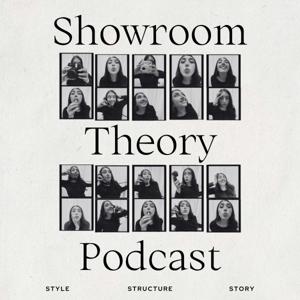
My conversation with Veronica Tucker for the Showroom Theory Podcast left me with a question instead: What is the silhouette of our era? At first, this feels like a fashion question. But the longer I sit with it, the more it begins to feel like something else entirely. A question about history, continuity, identity, and why so many of us seem drawn to archives, heirlooms, historical references, and old silhouettes despite living in a culture obsessed with novelty.
A few years ago, it still felt possible to identify an era by its silhouette. Not while you were living through it, of course.
History rarely announces itself so clearly.
But in retrospect, the shapes seem obvious. The 1920s had the flapper. The 1950s had the New Look. The 1980s had power dressing and strong-shouldered suits. Even the 1990s, for all their supposed anti-fashion tendencies, remain instantly recognizable through slip dresses, low-rise denim, and heroin-chic minimalism.
A silhouette often becomes shorthand for an entire cultural moment. It tells us what a society found beautiful, what it rewarded, what it feared, and what it asked bodies to communicate.
Pattern designer, writer, podcaster, and fashion historian (my title, not hers), Veronica Tucker, articulated the very thing I’ve been thinking about for a while. Future historians, she suggested, may struggle to identify a defining silhouette of our era.
But how could that be possible? We live in one of the most visually documented periods in human history. Never before have people produced, consumed, and circulated so many images of themselves. Surely there must be a defining silhouette.
But what is it? I suspect most of us would hesitate to identify just one because there are simply too many.
The clean girl and the trad wife. The office siren and the coastal grandmother. Hyper-femininity and anti-fashion. Nineties minimalism revival and Rococo excess. Corsetry. Adidas Sambas. Edwardian lace. Quiet luxury. Mob wives. Medieval romanticism. Archival Galliano. Cottagecore. Balletcore. Every aesthetic appears to exist at once, circulating across the same feeds, often worn by the same people.
And nowhere is this clearer than in bridal.
Brides frequently arrive at appointments armed with references that would have felt entirely incompatible a decade ago. A minimal sheath dress sits beside an image of Princess Diana. A nineteenth-century Basque waist shares a Pinterest board with Carolyn Bessette-Kennedy's patented nonchalance. Medieval sleeves. Clean-girl beauty. Heirloom lace. Vivienne Westwood corsetry. A Vera Wang ballgown. An archival designer reference pulled from a TikTok edit posted three days ago. The modern bride is often trying to reconcile all of these aesthetics at once.
And the longer I sit with this reality, the stranger it feels.
For most of modern history, fashion functioned as a kind of visual consensus. There were always subcultures and regional differences, of course, but there was still a sense that culture was moving in roughly the same direction. Today, fashion (much like my brain) feels less like a river and more like a browser with forty tabs open.
And it begs the questions:
If previous generations could orient themselves through shared visual language, what happens when no such language exists? What happens when every reference point is available all at once? What happens when we inherit infinite aesthetic choice but lose our sense of location?
The Human Need for Coordinates
“The human brain feels a need to box things and categorize things and label things and put them away”
Veronica observed, once again making an astute observation that had very little to do with clothing and everything to do with the human experience.
So much of contemporary culture is organized around that very impulse. We categorize music, politics, personality types, generations, attachment styles, content niches, and entire identities.
Fashion is no exception. In recent years, the internet has become so obsessed with aesthetic taxonomy that every few weeks, a new “-core” emerges to explain the world to us. It’s tempting to joke about it, but the phenomenon persists because it satisfies something deeper than trend participation.
Categories provide coordinates. They help us answer questions that have little to do with clothing itself. Who am I? What kind of person am I becoming? What story am I participating in?
The more fragmented culture becomes, the more urgently we seem to crave answers. Which may explain why, despite living in an era defined by novelty, we keep finding ourselves pulled backward.
Fashion Is Social Evidence
One of the reasons I enjoyed speaking with Veronica so much is that she approaches design less as self-expression and more as evidence.
Evidence of what a culture values. Of what it fears. Evidence of who is allowed to be visible and who isn’t.
Throughout our conversation, she repeatedly challenged the tendency to flatten historical dress into simple morality tales. Corsets, for example, have become a convenient shorthand for female oppression. But the historical reality is considerably more complicated.
A corset can constrain, but it can also support.
The more interesting consideration, Veronica suggested, isn’t whether a garment is inherently liberating or oppressive. It’s what the body was being asked to communicate.
The same observation surfaced in our discussion of gigot sleeves, those dramatic leg-of-mutton sleeves that ballooned from the shoulder at the end of the nineteenth century.
At first glance, they appear decorative. In reality, they emerged alongside profound shifts in women’s visibility and participation in public life. Women were cycling, working, organizing social movements, and taking up space in brand new ways. The silhouette changed accordingly.
The longer I spoke to her, the more I found myself thinking that fashion history is often mischaracterized as the study of clothing when it is really the study of people.
Fashion doesn’t merely reflect culture. It records it. Silhouettes become a social manuscript, preserving traces of collective hopes, anxieties, aspirations, and negotiations long after the moment itself has passed. This raises another uncomfortable question:
If future historians were trying to understand us through our clothing, what exactly would they conclude?
That we valued individuality? Certainly.
But they might also conclude that we were deeply uncertain. That we were surrounded by more images than any generation before us, and yet increasingly unsure where to place ourselves among them.
Why We Keep Looking Back
Legacy houses understand something the internet often forgets: people don't just want novelty…. they want continuity.
When discussing Jonathan Anderson’s buzzworthy appointment at Dior and Matthieu Blazy’s recent move to Chanel, Veronica pointed out that despite the industry’s obsession with novelty, these designers are ultimately stepping into stories larger than themselves.
They’re putting their own spin on things, but they’re also continuing a legacy.
Fashion often presents itself as a machine for producing what’s new. Yet some of its most enduring institutions are organized around continuity, inheritance, and stewardship. And maybe that’s part of what feels so appealing right now.
Because if the defining characteristic of our cultural moment is fragmentation, then continuity becomes increasingly valuable.
To this end, spend enough time around bridal fashion and one thing becomes immediately obvious: we’re in the middle of a historical revival. Not in a cyclical, trend-report sense of the word… a deeper force.
Corsetry has returned, everyone is still obsessed with Basque waists, and cathedral veils, lace, Edwardian references, historical embroidery, and silhouettes that would have felt old-fashioned a decade ago now appear everywhere from couture runways to bridal appointments.
The conventional explanation, of course, is that fashion is a cyclical system. But the more interesting explanation and, consequently, the one I think best applies is that people are searching for continuity… not nostalgia.
Most brides aren’t trying to become Victorian women. They aren’t secretly longing for the social structures of the nineteenth century.
The popularity of historical references often gets interpreted as conservatism, regression, or romanticization. And sometimes it is. But I suspect that explanation misses something important. A bride choosing a Basque waist isn’t necessarily trying to inhabit another century. She may simply be looking for evidence that she belongs to a lineage. That beauty has ancestors. That ritual has continuity. That she is participating in something older than herself.
At one point, I described our current moment to Veronica as feeling almost like “the period of nothingness.” Not because nothing is happening. If anything, the opposite is true. Everything is happening.
The result isn't cultural emptiness so much as cultural saturation. We are drowning in references and starving for context. The challenge is no longer access, but orientation, and History offers something the algorithm struggles to provide. It offers context.
In a culture that increasingly feels suspended in the endless present moment, historical references create depth. They provide us with a tether. They remind us that things came from somewhere… that we came from somewhere.
A Dress Cannot Tell You Who You Are
There’s a particular pressure that emerges during the hunt for a wedding dress, and it’s almost impossible to explain to someone who has never experienced it.
On paper, the task appears simple enough: Choose a dress.
In reality, the dress quickly becomes responsible for making statements no garment could possibly make. Statements about identity, values, perception, and the parts of ourselves we carry forward or leave behind.
At one point in our conversation, Veronica described her own experience of wedding dress shopping.
“Your wedding is a really huge emotional undertaking where you feel the need, or I certainly [did], to distill [your] entire identity into one dress.”
I laughed when she said it because every bridal professional knows exactly what she means. The modern wedding dress is rarely treated as clothing. It’s asked to perform impossible labor. It becomes the wearer’s autobiography.
Women arrive hoping to find a silhouette that will reconcile every contradiction they hold within them. Timeless yet unique. Fashion-forward yet classic. Romantic yet modern. Traditional yet entirely themselves.
The dress becomes a vessel for certainty. But the problem, of course, is that no dress can provide it.
No silhouette can fully explain a person. No aesthetic can permanently answer the question of who we are.
And yet we keep asking them to try.
Fashion Really Is That Deep
Toward the end of our conversation, I parroted a phrase to Veronica that has become something of a signature for her (at least to me):
“Fashion is that deep.”
The line hits something for me because it sounds faintly absurd.
It also happens to be true.
Not because every trend deserves a dissertation and not because every garment contains hidden meaning, but because human beings consistently use clothing to answer questions that clothing can never fully resolve.
Questions of belonging, visibility, identity, and orientation.
At one point, Veronica spoke about women weavers inventing the logic that would eventually become binary code. Reflecting on the way this history is often overlooked, she observed:
“We call it craft when we really should have called it programming.”
The names assigned to things shape how seriously we take them. Fashion has long been dismissed as frivolous because of its association with women. Bridal doubly so.
And yet, few industries reveal cultural anxieties more clearly.
Not because fashion predicts culture, but because it records it. A corset is never just a corset. A gigot sleeve is never just a sleeve. A cathedral veil is never just a veil. Each reflects something about the moment that produced it: what people valued, what they feared, what they hoped for, and what they believed the body should communicate.
Which brings me back to the question I have been unable to stop thinking about since my conversation with Veronica.
If future historians struggle to identify the defining silhouette of our era, what will they say instead?
Perhaps they’ll describe us as the generation that inherited every silhouette at once. The generation overwhelmed by reference. The generation caught between endless choice and very little certainty.
The generation that kept reaching for archives, historical references, legacy fashion houses, and old silhouettes not because it wanted to return to the past, but because it was searching for coordinates.
Not because we wanted to be told what to wear. Because we wanted to know where we were.
And in the absence of a shared visual language, we keep searching for orientation wherever we can find it.
In archives.In heirlooms.In legacy.And increasingly, in bridal.
Perhaps the defining feature of our era isn’t a silhouette at all.
Perhaps it’s the desire for one.
Not because we want to return to the past, but because we are trying to locate ourselves within the present.
Thanks for reading! Subscribe for free to receive new posts and support my work.
Further Reading
Altar is an independent publication dedicated to bridal fashion, culture, and ceremony. Through essays, reporting, criticism, and photography, it explores the ideas shaping how we dress, gather, and celebrate.
Explore Issue 001 →
Post Assets: Veronica Tucker the Label
This is a public episode. If you would like to discuss this with other subscribers or get access to bonus episodes, visit showroomtheory.substack.com