
Sign up to save your podcasts
Or

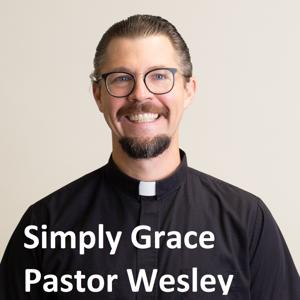


Sermon 30 October 2022
Grace Lutheran Church
Rev. Wesley Menke
This Is Not Your Church.
Say what?
Let’s get real. Worship attendance is down. But let’s not get personal. It’s all the churches. Church attendance has been in a steady decline for decades. Covid made a fast forward of the trend. Nationwide most churches are worshiping around 60% in person attendance of what they were pre-Covid. Many who worship now are different than those who worshiped before.
So what do we do about it?
We could try to be exceptional and special. We could buck the trend. Maybe.
What else could we do?
We could change the way we think and feel about church.
This is not your church.
What is your church?
Your church is the world!
Each Sunday we do the intercessory prayers of the people. It is supposed to be like a funnel. We start off praying for the biggest thing possible, and then we focus-in, petition by petition until finally we end the prayer by naming specific individuals.
The largest part of the prayer, the first part of the “funnel” is the church. The church is all of time, it is all generations, it is most certainly the well being of all of God’s people; of all people.
When we think about the health of the church, we must think about guests, non-members, strangers, non-Christians, governments, businesses, organizations, the planet, animals, plants, and the universe. When we think about our property it doesn’t end in the drainage ditch to the east of the sanctuary. It includes Euclid Avenue and all the people in the cars and on the trail.
When I was installed at Grace Lutheran three and a half years ago the preacher, Rev. Frohner told me I was now the “local bishop.” I raised my eyebrows at the time. Say what? Now I get it. I am your local bishop. A bishop is a pastor to the pastors. It is my calling to help prepare you to be pastors.
This is not your church. Your church is the whole world. You are its pastor.
Think of Grace Lutheran not as a church, but as a seminary and a synod. It’s where you come to learn how to be a pastor; and to build on those skills for your whole life. When you become an adult member of Grace Lutheran by baptism or affirmation of baptism, you at that minute are commissioned to be a minister of the gospel.
When we talk about being saved by grace through faith, and not by works we are talking about how you are called with your imperfections to be a pastor to the world. That’s what happened to Zacchaeus. Do you remember Zaccheaus? He was a wee little man. He wanted to see Jesus so he climbed up in a sycamore tree. Jesus told him to come down, and then Jesus invited himself to Zacchaeus’ house for dinner. This is another example of Jesus breaking social norms also known as being rude. He invites himself over to someone’s house.
Because up until that point Zacchaeus was a hard working man. He was a tax collector. He was clever and worked extremely hard: long days and nights keeping meticulous records of who owed what. By doing this exceptionally well Zacchaeus got rich and earned a comfortable and secure lifestyle. But when he met Jesus he learned that you can’t buy your way into heaven. He learned that God loves every human being unconditionally. He learned about grace. So the moment Zacchaeus believes in this fundamental truth, the moment he has faith in it, is the moment he gives his wealth away. He stops working; and starts stewarding.
Stewardship is quite simply using the resources at our disposal to care for God’s church; that is, the world. So Jesus says that Zacchaeus is saved, because he now has faith in God’s grace, and no longer puts his faith in work and the pursuit of money. He becomes a steward of what belongs to God.
Zacchaeus gave half of his wealth to the poor, probably giving a lot of it to Jesus himself since Jesus was helping the poor. He promised to make amends to anyone he had stolen from fourfold. It was at that moment that Jesus said that salvation had come to Zacchaeus and his household.
Many people gave what they could to help the ministry of Jesus. But some people can give more than others. Who are the Zacchaeus’ of today? Are you a Zacchaeus? Today pledge cards go home. Please prayerfully discern how you will steward the resources in your life.
The world is your church. You are its pastor; and I am your local renegade bishop. You are a minister of the gospel, and I am here to teach, encourage, and support you in your ministry.
This is exactly what the reformation was all about. 500 years ago religion had become run by a professional elite. It was better at making money than it was at actually helping people. It trampled on poor people to build fancy cathedrals. But it would be unfair to pin this only to the Catholics. All religions including Lutherans are liable to lose sight of the radical calling to serve the world. The reformation was not a one and done. It is a discipline we are called to throughout our whole life.
Seminary was a great time, but I only learned half of what I needed to know to be a pastor. The rest has been on the job training. The same is true for you. We all have room to grow and learn. I want to give a shout out of thanksgiving to everyone who makes the effort to participate in worship, Bible Study and Sunday School. Reading, studying, and learning together is essential for pastors to keep learning and growing. Thank you to all you stewards, too!
A few months ago we had the funeral for Jerry Shepherd Sr. The sanctuary was packed with people. Do you know who all of those people were? They were not just the family and friends of Jerry. They were his congregation. They were the people God called Jerry to serve to proclaim the good news. Each of you has a congregation that you serve.
The world is your church. You are its pastor. Semper Reformata.
Pastors are like manure. So the saying goes. They are best spread out in the fields. When they are gathered up they only make a stink and scorch the earth. It would appear that October is the month of theological conferences for pastors. It’s a brief window before advent, but after the fall ministries are back up and running when we can get away for a little bit.
This past week I was in La Quinta, California with church leaders from throughout California. The theme was: Grief. A real light and refreshing topic? I think not. The conference finally made sense to me, though, at our closing worship. Bishop Brenda Bos had the sermon translated live into Spanish. She preached on “grief.” But when Pastor María Paiva translated the word grief, she used the Spanish word, “duelo.” Over and over again I heard the word “duelo,” which means yes grief, but also pain from the word “dolor.” This was supremely helpful because often when I think of grief I think of a generic term to describe the process a person goes through when they lose someone they love. Grief is just what you go through. But by hearing the Spanish word, “duelo,” it made me think and feel more honestly that grief is about pain and hurt.
It is fair to say that we have experienced and are even still feeling “duelo,” grief and the pain that comes with it. We have lost both people and relationships, and it hurts us to the innermost recesses of our soul. Or then again maybe it doesn’t! The problem with painful grief is that it can be so overwhelmingly painful that we do all kinds of crazy things to try to avoid it. We have discovered and curated a panopoly of devices to temporarily distract us from the god-awful pain of loss: money, work, shopping, alcohol, drugs, sex, entertainment, and religion.
Honestly religion may be one of the greatest culprits of anesthetizing people from their pain. Marx said that religion was the opiate of the masses. But he wasn’t the only one. Dietrich Bonhoeffer also criticized the church for the same failing. During the rise of Hitler a solid super majority of Catholic and Lutheran leaders quietly supported the fuhrer. They did not criticize or resist. Maybe they tried to comfort people and relieve them of their pain rather than resist the injustice. Bonhoeffer called this “cheap grace,” in his book, “The Cost of Discipleship.” Cheap grace relieves us of our duty to strive and sacrifice for what is right. It asuages us of guilt and smothers us with a false hope that God will come and fix everything.
Costly Grace is what Bonhoeffer advocated for. It takes the cross of Jesus as the center of faith, and so every human being which suffers as being close to the heart of God, and so demands our care, respect, and efforts to resist that which hurts and destroys life. It means feeling the pain and not just looking the other way or distracting ourselves with cheap promises of resurrection. When you feel pain you are actually feeling God’s costly grace. Grace makes all of creation sacred. You are sacred, and so are the people in your life. When you feel pain you are alive to the holiness of all these things. We are in real trouble when we stop caring; and stop feeling. When we cut ourselves off from others and excuse their suffering as merited because of their sins.
The Pharisee in Jesus’ parable is guilty of this. He is stuck trying to avoid the pain of his life. He looks with contempt on the tax collector judging him in order to not have to sympathize or empathize with him, in order to not have to be concerned for his well being. And he has lots of good reasons to do so. Today we all love and respect tax collectors, right? Haha. Well it was even worse in Jesus’ day. Tax Collectors were sending the hard earned money away, impoverishing their own people for the sake of Rome, and keeping plenty for themselves. There was a reason to hate them. But if you believe in Grace then you believe that all people are sacred and beloved by God, especially your enemies. The Tax Collector in this moment is justified because in his soul he is accepting God’s grace. He is coming to terms with the fact that he hasn’t just exploited disposable people; he has made bereft his own brothers and sisters, and so his heart is breaking. But he is justified because he finally has faith. He believes in his heart God’s grace and that people matter; so he leaves the temple determined to change his life radically. Faith without struggle is dead. The tax collector is struggling to do right by the people, so he has faith.
Today we will study the first chapter of Bonhoeffer’s book, “Life Together.” In this chapter called, “Community,” we will read about Bonhoeffer criticizing retreats and theological conferences. He says that nothing is more toxic to faith than a short term gathering of Christians where they feel so happy and uplifted. True community is to be with the very people who you have a hard time with. So let us modify our original refrain. Christians are like manure. They are to be spread out in the field doing good, and not piled up making a stink.
Friday night was homecoming at Upland High School, and our daughter Rebecca took the field with the Pioneer Junior High band to play alongside the Highlanders regiment and marching band. The cheerleaders stood at attention. The football teams leapt with vigor. The students danced with glee. The parents and grandparents cheered with pride. A host of staff and volunteers made it all happen. The opposing team and their entourage made it all worthwhile. When I saw this old tradition unfold anew for this generation I was comforted. Despite everything we’ve been through, and all the challenges we face it gives us hope to know that the children are okay. They are laughing, crying, arguing, flirting, running, and showing us that there is a future. They matter. This world matters, and it is worth living, it is worth struggling for. This is the world into which you are sent, to be life giving manure in God’s football field.
Faith the size of a mustard seed is sufficient to depose unjust tyrants as in mulberry trees of cruel dynasties. How you treat those with less power than you is an indication of your faith in God. Why would God treat you any better than you treat a slave? Jesus doesn’t advocate slavery. If we give freedom and care to others; then we really believe that God gives the same to us. So how we treat animals is indicative of our faith.
I turned 41 last week and it was a little bit harder than I thought it would be. My wife, children, family, and friends were very kind and gracious. Thank you for all the wonderful cards and well wishes! Why is getting older so hard? I know at least one person who says that they love getting older. It is better than the alternative. You only have so much time. At a birthday one thinks of the things they’d like to accomplish, but haven’t. That is hard. What one should do is think about the many blessings one has.
I recently read a book called, “Metaphysical Animals.” It’s quite good, and about four women philosophers who study during world war two at Oxford. For a while one of the women, Elizabeth Anscombe studied in Cambridge under Ludwig Wittgenstein. He was a tortured soul, and his brilliance was terrifying. Ms. Anscombe translated his work into English; which is no simple task. The main work is titled, “Philosophical Investigations.” I listened to that audiobook too. It was a difficult book to absorb, but the main idea is that language is both capable and insufficient. Through hundreds of examples Wittgenstein demonstrates how language can effectively communicate ideas, but that it is also fluid and can almost always mean different things. Wittgenstein seems to believe that there is a reality beyond which language can fully describe and so is kind of Platonic. However, language can’t be boiled down to uncontested logical syllogisms. It is irreducibly nuanced and playful. Wittgenstein talks more about “language games” than formal systems. So playfulness is concomitant with intelligence. If you want to be smart, you need to know how to play.
Wittgenstein died at a relatively young age and he, like many of his contemporaries, was a chain-smoker. He died of cancer and suffered physically at the end of his life. Ironically as he grew closer to death the tormented nature of his soul relaxed and on his deathbed he expressed a profound gratitude for his life; calling it, “a good life.” This surprised many people, because he had endured so much suffering. His deathbed confession is surprising in a similar way that the parable of Lazarus and the rich man is surprising.
It’s surprising that the rich man is not named, but Lazarus is. Usually money and power gain one recognition. But in this story the poorman Lazarus is recognized. This very fact brings up the question, “Why do bad things happen to good people?” Why would Lazarus suffer so terribly and the rich man live so extravagantly? The answer might surprise you.
If you believe that it’s God’s grace that saves us, and not our actions, then you also have to concede that there is no justice in the present moment. God is not rewarding or punishing you or anyone else. God’s grace doesn’t discriminate based on the quality of person that you are. This means that if you want justice and fairness in this life, you have to make that happen. That’s what faith is, it’s believing that you have to take responsibility for what is just and true. You can’t sit back and wait for God to do that for you. It’ll never happen.
But what about the part of the story that happens after Lazarus and the rich man die? Several things are noteworthy. Lazarus doesn’t know or believe in Jesus. He is rewarded with everlasting comfort and peace only because he had already suffered, and was a good man. He endured the suffering that fell on him without terrorizing or tormenting others. He was nice to dogs; and dogs were nice to him, so that helps too!
The rich man has to endure pain and anguish because he already experienced comfort in this life. He tries to command Abraham to order Lazarus to help him. This rich man who is used to using people just keeps on trying to do that even in hades. It doesn’t work. He pleads with Abraham to send Lazarus back from the dead to warn his family to repent. Abraham’s answer, which is Jesus’ answer, who is telling the parable, is quite fascinating. The answer is, “No.” Everything you need to know to have eternal life is available through Moses and the Prophets. Furthermore, sending someone from the dead won’t make any difference. Ironically, Jesus is exactly the person who resurrected from the dead. But according to his own words this doesn’t really affect a person’s salvation.
It has been an evangelism strategy for a long time to try to convince a person that Jesus is worthy of our devotion and worship precisely because he did resurrect, and yet Jesus is on record saying that a resurrection wouldn’t matter much in convincing someone to be faithful. This is sobering.
So what is the moral of the story? If resurrection can’t save a person, what can? Money. Rather, a lack thereof. Jesus warns us in the strongest way possible that a love for money puts our very salvation at risk. The love of money is so seductive that it can corrupt the heart of anyone: no matter what religion they subscribe to. Greed, and the love of money, is the root of all evil. How many times in history has a concern for money and income hobbled an otherwise good person from doing the right thing? It makes one wonder if that isn’t the point. If the invention of money itself exists to quiet and control the populace.
How many people walked through the rich man’s gate to attend one of his swanky parties and ignored Lazarus as they walked by? And why was Lazarus parked at the rich man’s gate? Why did the rich man know Lazarus’ name? Did Lazarus get his wounds from serving the rich man?
Day in and day out we “work” for money to be able to survive. Yet some of the most important jobs to our survival as a species are the most underpaid. The very people who hold life and death in their hands are given a pittance. Why? Is raising interest rates on those who have to borrow money the only way to manage the economy?
So what’s the good news? The good news is that there’s no price tag on heaven. While you may not control whether you suffer in this life, you can choose how to respond. You can choose for this life to be a good life. Don’t let anyone tell you that you aren’t worth it. Nobody is worthy. God’s grace makes it possible for everyone to live a good life.
Sermon 2022.09.18 Rev. Wesley Menke
The King Has Taken Back His Throne
The King of England has ascended his throne and his name is Charles. A good name! Time will tell if he will be a good king. We should pray for kings and queens so that we may live a peaceable life, that all may have salvation, and that royalty knows the truth (1 Timothy 2:1-7). And what is the truth? The truth is that there is only one true king, and his name is Jesus. All other kings no matter their wealth or power are less than shadows of the one great steward king, Jesus. His throne was a cross; and his crown was made of thorns. We pray that earthly kings would lay their crowns down at the foot of the cross and practice faithfulness.
The steward King Jesus had a peculiar way of explaining things and helping us to understand his rule. Kings, since forever, are to be understood as divine sons appointed as God’s representative on earth. They exact tribute, allegiance and undying devotion. Kings are like divine managers or stewards tasked with the awesome responsibility of caring for Earth and its inhabitants on behalf of God almighty. The king does not own anything, but at best manages or stewards the wealth that belongs to God. God is the true owner of all wealth and life itself. Some kings merely use the pomp and circumstance of their office as a means to indulge themselves and their basest desires without regard to the well-being of their subjects.
The prophet Amos addresses this problem. He warns against trampling the needy, and ruining the poor of the land through shoddy business practices. False prophets would only tell the king to perform outward religious rituals. Amos said true religion was defending widows, orphans, and immigrants. Taking a cue from Amos, Jesus told a parabolic story of an unusual steward-king.
Jesus said that once upon a time there was a steward who served a rich owner. The steward was busted for cooking the books. He would make special deals with people, showing favor and not collecting what was owed to the rich owner. So the owner finds out about this and decides to fire the steward. But before he can officially send the steward packing there is a twist. The steward quickly calls in all the debtors. He begins to lessen and cancel their debts. One by one he wins favor with the impoverished and indentured subjects of the owner. They love the unjust steward for this largess and the streets are filled with rejoicing. God the owner finds out about this and his plan is foiled. Although he has cause to depose the unjust steward he cannot do so, because the people are in love with him.
What is the meaning of this story? Jesus is the unjust-steward, the king of all creation, appointed by God. And God is the rich owner of all of the multiverses. When Jesus was sent to Earth to rule justly he did not do as he was supposed to do. He did not reward the good and just people, rather he would make special deals with the most unsavory of people: tax-collectors, prostitutes, samaritans, and the general dregs of society. Jesus the unjust steward king infuriated anyone with a sense of propriety and deference. Even God the rich owner of everything forsake his son, his appointed King and wrote him off as dead. So he was drummed up with bogus charges, and executed with a mock coronation. But just as he was being banished to hell, and the dustbin of history; written off as nobody, he pulled off the ultimate hustle. One by one he called the indebted subjects of the Rich and Powerful God of All Creation. He summoned them to the foot of the cross and he struck down their debts. He forgave the debts of everyone, of absolutely everyone no matter who they were, so that not a single person owed the Rich and Powerful God anything. God the Father, the Owner of Everything did not expect this, and rather than disregard, disdain, or disown his son, he breathed new life into him, and resurrected him from the dead, restoring him to his role as king and steward of all creation. The King has taken back his throne, the useless seed was sown (Arcade Fire), through cunning, shrewdness, and despicable generosity. And the God who once exacted punishment has been humbled by the sheer audacity of Joseph and Mary’s boy, Jesus the carpenter from Nazareth. A good king, an unjust king, a king full of grace. A king who cares very little about expanding an empire, but rather sabotages it; and lived to give freedom.
Are you the king of your castle? Taylor Swift says, “We figured you out, We all know now, we all got crowns You need to calm down.” You can go to Laguna Beach and buy a crown crafted with brilliance by local artists. And why not? In Spanish it’s romantic for a husband to call his wife, “reina” or “queen.” Luther said the Christian is perfectly free, subject to none; and dutiful to all, subject to all. The king is taking back his throne. Amen. Alleluia. Come Lord Jesus. All Hail the power of Jesus name and crown him with many crowns.
El jefe de jefes
Inglaterra ya tiene un rey nuevo, se llama, Charles. ¿No es buen rey? Jesús es el único rey.
El propósito de cualquier rey es ser mayordomo de Dios en la tierra.
Jesús no contó una historia. Había un mayordomo que robó dinero de su amo; un gran dueño. El dueño Iba a correr al mayordomo. Pero antes de perder todo el mayordomo perdonó todas las deudas de los clientes.Entonces por mantener la paz, el dueño no le corrió al mayordomo.
El propósito de la parábola es que Jesú es el mayordomo injusto. Él no fue justo en su tiempo en la tierra. Sino era generoso con gente de mala fama. Dios rechazó a su hijo en la cruz. Pero antes de renunciar a su reino, Jesús perdonó a todo el mundo su deuda a Dios. Entonces Dios tenía que resucitar a su hijo por mantener la paz con la creación
Eres un rey? Eres un jefe? Los Tigres del norte cantan, “Soy el jefe de jefe señores.” Bueno, todos somos como reyes por la libertad que tenemos por la bondad de Jesús. La cuestión es, ¿Qué haces con tu poder? ¿Qué dices cuando ves la injusticia? Hay mucha explotación del pueblo.
¿Nunca te sientes que el gran deseo de su corazón existe poquito más allá del horizonte; y nada más tienes que hacer el primer paso? No tomes este paso. Es una trampa. Mantengenos en la senda ancha. Esto es lo que es real.
Sermon 2022.09.11
Rev. Wesley Menke
Finding the Face of God
There may come a time in your life when you will yearn to see the face of God, but God’s face will be hidden from you sight: nowhere to be found. This happened to Moses. It used to be that Moses would talk to God face to face; like friends. God first spoke to Moses directly from the burning bush on top of Mount Sinai. Then God would speak to Moses in other ways, including from a pillar of smoke outside of his tent. You could imagine something between a tornado and dust devil from which God would appear and speak to Moses. Then one day it all changed. Moses was no longer able to see God face to face. God said to Moses that nobody could look on the face of God without dying. So God explained that the closest Moses could get would be to look at God’s back.
So why the change in Moses’ relationship with God? Why was the closeness and intimacy cooled? Well, the thing is, Moses had a bit of an anger problem; and sometimes his anger would get the best of him so that he would lash out and hurt people. Moses even killed people. You will remember that he killed an Egyptian when he was a young man living as an adopted prince. Then there was the incident with the golden calf of which we read about in Exodus 32.
So Moses is up on the mountain with God, talking face to face for a long time. The people get restless and maybe a little jealous. So Aaron, Moses’ brother makes a golden calf as a focal point for the people to worship. In the movie The 10 Commandments, which bears a strong influence in our collective imagination, we envision idolatry, but it’s not that simple. There is archeological evidence to suggest that a calf or bull could have been used as a kind of “mount” on which the invisible God would have stood or sat; not unlike the cherubim mounted on the ark of the covenant. Either way, God doesn’t like it, and God gets angry with the people. God threatens to punish them. But what does Moses say? Moses pleads with God not to punish them severely. So God relents and Moses goes back down the mountain. What happens next?
You remember how Moses had an anger problem? Well no sooner after he gets down, he makes the people drink the pulverized gold from the calf. Then he rallies a group of people with swords to go out and slaughter their own people. It’s a kind of civil war: brother against brother. It’s completely brutal. It’s also totally hypocritical. Moses did the very thing he pleaded God not to do. When the dust settles, and the blood stops flowing, the people of God have to regroup and start over. They suffered terribly not from the hand of God, not from a foreign army, but from within. It was after this incident that God took a break from showing their face directly to Moses.
Psalm 51 says, “Hide your face from my sins, and blot out all my wickedness.” You, like Moses, are without a doubt, saved by grace through faith, and not by works. God is patient with Moses, never tiring of teaching him, of believing that he can keep growing and becoming a better person. God believes the same thing for you.
1 Timothy 1:14 is a testimony to that apostle’s growth by Grace. They write, “I was formerly a blasphemer, a persecutor, and a man of violence. But I received mercy because I had acted ignorantly in unbelief, the grace of our Lord overflowed for me with the faith and love that are in Christ Jesus.” Moses wasn’t the first or the last human to be called to peaceful faith in action inspired by God’s grace. You are called to have faith that each living human being is a sacred creature made in the image of God to which you devote your life to care for, even when they make you angry and at a loss to understand their motives.
The parables of the lost sheep and the lost coin are an ethical teaching of Jesus about this very thing. You are to see yourself both as one who has been lost; and the one who searches out. When you lose your way God won’t abandon or punish you, but will seek you out. “Amazing grace, how sweet the sound that saved a wretch like me. I once was lost, but now am found. Was blind but now I see.” So if you see, if you have been found, you are now called to let go of your anger; and take up the calling to search, to find the lost, and to bring them back, and to rejoice. You will see the face of God again or maybe for the first time in those whom you find; and perhaps even in your enemies. Amen.
Sermon 2022.08.28
Rev. Wesley Menke
Érase una vez una pareja en la que el marido no era fiel. La esposa le suplicaba y le rogaba que cambiara su comportamiento, pero su comportamiento solo empeoró. Entonces, un día, el hombre le dijo a su esposa que haría un viaje a Florida con una amiga y que regresaría en unos días. La esposa intentó algo diferente. Investigó destinos románticos y luego le sugirió a su esposo un itinerario para él y su amiga. Inmediatamente canceló el viaje y se quedó en casa. El punto es que el poder importa, y cómo lo obtenemos; a menudo se malinterpreta.
Algunas personas piensan que Jesús y sus seguidores no quieren ni tienen ningún poder. Pero, de hecho, hoy Jesús enseña formas de subvertir los esquemas de poder convencionales; y construir poder para nuestra propia supervivencia y bienestar mutuos.
Las dificultades en tu vida no son un castigo divino que mereces y debes soportar. Depende de ti lidiar con los problemas en tu vida. Jesús enseña que el poder se ejerce a través de la comunión.
No se arrodillen a los pies de un rey y de aquellos con poder oficial, sino levántense junto a aquellos a quienes la sociedad ha ignorado. Eso es lo que hizo Jesús.
Jesús vivió esto, comenzando su ministerio entre la base de la pirámide social y finalmente siendo coronado rey por Pilato.
Los que tienen el poder oficial se benefician cuando todos clamamos por ser los mandamás. Pero si te sientas con los humildes y el anfitrión te llama, te dan más.
Leemos en Hebreos 13 que la iglesia debe respetar el matrimonio y la familia. Esta no enseñanza de ser puros. Sino nos necesitamos unos a otros para sobrevivir.
Finalmente, se promete una gran bendición a aquellos que adoran a Dios y pronuncian el santo nombre de Dios. ¿Qué le dijo Dios a Moisés que se llamaba? “Yo Soy.” Habla el nombre de Dios y sé bendecido.
Once upon a time there was a couple in which the husband was not faithful. The wife would plead and beg him to change his behavior, but his behavior only grew worse. Then, one day, he told his wife that he would be taking a trip to Florida with a friend, and that he would be back in a few days. The wife tried something different. She researched romantic destinations and then gave her husband a suggested itinerary for him and his friend. He immediately canceled the trip, and stayed home. The point is that power matters, and how we get it; is often misunderstood.
Some people think that Jesus and his followers do not want nor have any power. But in fact, today Jesus teaches ways to subvert conventional power schemes; and build power for our own mutual survival and well being. The problem is works-righteousness; a scheme devised to take away power from you. The devil tricks you into thinking that you have to keep working all of the time to earn your power. By doing this the devil takes away your power to live freely and happily. Like the unfaithful husband in the story, the devil torments us, for the sadistic pleasure of watching others suffer.
The truth is that we are saved by grace, through faith, and not by works. The hardship in your life is not a divine punishment that you deserve and must endure. God doesn’t do that. Your sins are forgiven. What you do with your life, and how you deal with hardship depends on you; it depends on your faith. It’s up to you to deal with the problems in your life. Power is something we all need to be able to do anything, especially solve problems. Jesus teaches that power is exercised through fellowship.
Fellowship intentionally reaches out to other struggling persons to find common ground. There is a lot more common ground than we realize. The key is to recognize that true power comes not from scrambling or groveling at the feet of a king and those with official power, but standing up alongside with those who society has disregarded, shunned, and cast aside. That’s what Jesus did. Power comes from the bottom.
Jesus said that all who humble themselves will be exalted, but all who exalt themselves will be humbled. Jesus also said that when you give a party, don’t just invite people of means who will return the favor, but invite those who have less means than you. You will be blessed because they cannot repay you. You will be repaid when new life is given to the just. We forget how shrewd and tactical Jesus could be. This isn’t just a lesson merely on social graces, this is a formula for building power. Jesus lived this out, beginning his ministry among the bottom of the social pyramid, and ultimately being crowned a king by Pilate. Jesus, our humble servant king inspires a kingdom to grow now still 2,000 years later while other empires come and go.
Proverbs 15 teaches us to not seek out the presence of a king or win his support. Rather, build a movement of people who are bound together in fellowship so that the king is forced to say, “Come up here, and talk to me,” because they cannot ignore the power growing under their feet.
Those with official power benefit when we all clamor to be the top dog. We thereby consent to the hierarchy and social control. If you scramble for the best seat, and the host or king shames you in front of the party, then they have reestablished their power over the goings on. But if you sit with the lowly and the host calls you up, they recognize your power, and by naming it give you more.
We read in Hebrews 13 that the church which formed in Jesus’ physical absence took seriously the necessity to show hospitality to the least, last, and lost, knowing this was how they would grow. Respecting marriage and families wasn’t about policing purity as it was fearing the loss of sacred human bonds and companionship. Civilization is built by the trust and fidelity between us, ordinary people. We can’t survive or improve our lot unless we can care for and respect each other in the present moment. Leaders aren’t to be worshiped but regarded with sobriety, learn from their success and mistakes. Finally a great blessing is promised to those who worship God and speak God’s holy name. What is God’s holy name? What did God tell Moses the name was? “I am.” Speak the name of God and be blessed.
El proposito del sabado es practicar la fe. No merecemos tanta bandicion ni tanta condenación, pero lo pedimos lo que necesitamos. No trabajar en el sabado es acto de soladaridad uno con otro en recibir alivio, perdon, y la justicia. Es como huelga sagrada.
We are currently reading through the book of Exodus at Thursday morning Bible Study. We meet each Thursday at 10:30am and read through the bible verse by verse, pausing for discussion. Please join us! Thank you to Mark Allert who led study while I was on vacation. Last week we read the climax: chapter 20: the giving of the 10 Commandments. While all the commandments are important, some take on a special significance. Honor the Sabbath and keep it holy. Keeping the Sabbath is central to Judaism. Do you know what is the most holy day of the year in Judaism? It is the sabbath. Every week the holiest day of the year is given to us by God to enjoy.
Something that’s interesting is that even before the 10 commandments are given, the people are instructed to observe the sabbath. The people are starving in the desert wilderness and they complain to Moses for food. God in turn sends them: Manna. Also known as “What is it?” The thing is, each morning people gather just enough Manna for what they need, except on Friday, they gather double, so that they don’t have to work on the sabbath. Today we read from the prophet Isaiah,
Then we have this strange reading from Luke 13. Jesus heals a woman who had been crippled for eighteen years by a Spirit. When the Bible talks about Spirits crippling people and causing all kinds of ailments I can’t help but wonder if we should translate that word, “Spirits” to something that makes more sense for us today. What if we used the word, “virus.” We attribute ailments to viruses like ancient people attributed them to Spirits. Indeed West Nile Virus can cripple people.
Why do people do this? Why is that when someone tries to do something good, they get ganged up on, criticized, and torn down? Maybe it is out of jealousy? Maybe we are afraid that if someone lets their light shine brightly it will diminish our own light. Maybe a good deed makes us uncomfortable because we have grown accustomed to the Spirits or Viruses in our lives. We act out of pain and frustration longing for a healing from the suffering from which we deal with.
So where is the grace in all of this? We believe that we are saved by grace through faith, and not by works. In other words, if and when someone is giving you a hard time, criticizing and belittling you, don’t for one moment think that this is the will of God. God does not punish us for our sins. The God of judging and condemning is dead. So if someone is judging and condemning you, they do not speak for or represent God. The evil, pain, and suffering of this world is not the will of God, it is the result of broken and hurting people. So if you have faith in God’s grace and God’s forgiveness. If you believe that all sin died on the cross with Jesus’ then your faith must compel you to not standby while innocent people are suffering. Many people, multitudes of people suffer every day in silence. If you would be the one to lift up your head, to come to the defense of the suffering, you have truly become a person filled by the power of the Holy Spirit.
What is the holiest day of the year?
Sermon 2022.08.14
Wesley Menke
Jesus said we are great at predicting the weather, but lousy at understanding what is going on. Sounds a lot like watching the news. Do you ever get frustrated with the news; like they do not tell the whole story? Take Ukraine as an example. We are told the names of places that are attacked without very much or no context. What are these places and what is their significance? So I decided to read a history of Ukraine. It is very complicated. I would like to read more. Initial impressions are that Ukraine is very important. It is ancient in terms of a people, culture, and language, and it is also fairly young as a country with Zalensky as its 6th president. It wasn’t just part of the USSR, it provided key leadership to it. Nikita Krushveb was born near what we consider Ukraine and relied heavily on Ukrainian political leadership. And it hasn’t just been the USSR, but many previous empires like Austro-Hungary, the Ottoman, and the Greek empires all reached into Ukraine and depended on its people and natural resources. It is an area that has been highly contested. One popular example of the historically complicated slavic lands and peoples would be Fiddler on the Roof, focusing on the particular history of Judaism under empire. So the struggle to resist external imperial ambitions is much of Ukraine’s history.
So now we hear from Ukrainian leaders asking us to support their right to resist, their right to sovereignty and self determination. Supporting this seems like the only decent thing to do. But the question is: How? Is the procurement of billions of dollars worth of weapons the only way to support Ukraine? This is where Jesus’ words might show us another path.
Contrary to popular belief Jesus doesn’t seem to want peace.He envisions divisions within families as to be expected. Jesus wants us to be prepared to deal with conflict.
One thing I’ve learned about Ukraine is that in the Eastern Donbas region of Ukraine you could probably find families where one member wants to be Russian and other members who do not. Armed conflict has existed in that area before the recent invasion.
The problem is when someone or some group runs out of patience and in a desire for peace and an end to conflict resorts to violence or coercion to stop the maddening arguings and division.
This is something that parents deal with constantly. A child or children may argue or bicker; it may escalate and then the parent faces a choice:
I feel that option 2 is better, and I strive to do it. What we do in our homes has a great impact on the world writ large. To this Jesus says, it’s ok to get fired up. It’s okay to think differently than even the most intimate people in your life. If we can figure out non-violent confrontation at home; then we can handle it better in larger cases too. Can you let yourself and people you love get angry? Maybe burying conflict and avoiding it will only let it fester.
By seeking to end conflict hastily we can unleash great and terrible suffering. Maybe peace shouldn’t be our goal. Maybe we need to lower our expectations and strive for something more realistic. Ask yourself what am I willing to live without? What am I willing to lose? Maybe it’s time to let go of the fantasy of a comfortable peaceful life. You can’t earn heaven or salvation, so how could we earn peace? We are all guaranteed to lose our lives someday. By grace we know that this isn’t a punishment, but just a fact of life.
I recently heard that the most dangerous man in America was Walt Disney. Why? Because he made it possible for millions if not billions of people to believe that if they wished upon a star they could live happily ever after like royalty. Sometimes we think that conflict or disagreement is a sign that we are doing something wrong. What if it’s just the opposite? What if conflict and disagreement means that people care and are struggling to come to terms with difficult realities? Remember that God doesn’t mete out punishments. Your sins are forgiven on the cross. Faith is striving to uphold life and dignity even with our enemies. Peace depends on us; and our actions.
Jesús dijo que somos buenos para predecir el clima, pero malos para entender lo que está pasando. Se parece mucho a ver las noticias. Tomemos Ucrania como ejemplo. Es antiguo en términos de gente, cultura e idioma, y también es bastante joven como país con Zalensky como su sexto presidente. Y no ha sido solo la URSS, sino muchos imperios anteriores como los imperios austrohúngaro, otomano y griego, todos llegaron a Ucrania y dependieron de su gente y sus recursos naturales.
Así que ahora escuchamos a los líderes ucranianos pidiéndonos que apoyemos su derecho a resistir. Apoyar esto parece ser lo único decente que se puede hacer. ¿Pero la pregunta es cómo? ¿Es la adquisición de miles de millones de dólares en armas la única forma de apoyar a Ucrania? Aquí es donde las palabras de Jesús podrían mostrarnos otro camino.
Contrariamente a la creencia popular, Jesús no parece querer la paz. Visualiza divisiones dentro de las familias. El problema es cuando alguien o algún grupo pierde la paciencia y en afán de paz y fin del conflicto recurre a la violencia o a la coerción para detener las enloquecedoras disputas y divisiones.
A veces pensamos que el conflicto o el desacuerdo es una señal de que estamos haciendo algo mal. ¿Qué pasa si el conflicto y el desacuerdo significan que las personas se preocupan y luchan por aceptar realidades difíciles? Recuerda que Dios no impone castigos. Tus pecados son perdonados en la cruz. La fe es esforzarse por mantener la vida y la dignidad incluso con nuestros enemigos.
From the publisher's feed