
Sign up to save your podcasts
Or



Katha Upanishad as its santi form is sounded is actually something beyond all material calculation. It can't be understood. It is revealed knowledge. In other words, it talks about the spiritual existence. It talks about our relationship with God. It talks about death and what is after death.
NEW! Complete transcriptions of all our videos:
Get deep answers to your spiritual questions from our Genie AI
So at the sacrifice Vajasravas, the son of one whose reputation is based on giving food, he's trying to outdo his father maybe, or he certainly is striving for a result to go to the heavenly planets, and as a result he's cutting a few corners in his sacrifice, giving away these old cows that are good for anything and are just going to be a burden on the Brahmins that receive them.
NEW! Complete transcriptions of all our videos:
Get deep answers to your spiritual questions from our Genie AI
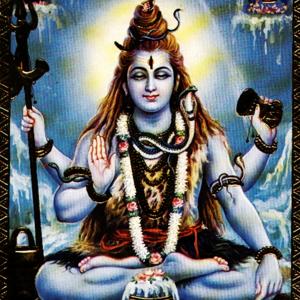
The name of the Upanishad itself, Ka Ta. Ka, means width, and Ta is the name of Shiva. Ka Ta itself means a branch of the Yajur Veda, or the people who study that branch of Yajur Veda. And what does that have to do with? Death.
It's no accident that Kata Upanishad has to do with death.
NEW! Complete transcriptions of all our videos:
Get deep answers to your spiritual questions from our Genie AI
The principle of Upanishad finds three primary expressions in the three meanings of the term Upanishad.
According to Shankaracharya, the word Upanishad is derived by adding upa, near, and ni, with certainty, as prefixes, and kvip, as a suffix, to the root sad, meaning to split up, destroy, go, reach, attain, or loosen.
NEW! Complete transcriptions of all our videos:
Get deep answers to your spiritual questions from our Genie AI
The Katha Upanishad is a dialogue with death. The meaning of Katha with the dot under the T, the ordinary Katha without the dot means like stories, past times, instructions even, or things that were done, you know, like histories in the past. But Katha with the dot underneath it, when it's pronounced properly, it means distress.
I had to dig deep into the Sanskrit dictionaries to find this. It means distress, but it's also a name of Shiva. So Shiva is death.
NEW! Complete transcriptions of all our videos:
Get deep answers to your spiritual questions from our Genie AI
In this section of the Mahābhārata, Sage Upamanyu, a resident of Kailāśa, is honoring the passing away of Bhīṣma by reciting a selection of the 10,000 names of Lord Śiva. These names were originally composed by Lord Brahmā in the early days of the universe. Sage Upamanyu introduces the significance and importance of these thousand and eight names of Lord Śiva to Kṛṣṇa, the assembled gods, sages, and devotees. In conclusion, he states that by listening to and contemplating upon these names, one can attain the fulfillment of all their desires.
Śrī Śiva-Sahasranāmam Introduction Transcription
NEW! Complete transcriptions of all our videos:
Get deep answers to your spiritual questions from our Genie AI
Verse 26 of the Śiva-sahasranāmam praises Lord Śiva as the God of gods, the Ṛṣi of all ṛṣis, the sacrifice of all sacrifices, and the most auspicious of all auspicious things. It signifies that even the mightiest deities like Brahmā and Viṣṇu seek His intervention and blessings. Lord Śiva possesses supreme wisdom, transcending all other sages. He is the ultimate recipient of all offerings and devotional acts, representing the essence of worship. Additionally, Śiva is hailed as the epitome of auspiciousness, encompassing all positive energies and divine grace. These verses exalt Lord Śiva's unparalleled greatness and dominion over all aspects of existence.
Śrī Śiva-Sahasranāmam Introduction Transcription
NEW! Complete transcriptions of all our videos:
Get deep answers to your spiritual questions from our Genie AI
The passage highlights the sacredness and purifying qualities of the holy name of Lord Śiva. It is described as the most auspicious thing and has the ability to cleanse the heart from all sins. Adyashakti Swami expresses their intention to recite the best hymn to the listener, acknowledging its power and significance. Chanting this holy name is believed to bring blessings and spiritual purification.
Śrī Śiva-Sahasranāmam Introduction Transcription
NEW! Complete transcriptions of all our videos:
Get deep answers to your spiritual questions from our Genie AI
The Śiva-sahasranām is a hymn composed by Brahmā, the creator of the universe, and is considered the foremost among all excellent hymns. It is dedicated to Lord Śiva, who is revered as the supreme deity and the god of all gods. The hymn consists of a thousand names that describe the attributes and manifestations of Lord Śiva. It has been passed down through Hindu mythology and tradition and is recited or chanted by devotees as a means of worship and spiritual practice. The Śiva-sahasranām holds a unique position among hymns due to its divine origin, its focus on Lord Śiva, and its profound spiritual significance.
Śrī Śiva-Sahasranāmam Introduction Transcription
NEW! Complete transcriptions of all our videos:
Get deep answers to your spiritual questions from our Genie AI
Śrī Śiva-sahasranāmam is a revered text containing a thousand names of Lord Śiva. Reciting and meditating upon these names is considered a form of yoga and the highest object of meditation. It is recommended as a constant japa practice, leading to spiritual knowledge and the realization of the highest mystery. By understanding and practicing these sacred names, one can attain the ultimate goal of liberation and union with the divine.
Śrī Śiva-Sahasranāmam Introduction Transcription
NEW! Complete transcriptions of all our videos:
Get deep answers to your spiritual questions from our Genie AI
From the publisher's feed