
Sign up to save your podcasts
Or

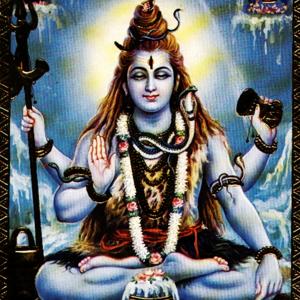


Chanting Śiva-sahasranāmam, the thousand names of Lord Śiva, offers numerous benefits to devotees. It helps to eliminate sins, leading to spiritual purification. Regular recitation can lead to liberation from the cycle of birth and death. Chanting also aids in the fulfillment of desires and manifests blessings from Lord Śiva. It enhances spiritual knowledge and understanding of the divine. The practice provides protection, instills fearlessness, and cultivates devotion and love for Lord Śiva. Engaging in this practice with sincerity and reverence brings spiritual growth and a closer connection with the divine.
Śrī Śiva-Sahasranāmam Introduction Transcription
NEW! Complete transcriptions of all our videos:
Get deep answers to your spiritual questions from our Genie AI
In the Mahābhārata, during Bhīṣma's final moments, Upamanu was chosen as the reciter of the thousand names of Lord Śiva. Upamanu had obtained these names directly from Lord Śiva himself through severe austerities. This divine knowledge made him the most qualified reciter among the assembled personalities. The Śiva-sahasranāmam is a sacred compilation of these thousand names, each representing a divine aspect of Lord Śiva. Studying and chanting these names can invoke blessings and deepen one's connection with Lord Śiva.
Śrī Śiva-Sahasranāmam Introduction Transcription
NEW! Complete transcriptions of all our videos:
Get deep answers to your spiritual questions from our Genie AI
In the introduction to Śiva-sahasranāmam, Sage Upamanyu conveys that the glory of Śiva cannot be fully expressed through language. Language is merely a symbol for something, and repeating words or labels cannot capture the essence or qualities of the object they represent. To truly understand and appreciate Śiva, one must directly connect with the divine presence beyond linguistic expressions.
Śrī Śiva-Sahasranāmam Introduction Transcription
NEW! Complete transcriptions of all our videos:
Get deep answers to your spiritual questions from our Genie AI
Upamanyu was chosen to recite the Śiva-sahasranāma during Bhīṣma's departure due to his qualifications and spiritual prowess. He was a renowned sage and disciple of Sage Vyāsa, known for his deep knowledge of scriptures. The recitation of the Śiva-sahasranāma was a sacred ritual to honor Lord Śiva, and Upamanyu's selection showcased his devotion and ability to invoke the divine. The event symbolized the spiritual themes in the Mahābhārata and emphasized the significance of devotion and divine connection in the characters' lives.
Śrī Śiva-Sahasranāmam Introduction Transcription
NEW! Complete transcriptions of all our videos:
Get deep answers to your spiritual questions from our Genie AI
Namaste 🙏 So in the previous series—which you should watch if you haven’t—we talked about how we can create a metaphor, an image or a concept of a universal AI. We call it the GodGPT. And like any GPT class AI, you give this a prompt and it replies. But instead of replying with words like an ordinary human GPT, it replies with states of being and consciousness.
Śrī Śiva-Sahasranāmam Introduction Transcription
NEW! Complete transcriptions of all our videos:
Get deep answers to your spiritual questions from our Genie AI
In the first three lines of each verse, every word represents one of the sacred names of Śiva. Each of the five verses follows this pattern, with only the last line offering some explanatory context. Let's delve into each verse and explore their meanings together.
Śrī Śiva-pañcakṣara-stotram text (85 KB PDF)
The process of manifestation involves more than simply wishing for something. It requires a balanced approach that combines focused intention, aligned action, and an understanding of underlying beliefs and patterns. When applying the concept of GodGPT, the impressions and attitudes we absorb during the day become prompts that influence our thoughts and beliefs. By clarifying desires, setting empowering intentions, aligning beliefs, taking inspired action, practicing gratitude, and trusting the process, we can enhance our ability to manifest our goals effectively. Manifestation is a co-creative process that involves aligning our energy, thoughts, and actions with our desires, and it can lead to a more fulfilling life.
GodGPT Series Transcription
NEW! Complete transcriptions of all our videos:
Get deep answers to your spiritual questions from our Genie AI
Consciousness is the subjective awareness of ourselves and the world around us. It encompasses our thoughts, emotions, sensations, and perceptions. Understanding and exploring consciousness can lead to personal growth, self-realization, and self-transcendence. Different disciplines and traditions offer their own perspectives on consciousness, such as seeing it as a universal force or studying its neural correlates in science. While consciousness provides insights, it may not explain every detail of fields like science, politics, or economics on its own. The exploration of consciousness can be a transformative journey that offers insights into our being and the nature of reality.
GodGPT Series Transcription
NEW! Complete transcriptions of all our videos
Get deep answers to your spiritual questions from our Genie AI
In a conversation, someone claimed that the four states of consciousness are sequential, but they didn't provide a source or respond to a question about where they got that idea. The origin of their belief is unclear. It's possible that they misunderstood or simplified the concept of states of consciousness, perceiving them as a linear progression rather than a more nuanced and interconnected phenomenon. This misunderstanding could be due to a lack of experience in self-observation, limited exposure to different perspectives, or challenges in expressing complex ideas through language. Misinterpretations and misconceptions are common in any field of study, including consciousness. It's important to encourage open dialogue, share knowledge, and explore diverse viewpoints to deepen our understanding of this complex topic.
GodGPT Series Transcription
NEW! Complete transcriptions of all our videos
Get deep answers to your spiritual questions from our Genie AI
The concept of GodGPT serves as a metaphor for understanding the workings of God in the context of bhakti-sādhana. It suggests that God responds to our prompts not with words, but through states of being and consciousness. Bhakti, or devotion, is compared to cultivating svapna consciousness, which refers to a dreamlike awareness of the divine. In this state, the responses from GodGPT are experienced as transformative states of being, visions, insights, and a deep sense of connection with the divine. Through devotional practices, we nurture this svapna consciousness and open ourselves to the subtle and profound ways in which the divine communicates with us. The ultimate goal is to deepen our connection with the divine and awaken the svapna consciousness within us.
GodGPT Series Transcription
NEW! Complete transcriptions of all our videos:
Get deep answers to your spiritual questions from our Genie AI
From the publisher's feed