
Sign up to save your podcasts
Or



“Death told him of the Fire that is the source of the world, the class and number of bricks, as also the manner of arranging the fire. And Naciketā repeated verbatim, with understanding, all these as they were spoken. Then being satisfied with this, Death said:
The categories of consciousness etc. described in the Upaniṣads form the background for the entire Vedas. Your consciousness, thinking, meditation and realization are only as good as your ontology. Thus, having a correct ontology of consciousness and being is crucial to success in Self-realization. Here we present our root ontology of consciousness and existence, which we have found to be very useful in researching, practicing, realizing and presenting the Upaniṣads.
Thanks to Śrīpad Śaṅkarācārya's amazing commentary on Kaṭhopaniṣad, we were blessed with a deep insight that resolved an issue over 38 years old. Now our model of consciousness and Self-realization is finally complete and fully-functional, and we have completely recovered the state that was revealed by Śakti at the time of our First Path realization in 1984.
After the last video, "What Is, Is; What Ain't, Ain't" I needed a break. I decided to wait and see if anyone responded appropriately. That finally happened, so this is the next step in the dialogue.
A deep analysis by Śrīpad Śaṅkarācārya of Bhagavad-gītā 2.16. We study the verse in the traditional Upāniṣadik style with call-and-response chanting.
That fire which is the means for the attainment of heaven and which is the support of the world, know it to be established in the intellect of the enlightened ones.
NEW! Complete transcriptions of all our videos:
Get deep answers to your spiritual questions from our Genie AI
You are not there, and nobody is struck with fear because of old age. Having transcended both hunger and thirst and crossed over sorrow, one rejoices in the heavenly world.
NEW! Complete transcriptions of all our videos:
Get deep answers to your spiritual questions from our Genie AI
We see the nobility of these characters, death and Nachiketa, that Nachiketa came voluntarily to the house of death. And so, death is treating him as an honored guest. Because, as we'll see as the story unfolds, Nachiketa is also extremely noble and has a fine character. And this will become obvious from the nature of the boons.
NEW! Complete transcriptions of all our videos:
Get deep answers to your spiritual questions from our Genie AI
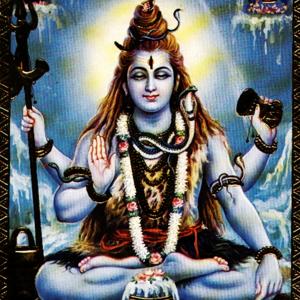
Finally death speaks. And what kind of a person is he? What kind of a being is he?Well, first of all, he's an expansion of Shiva. Shiva as Ta gives distress to people by taking away their lives. But the problem is we created these lives in the first place, we fabricated them. So by the law of nature, what goes up, what will come down, what was made will become unmade. Who is born will also die. That's the law of the universe, that's the law of time.
NEW! Complete transcriptions of all our videos:
Get deep answers to your spiritual questions from our Genie AI
The scene shifts suddenly from the sacrifice, the sacrificial arena, where Nachiketa's father tells him, I send you, I give you unto death.
And there's no explanation in the text, but Shankara Acharya explains, drawing information from subsequent shlokas, that he has been waiting there for three days because death was out on some errand. And so when death returns, his advisors or wives are speaking to him about the danger of having a brahmana in the house without serving him.
NEW! Complete transcriptions of all our videos:
Get deep answers to your spiritual questions from our Genie AI
From the publisher's feed