
Sign up to save your podcasts
Or

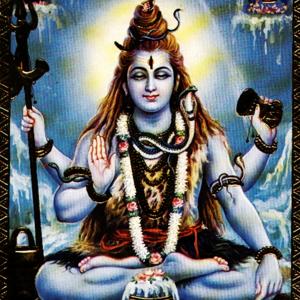


An easy version of Śrī Śiva-pañcāksara-stotram with English synonyms.
In this video, Dev Bhagavān talks about the Śiva-mahāmantra, which is the basis and foundation of worship of Śiva. The mantra ĀŪṀ Namaḥ Śivāya is mentioned in the Śiva Purāṇa and other similar works as the only mantra needed to attain liberation. Dev Bhagavān explains that this mantra is a mahā-mantra, meaning it is so powerful that it fulfills the function of all other mantras. The mantra is simple and easy to practice, and its five syllables correspond to the different parts of ĀŪṀ manifesting as the five faces of Śiva. The speaker discusses the meaning of ĀŪṀ and how each of its five parts expands into one of the syllables of the pañcākṣara-mantra, which shows how ĀŪṀ, how Brahman manifests in the world as Śiva. Dev Bhagavān also explains that mantras that represent or address or symbolize forms of the Lord that appear within the material world, like Rudra, can only get you as far as the subtle parts of the material world, and cannot give liberation.
Śiva-pañcākṣara-stotram YouTube Playlist
Series Transcription
Disciple: “The follower of every religion thinks that his faith, his scripture or his interpretation of it reveals the highest truth, and that they are therefore superior to other faiths, scriptures or interpretations. This notion has contributed much the misfortunes of mankind in this world… Lastly, as regards truth itself, everyone, even a fool, thinks that what he knows is the truth.”
Guru: “What you say may be true with regard to mere religion, mysticism, theology or scholasticism mistaken for philosophy. It may be so with the early or intermediate stages of philosophy itself. But Vedānta, particularly its philosophy, sets before itself the object of finding a truth ‘free from all dispute’ and ‘not opposed to any school of thought or religion or interpretation of scriptures.’ Its truth is independent of sect, creed, colour, race, sex, and belief. And it aims at what is ‘equally good for all beings’.” — Introduction to Māṇḍūkya Upaniṣad
Brahmā said, “O sage, once I along with you saw Satī standing near Her father. She is, as it were, the essence of the three worlds. When She saw both of us honoured and bowed to by Her father, Satī, following the conventions of the world, saluted us with joy and reverence. At the end of obeisance, O Nārada, you and I sat in the fine seat provided by Dakṣa. When She humbly bowed again, I spoke to Her: ‘O Satī, secure as Your husband, the Lord of the universe, the omniscient Śiva who desires only You, and whom You too desire. O auspicious lady, you shall secure as your husband, the person who has not taken, does not take, and will not be taking another wife. He will be unlike others.’
“O Nārada, after saying this to Satī we stayed in Dakṣa’s abode for a long time. We were bidden farewell by him and we went to our respective places. On hearing that, Dakṣa became delighted and free from all worries. Thinking that She was a great Goddess, he took Her with him.
Brahmā said, “In the meantime, O celestial sage, on hearing of the incident I, the grandfather of the worlds, came there. I consoled Dakṣa as before. Clever that I was, I made him friendly with you. O best of sages, I consoled you—my own son, beloved of the devas, and taking you with love, effected conciliation. Then Dakṣa, consoled by me, begot of his wife sixty comely daughters. Without any lassitude he performed their marriages with Dharma and others. O excellent sage, listen to that with pleasure. Dakṣa gave ten of his daughters duly in marriage to Dharma, thirteen to Kaśyapa the sage, and twenty-seven to the Moon. He gave two daughters each to Bhṛgu, Aṅgiras and Kṛśāśva. The other daughters were given to Tārkṣya. The sons and grandsons and descendants of these filled the three worlds. A detailed narration is not attempted here. Some say that Śivā was the eldest of his daughters, some say that She was the middle, and some say that She was the youngest. All the three opinions are correct in different kalpas.
Our experiences in the world are often complex, ambiguous, and ill-defined. We must be able to accommodate conflicting hypotheses. Here is the pertinent adage: “The truest sign of intelligence is the ability to entertain two contradictory ideas simultaneously.” — F. Scott Fitzgerald There are four main states of consciousness—jagrat, svapna, suśupti and turiya—naturally, reality looks very different in each of them. But that doesn't mean any of them are 'wrong'.
The teaching of Māṇḍūkya Upaniṣad Kārikā is called aspārśa-yoga or asleśa-yoga. Aspārśa means disconnected or unrelated, while asleśa means embracing. Thus one who has realized Brahman, the Self, situated in turīya consciousness, adopts the view of ajata-vāda, that the material world is unborn—it doesn't really exist. But that doesn't mean that we try to suppress, deny or ignore it; instead we should embrace and accept it, but without attachment or identification.
“No jīva is ever born. There does not exist any cause that can produce it. This is the highest Truth, that nothing is ever born.” —Māṇḍūkya Upaniṣad Kārikā 3.48
“All these ideas regarding the discipline of the mind, evolution resembling the creation of forms from iron and clay, as well as ideas regarding devotional practices, are given as means to realization of the nature of Ultimate Reality. They have, in themselves, no meaning whatsoever. The Truth regarding Ultimate Reality is that no jīva is ever born. The individual jīva, whom one knows empirically as the agent and the enjoyer, is not born in any way whatsoever. Therefore, no cause can ever exist which may produce the Ātman which is, by nature, unborn and nondual. In other words, no jīva can ever be born, as the cause which may produce it does not exist. Of all the relative truths described in Scriptures as means for realization of Ultimate Reality, this alone is the Supreme Truth: that nothing whatsoever is ever born in or of that Brahman, which is of the nature of Ultimate Reality.” — Śaṅkarācārya’s Commentary ơn Māṇḍūkya Upaniṣad Kārikā 3.48
In this chapter about the early days of the universe, the shift is made from creating offspring by mental power to sexual reproduction. Brahmā gives Dakṣa a wife and urges him to create many sons by coitus. This was a new thing in the early days of the universe.
Nārada said, “O Brahmā of great intelligence, O eloquent one, please tell us what happened after Dakṣa went home with great delight.”
Brahmā said, “Dakṣa Prajāpati returned with pleasure to his hermitage and began mental creations at my bidding. On seeing the creation not increasing in size, Dakṣa Prajāpati informed me, his father Brahmā.”
Dakṣa said, “O Brahmā, lord of subjects, these subjects are not flourishing. They are conceived by me but they remain stationary. O lord of subjects, what shall I do? How can they flourish themselves? Please instruct me in the means thereof. I shall certainly create subjects.”
Brahmā said, “O Dakṣa Prajāpati, listen to my weighty words and carry out the direction. Śiva will bless you with welfare. O lord of subjects, let Asiknī, the beautiful daughter of Pañcajana, the lord of five tribes, be taken by you as your consort. Indulging in sexual intercourse you can create subjects many in number in a beautiful woman like her.” Then, in order to procreate subjects by way of coitus, he married the daughter of Vīraṇa at my bidding.
From the publisher's feed