
Sign up to save your podcasts
Or

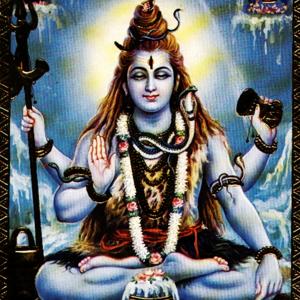


This chapter is pivotal to the entire Khaṇḍa. In it, Brahmā's foolish egoistic grudge against Rudra grows into a curse. Goddess Kālikā agrees to become Dakṣa's daughter and marry Śiva, on the condition that he does not disrespect Her. No one—not even Brahmā—can avoid the consequences of their actions.
“This highest bliss is based upon the realisation of Self; it is peace, identical with liberation, indescribable and unborn. It is further described as the omniscient Brahman, because it is one with the unborn Self, which is the object sought by realized knowledge.” —Māṇḍūkya Upaniṣad Kārikā 3.47
“This bliss, which is the highest Reality characterised by realization of Ātman, is centered in the Self. It is all peace, characterised by the cessation of all evils and suffering. It is the same as liberation. It is indescribable: nobody is able to describe it, for it is totally different from all objects. This ultimate bliss is directly realized by the perfect yogīs. It is unborn because it is not produced, like anything resulting from empirical perceptions. It is identical with the Unborn Self, which is the object sought by Knowledge (jñāna). The Knowers of Brahman describe this bliss verily as the omniscient Brahman, as it is identical with that Reality which is omniscient.” — Śaṅkarācārya’s Commentary ơn Māṇḍūkya Upaniṣad Kārikā 3.47
Nārada said, “O Brahmā, O sinless and intelligent one, you have splendidly narrated the story of Śivā and Śiva. My life has been sanctified. This is conducive to my benefit. Now please tell me, what was the boon that Dakṣa, with steady sacred rites and austere penance, secured from the Goddess, and how She became Dakṣa’s daughter?”
Brahmā said, “O Nārada, listen. You are blessed. You are revered by all sages with devotion. Hear how with good sacred rites, Dakṣa performed penance and secured boons. At my bidding, intelligent Dakṣa the great chief controlled his mind and went to worship the Goddess, the Mother of the universe, with that cherished desire. He went to the northern shore of the ocean of milk and began to perform the penance, keeping the Mother of the universe in his heart. He wished to see the Goddess in person. For 3,000 divine years he performed the penance with good sacred rites, controlling his mind and keeping himself pure. For some years, he sustained himself on taking in only air, abstaining from food, and for some years taking only water and for some years taking only leaves as food. Thus he spent the time meditating upon the Goddess in cosmic form.
“When the mind does not merge in the inactivity of oblivion, or become distracted by desires—that is to say, when the mind becomes quiescent and does not give rise to appearances, it verily becomes Brahman.” —Māṇḍūkya Upaniṣad Kārikā 3.46
“When the mind, brought under discipline by the above-mentioned methods (the practice of knowledge and discrimination), does not fall into the oblivion of deep sleep, nor is distracted by external objects—that is, when the mind becomes quiescent like the flame of a lamp in a windless place—in this steady condition the mind realizes the nondual Brahman alone everywhere. Or when the mind does not appear in the form of an object—when it is seen that the external objects are nothing but the activities of the mind itself—the mind endowed with these characteristics verily becomes Brahman.” — Śaṅkarācārya’s Commentary ơn Māṇḍūkya Upaniṣad Kārikā 3.46
“The mind should not be allowed to enjoy the bliss that arises out of samādhi. It should be freed from attachment to such happiness through the exercise of discrimination. If the mind, once attaining to the state of steadiness, seeks externality, then it should be unified with the Ātman again, with effort.” —Māṇḍūkya Upaniṣad Kārikā 3.45
“The aspirant should not taste the happiness experienced by yogīs seeking after samādhi. He is not to be attached to that happiness. What then should he do? He should become unattached to such happiness by knowledge through discrimination, and think that whatever happiness is experienced is false—conjured up by ignorance. Thus the mind should be turned back from such happiness. When, once being withdrawn from happiness and fixed on the state of steadiness, if the mind again manifests its outgoing propensities, then control it by adopting the above-mentioned means; and with great care, make it one with Ātman—make the mind attain the condition of pure existence and thought.” — Śaṅkarācārya’s Commentary ơn Māṇḍūkya Upaniṣad Kārikā 3.45
In these chapters, Brahmā finally gets some good sense and approaches Viṣṇu for advice. He tells Brahmā to approach Śakti directly, which of course he could have done all along. But due to being conditioned by rājo-guṇa, the mode of passion, he made so much unnecessary trouble for everyone.
"I bow to that best among men who by means of jñāna (realized knowledge), which is like ākāśa and nondifferent from the object of knowledge—Brahman—realised the nature of the Dharmas (the jīvas) which are also like ākāśa." — Māṇḍūkya Upaṇiṣad Kārikā 4.1
Nārada said, “O Brahmā, dear, of great intellect, please tell me, O most eloquent one. When Viṣṇu went away what happened? O what did you do?”
Brahmā said, “O brāhmaṇa, best of my sons, listen attentively to what I did when lord Viṣṇu went away. I began a continuous laudatory prayer of the Goddess Durgā, the beloved of Śiva, the creator of the universe, of the nature of vidyā and avidyā, and identical with the pure supreme Brahman:
‘I salute the Goddess who is omnipresent, eternal, for whom there is no support, who is never distressed, who is the Mother of the three deities, who is the grossest of the gross and yet has no form. O Goddess of the devas, you are Perfect Knowledge, Supreme Bliss, identical with the Supreme Soul. Be pleased. Grant me the fulfilment of my task. Obeisance to You.’
O celestial sage, on being thus lauded Caṇḍikā, the mystic slumber, appeared before me. Her complexion had the glossy hue of collyrium. She had comely features. She had four divine arms. She was seated on a Lion. She showed the mystic gesture of granting boons by one of her hands, and pearls adorned Her dishevelled hair.
“If the mind becomes inactive in a state of oblivion, awaken it again. If it is distracted, bring it back to the state of tranquillity. In the intermediary state, know the mind containing within it desires in potential form. If the mind has attained to the state of equilibrium, then do not disturb it again.” —Māṇḍūkya Upaniṣad Kārikā 3.44
“When the mind is immersed in oblivion (samādhi or suśupti) then arouse it by means of knowledge and detachment. That is to say, turn the mind to the exercise of discrimination, leading to knowledge of the Self. The word citta in the text means manas or mind. If the mind is distracted by various objects of desire, bring it back to the state of tranquillity. When, by constant practice, the mind is thus awakened from the state of inactivity and also turned back from all objects, but not yet established in equilibrium—when the mind dwells in an intermediary state—then know the mind to be possessed of attachment. It still contains seeds of desires for enjoyment and inactivity. With great care, bring the mind from that state to the realisation of equilibrium. Once the mind has realised the state of equilibrium, or when it is on the way to realise that state, then do not disturb it again. In other words, do not turn it to external objects by attachment.” — Śaṅkarācārya’s Commentary ơn Māṇḍūkya Upaniṣad Kārikā 3.44
“The mind should be turned back from the enjoyment of pleasures, remembering that all this is attended with misery. If it be remembered that everything is the unborn Brahman, the born duality will not be seen.” —Māṇḍūkya Upaniṣad Kārikā 3.43
“What is the way of disciplining the mind? Remember that all duality is caused by avidyā or illusion, and therefore afflicted with misery. With this thought, dissuade the mind from seeking enjoyment produced by desires. In other words, withdraw the mind from all dualistic objects by impressing upon it the idea of complete nonattachment. Realize the teachings of the śāstra and the ācāryas that all this is verily changeless Brahman. Then you will not see anything to the contrary—duality—for it does not exist.” — Śaṅkarācārya’s Commentary on Māṇḍūkya Upaniṣad Kārikā 3.43
From the publisher's feed