
Sign up to save your podcasts
Or

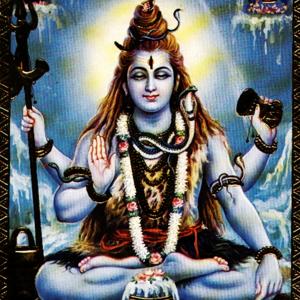


Nārada said, “O Brahmā, the fortunate, the dispenser of the fruits of our actions, you are a blessed devotee of Śiva, as your mind is fixed in Him. You have narrated to me the good story of Śiva, the great soul. When Kāma returned to his hermitage with Rati and his followers, what happened and what steps did you take? Please narrate that now.” Brahmā said, “O Nārada, listen lovingly to the story of the moon-crested Lord, the mere listening to which makes a man free from depravity and decay. When Kāma returned to his abode with Rati and his followers, what happened next you can hear from me in full detail. O sage Nārada, my arrogance was quashed when my desire remained unrealised. And surprise filled my dissatisfied and distressed heart. How will Śiva, who is free from depravity, who has conquered Himself and who is devoted to yogik practices, take a wife unto Himself? Thinking thus I bewailed a lot.
In the process of trying to settle his grudge against Śiva for his perceived insult, Brahmā also inflicted the wiles of Kāma, Rati and Vasanta on all living beings. As a result, everyone in the material world is bewildered by lust.
“The mind distracted by desires and enjoyments, as also the mind enjoying pleasure in oblivion (trance-like condition of samādhi) should be brought under discipline by the pursuit of proper means. For the state of oblivion is as harmful as desires.” —Māṇḍūkya Upaniṣad Kārikā 3.42
“One practising yoga meets with four kinds of obstacles that block realization of the Highest Reality: lāya (a state of oblivion—yogik samādhi or deep sleep), vikṣepa (distraction), sukha (happiness in temporary success) and rāga (attachment to a particular phase of realization). The mind should be trained to avoid these obstacles. The means are described in the next Kārikā.” — Śaṅkarācārya’s Commentary on Māṇḍūkya Upaniṣad Kārikā 3.42
Brahmā said, “O great sage, when Kāma went to Śiva’s abode along with his attendants an adversely surprising incident occurred; please listen. After going there, the heroic Kāma competent to enchant others, spread all his wiles and charmed all living beings. O sage, Spring too showed his prowess in order to delude Śiva. All the trees simultaneously bloomed. Kāma and Rati played many a trick. All living beings fell victims of their wiles but not Śiva, the Lord of Gaṇas. O sage, the efforts of Kāma accompanied by Spring were futile. He returned to his residence, being cured of his arrogance. O sage, Kāma saluted me, and bereft of arrogance and completely despondent, he told me in faltering voice:
Sūta said, “After hearing the words of Prajāpati Brahmā, Nārada became delighted in his mind and spoke these words:”
Nārada said, “O Brahmā, O great disciple of Viṣṇu, endowed with great intellect, you are a blessed devotee of Śiva and a guide to the understanding of the great principle. You have narrated the divine story of Arundhatī and her previous form as Sandhyā. It increases our devotion to Śiva. Now, O knower of virtue, please tell me the excellent story of Śiva, that quells all sins and is very excellent bestower of all auspicious benefits. When Kāma was delighted after taking a wife to himself, when Sandhyā had gone to perform penance and when others had also left, what happened?”
Sūta said, “On hearing the words of that sage of magnanimous soul, Brahmā became more pleased and spoke as follows:”
These chapters tell the story of Sandhyā, the first female born in the universe, who later because Arundhatī, the wife of Vasiṣṭha, one of the seven sages (saptaṛṣi). The name Arundhatī in Sanskrit literally means 'washed from the rays of sun', from arun 'sun rays', and dhatī , 'washed'. She is the grandmother of Parāśara and the great-grandmother of Vyāsa. Śiva Purāṇa describes her as Sandhyā, the mind-born daughter of Brahmā. On instruction of Vasiṣṭha, Sandhyā pleased Śiva by penance in order to purify herself from passion. She was then born as Medhātithi's daughter and married Vasiṣṭha. Arundhatī is identified with the star Alcor, which forms a double star with Mizar (identified as Vasiṣṭha Mahaṛṣi) in Ursa Major.
Brahmā said, “O sage, when Śiva vanished after granting her the boons, Sandhyā too went to the place where Medhātithi was performing sacrifice. She entered the sacrificial hall without being observed by anyone, thanks to Śiva’s favour. She recalled to her memory the brāhmaṇa boy who had instructed her in the procedure of penance. O great sage, at the bidding of Brahmā, Vasiṣṭha had assumed the guise of a brāhmaṇa boy and instructed her in the rites of penance. Meditating on that Brahmacārin, her tutor in the mode of austerities, Sandhyā thought of him as her future husband, and entered the blazing sacrificial fire unobserved by the sages. She was delighted that it was by Śiva’s favour that she could enter the sacrificial fire. Her body itself had become sacrificial offering in that sacrifice. When it was burnt, it could not be distinguished from the ordinary puroḍāśā since it too had the same fragrance. At the bidding of Śiva, the god of fire sent forth her body to the pure zone of the sun. The sun severed her body into two halves and placed the same on his own chariot for the propitiation of the pitṛs and devas.
Brahmā said, “O best of my sons, O intelligent one, listen to the description of the great penance of Sandhyā, on hearing which, sins are quelled instantly. When Vasiṣṭha went back to his abode after instructing her in the rites of penance, Sandhyā was greatly pleased on learning the procedure of penance. Putting on the dress of a person of blissful mind, she began to perform penance on the bank of Lake Bṛhallohita. She worshipped Śiva with the mantra taught by Vasiṣṭha as the adjunct of penance, in the manner explained by him. A period of four yugas elapsed, during which she continued her great penance, with mind fixed and duly concentrated on Śiva. Propitiated by her penance, Śiva was greatly delighted. He revealed Himself to her within and without, as well as in the heavens. Śiva became visible to her in the form in which she was meditating upon Him.
“The yogīs who do not follow the method of jñāṇa-yoga as described in this Kārikā depend on control of their mind for fearlessness, destruction of misery, knowledge of Self and eternal peace.” —Māṇḍūkya Upaniṣad Kārikā 2.40 "O Kṛṣṇa, the mind verily is restless, turbulent, strong and obstinate. The restraint thereof I deem quite as difficult as that of the wind." — Bhagavad-gītā 6.34 "Whoso meditates on the Sage, the Ancient, the Ruler, smaller than an atom, the Dispenser of all, of unthinkable nature, glorious like the Sun, beyond the darkness, whoso meditates on such a Being at the time of death, with a steady mind endued with devotion and strength of Yoga, well fixing the life-breath betwixt the eyebrows, be reaches that Supreme Resplendent Puruṣa." — Bhagavad-gītā 8.9-10
From the publisher's feed