
Sign up to save your podcasts
Or

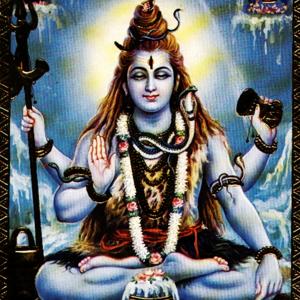


"We worship the three-eyed One (Śiva), who is fragrant and who nourishes all. Like the fruit falls off from the bondage of the stem, may we be liberated from death, from mortality." — Mahā-mṛtyunjāya-mantra
“This yoga, which indeed is called unrelated to anything, is hard to attain by all yogīs in general. The yogīs are afraid of it, for they see fear in it where there is really fearlessness.” —Māṇḍūkya Upaniṣad Kārikā 2.39
On hearing these words of Brahmā, the excellent sage remembered Śiva with a delighted heart and spoke joyfully. Nārada said, “O Brahmā, the fortunate disciple of Viṣṇu, O intelligent one, you have narrated the wonderful divine sports of the moon-crested Lord. After Kāma had married and gone to his residence when all of you—you the creator, Dakṣa and the mental sons—had all gone to your respective abodes, where did Sandhyā, the daughter of Brahmā and the mother of the Pitṛs, go? What did she do? Who married her? Please tell me all about it, and particularly the account related to Sandhyā.” Sūta said, “On hearing these words of his intelligent son, Brahmā, who knew the real situation, remembered Śiva and said, “O sage, listen to the auspicious story of Sandhyā, on hearing which ladies do always become chaste.
Poor Lord Brahmā: he's made of passion through and through, and yet so powerful that whatever he thinks automatically is created—a dangerous combination! He's always getting in trouble because of this, and this story of the creation of Kāmadeva is a perfect example.
Nārada said, “O lord Brahmā, O Viṣṇu’s disciple of great intellect, O creator of the world, you have narrated a wonderful story consisting of the nectar of Śiva’s divine sports. O dear one, what happened thereafter? Please tell me now. I am all attention to a narrative based on Śiva’s life.” Brahmā said, “When Śiva had gone back to His place and I, Brahmā had vanished from the scene, Dakṣa remembered my words and spoke to Kāma. Dakṣa said, “O Kāma, this girl is born of my body. She is endowed with beauty and good qualities. She fits you admirably. Take her as your wife. This powerful girl shall ever be under your righteous control, and shall be your constant companion as long as you wish.” Brahmā said, “Saying so, he presented to him the girl born of his sweat after naming her Rati.
“Seeing the Truth of what exists internally, as well as the Truth of what exists externally, he becomes one with Truth, derives pleasure from it, and never fails to be situated in Truth.” —Māṇḍūkya Upaniṣad Kārakā 2.38 Don't be lazy. Avoid show-bottle counterfeits. Study the original texts. Do the sādhana and get the result.
Brahmā said, “Then those sages, my sons—Marīci and others who understood my view—gave him suitable names. Dakṣan and others who understood other facts on seeing my face, gave him a suitable place and a wife. The brāhmaṇas Marīci and others, my sons, decided on suitable names for the Being and said thus “Since at your nativity itself you have begun to torment and bedevil our minds and that of Brahmā too, you will be famous in the world as Manmathā. You will be able to assume any form you wish. Hence, O mind-born God, you will be known as Kāma too. There is no one equal to you. Causing elation in others you will be known as Madana. Since you were haughty even as you were born, you will be called Darpaka, and your name Kandarpa will also become popular in the world.
Sūta said, “O residents of Naimiṣa forest, after hearing Brahmā’s words, the excellent sage further requested him for more such stories that quell sins.” Nārada said, “O Brahmā, O great lord, though continuously hearing the auspicious story of Śiva from your lotus-face I am never satisfied. Please further narrate the auspicious story of Śiva entirely. I wish to hear that story in which Satī is glorified, O Brahmā. How was the auspicious Satī born of Dakṣa’s wife? How did Śiva become inclined to marry Her? How did She cast off Her body formerly, due to Her rage with Dakṣa? How was She born as the daughter of Himālaya and how did She reach heaven again? How was Her rigorous penance performed? How was Her marriage celebrated? How did She happen to share half the body of Śiva? Please explain all these points in detail, O intelligent one. There is none else to remove my doubts, and none shall ever be like you.”
Human knowledge and intelligence are limited. We cannot know when a specific apple will fall off a particular tree. We can only predict such things in aggregate, by statistics—and even then, there is always some error. Similarly in spiritual life, we cannot know for certain the effect of a particular spiritual practice upon a specific individual. Anyone who says we can is bluffing.
Nārada said, “O Brahmā, thanks to Śiva’s favour, you know everything. You have narrated to me the wonderful stories of Śiva and Pārvatī. O lord, I am never fully satiated by hearing the great story of Śiva from your lotus-like face. I wish to hear further the same. As explained by you, Rudra is the complete manifestation of Śiva. He is the great Lord whose abode is Kailāśa. He is a yogin of perfect control. He is worthy of being propitiated by all devas—Viṣṇu and others. He is the final goal of all good men. He is free from dvandvas—mutually clashing opposites. The great Lord never undergoes any change, yet indulges in His divine sports. He became a householder again after marrying the noble Lady Maṅgalā at the request of Viṣṇu when She performed penance. At first She was born of Dakṣa and later of Himālaya. How could She be the daughter of both with the same body? How did Satī become Pārvatī and attain Śiva again? O Brahmā, please explain all these and other points relating to His episode.”
Spiritual life should be fun. There, I said it! If it's boring, dry, if there's pressure to perform, a daily grind—something is very wrong. "This knowledge is the king of education, the most secret of all secrets. It is the purest knowledge, and because it gives direct perception of the self by realization, it is the perfection of religion. It is everlasting, and it is joyfully performed." —Bhagavad-gītā 9.2
From the publisher's feed