
Sign up to save your podcasts
Or

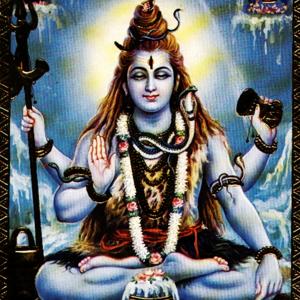


These last two chapters in Sṛṣṭikhaṇḍa about Creation describe the first-order creation of the universe by Brahmā and Viṣṇu.
“O Nārada, after performing the pentuplication of the bhūtas—elements and their attributes sound etc.—I evolved the gross elements—space, wind, fire, water and the earth—out of them, and created mountains, seas, trees etc. and the periods of time ending with Kali, and other ages. I created many other things as well; but O sage, I was not satisfied. Then O sage, I meditated on Śiva and His consort Ambā, and created aspirants. I created Marīci from my eyes, Bhṛgu from my heart; Aṅgiras from the head, and the great sage Pulaha from the vital breath vyāna. I created Pulastya from udāna; Vasiṣṭha from samāna; Kratu from apāna; Atri from the ears, and Dakṣa from the prāṇa. I then created you from my lap, and the sage Kardama from my shadow. Finally, out of my conception, I created Dharma, which is the means for the achievement of everything. O foremost among sages, creating these excellent sādhakas, thanks to the favour of Mahādeva, I became contented.
The big issue for me these days is the meaning of my recent spiritual experiences with Śiva. In any view they are extraordinary; but what is their real significance?
Nārada said, “O creator, O Brahmā the fortunate, you are blessed, O foremost among devas. A wonderfully sanctifying story of Śiva has been narrated by you today. I have heard the wonderfully divine story of the origin of the liṅga, the auspicious hearing of the efficacy of which destroys all miseries here. Please narrate what transpired thereafter, the grandeur of the created things, and particularly the mode of creation.” Brahmā said, “You have requested very pertinently. I shall briefly narrate what transpired later as I have heard before. When the eternal Lord Śiva vanished, O chief of brāhmaṇas, Viṣṇu and I in a very happy mood withdrew our forms of Swan and Boar, and wished for creation and sustenance of the worlds.”
“If the mind becomes inactive in a state of oblivion, awaken it again. If it is distracted, bring it back to the state of tranquillity. In the intermediary state, know the mind containing within it desires in potential form. If the mind has attained to the state of equilibrium, then do not disturb it again.” —Māṇḍūkya Upaniṣad Kārikā 3.44 “When the mind is immersed in oblivion (samādhi or suśupti) then arouse it by means of knowledge and detachment. That is to say, turn the mind to the exercise of discrimination, leading to knowledge of the Self. The word citta in the text means manas or mind. If the mind is distracted by various objects of desire, bring it back to the state of tranquillity. When, by constant practice, the mind is thus awakened from the state of inactivity and also turned back from all objects, but not yet established in equilibrium—when the mind dwells in an intermediary state—then know the mind to be possessed of attachment. It still contains seeds of desires for enjoyment and inactivity. With great care, bring the mind from that state to the realisation of equilibrium. Once the mind has realised the state of equilibrium, or when it is on the way to realise that state, then do not disturb it again. In other words, do not turn it to external objects by attachment.” — Śaṅkarācārya’s Commentary ơn Māṇḍūkya Upaniṣad Kārikā 3.44
The sages said, “O disciple of Vyāsa, O fortunate one, please explain to us authoritatively the fruits granted by Śiva for worship with different flowers.” Sūta said, “O sages, Saunaka and others, please listen attentively. I shall lovingly explain to you the mode of offering flowers, which is the same as Brahmā explained to Nārada at his request.” Brahmā said, “A person desirous of wealth shall worship Lord Śiva with lotuses, Bilva leaves, petals of lotuses or with Śaṅkha flowers. O brāhmaṇa, if a devotee worships Śiva with a hundred flowers, his sins shall be wiped off and the devotee shall become rich. Twenty full lotuses constitute one prastha measure. A thousand Bilva leaves constitute half a prastha. Petals of lotuses, a thousand in number constitute half a prastha. Ten ṭaṅka weight constitutes one pala, and sixteen palas make one prastha. Flowers for worship shall be weighed in the balance according to this calculation. The worship thus duly performed shall accord all cherished desires. If the devotee worships with no specific desires, he will become Śiva Himself.
It's 38 years to the day from the beginning of the solo meditation retreat that led to First Path realization. The story since then...
O sages, O devas, listen. Now I shall explain a mode of worship than which there is no better one and which is conducive to the achievement of all happiness and cherished desires. Getting up in the Brahma Muhurta within an hour before dawn one shall remember Siva accompanied by his consort. With palms joined in great devotion and head bent down he shall offer prayers: "O lord of devas, get up, get up. O lord stationed in the heart, get up. O lord of Uma, get up. Confer your auspicious blessings on the entire universe. I know what is virtuous, but I am not inclined to work it up. I know what is unrighteous but I am unable to desist from it. O ivlahadeva, I do everything as prompted by you, stationed in my heart."
This is the most important Spiritual Insights from Śiva Purāṇa yet. If you haven't listened to Chapters 11 & 12 yet, make sure to do it before you hear this.
From the publisher's feed