
Sign up to save your podcasts
Or

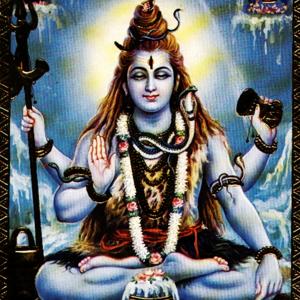


Brahmā said, “O brāhmaṇa, foremost among the celestial beings, you have inquired into a good matter, rendering service to the worlds and desiring their benefit. I shall explain to you the wholesome and salutary principles of Śiva, on hearing which the various sins of the people are destroyed. Neither the principles of Śiva nor His supreme wonderful forms have been understood by me or by Viṣṇu or by anyone else. At the time of Great Dissolution, when all the mobile and immobile objects of the world are dissolved, everything gets enveloped in darkness, without the sun, planets and stars. There is no moon. The day and the night are not demarcated. There is no fire, no wind, no earth and no water. There is no unmanifest primordial being. The whole firmament is one complete void, devoid of all elements. There is no Dharma or Adharma, no sound, no touch. Smell and colour are unmanifest. There is no taste. The face of the quarters is not demarcated.
Sūta said, “O brāhmaṇas, when Viṣṇu vanished, the excellent sage Nārada roamed over the Earth, seeing Śiva Liṅgas in the various holy centres with piety. In the course of his wanderings over the Earth, O brāhmaṇas, with his mind full of devotional pleasure, he saw many forms of Śiva that confer worldly pleasures and salvation on the devotees. On knowing that Nārada of divine vision was wandering over the Earth, the two attendants of Śiva approched him who by that time had become pure in mind. They bowed to him and touched his feet. With a desire to secure release from the curse they spoke to him respectfully.
These chapters describe Nārada's bewilderment by Śiva's Māyā and his deliverance by Śrī Viṣṇu. This is how Śiva operates. He sets someone up and then delivers the payload. Boom! But then He also arranges for one's rescue, and the 1-2-3 combination delivers a powerful spiritual lesson.
The sages said, “Sūta, O Sūta of great intellect, a wonderful tale has been narrated by you. Blessed indeed is the Māyā of Śiva. All mobile and immobile things depend upon it. When the two attendants of Lord Rudra had left at their own will, what did the infuriated Nārada, the sage disquieted by Kāmadeva, do?” Sūta said, ”After cursing the two attendants of Śiva suitably, the sage, still under the earlier delusion, looked into the water and saw that his face was quite normal. It was also due to Śiva’s will. He did not wake from the delusion still again due to Śiva’s will. Thereupon recollecting that it might have been a deception of Hari, he became unbearably infuriated and went to Viṣṇuloka. There he angrily poured abusive words, blazing like a kindled fire, since his wisdom had vanished due to Śiva’s will. Nārada said, ‘O Viṣṇu, You are extremely wicked, deceptive enchanter of the world. You are unable to brook others’ enthusiastic success. You dabble in illusory tactics and Your intentions are always dirty.’
The sages said, “Sūta, O blessed Sūta, disciple of Vyāsa, our obeisance to ye. It is due to thy grace that this wonderful story has been narrated to us, O dear one. Now tell us in detail, what Viṣṇu do after Nārada left Him? And where did Nārada go?” Vyāsa said, “On hearing these words of the sages, Sūta the wise and excellent scholar of Purāṇas remembered Śiva, the cause of different kinds of creation, and replied.” Sūta said, “When Nārada went away casually Viṣṇu, skilful in wielding his Māyā, spread his Māyā as Śiva had willed. On the path taken by the sage He created a big wonderful city. It was a hundred yojanas in extent and surprisingly beautiful. It was far more beautiful than heaven. Many articles were displayed there. Men and women of all four castes stayed there.
Sūta said, “O brāhmāṇas, once Nārada the excellent sage, son of Brahmā was inclined to perform penance, controlling himself very much. There is a very beautiful cave in the Himālaya mountain, near which the celestial river flows rapidly. There was a great hermitage of divine splendour which was resplendent in many ways. Nārada, endowed with divine vision, went there to perform penance. On seeing the hermitage very convenient for penance, the leading sage performed penance for a long time, seated firmly and steadily, keeping silent, controlling the breath and retaining the purity of the intellect. O brāhmāṇas, the sage performed meditation and contemplation wherein the realisation “I am Brahman” is generated, leading to direct perception of Brahman. When the great sage Nārada was thus performing penance, the mind of Indra became excessively agitated, and he trembled.
Śiva Purāṇa Rudra-saṁhitā, Sṛṣṭikhaṇḍa opens with an invocation that mentions the creation. But according to the Māṇḍūkya Upaniṣad, the creation is an illusion. So, why do we need to know about it? Because seeing the creation as illusion happens only in the highest stage of consciousness, turīya; and who can claim to be in turīya? Most of us are in ordinary dualistic consciousness , in which the material creation is seen as real.
1. “I bow to Śiva, the consort of Gaurī, the sole cause of the origin, sustenance and dissolution of the universe, who knows the Reality, who is of endless renown, who is the support of Māyā but is free from Her influence, whose form is incomprehensible, who is unsullied and who is perfect knowledge itself.” 2. “I salute Śiva who is prior to Prakṛti, who is calm and tranquil, the only excellent Puruṣa, who has created this visible universe, and who stays both within and without, like space.” 3. “I salute Śiva, of unmanifest form, who having extended Himself by way of creation, stands in the middle of it, while the worlds move around Him like iron filings round a magnet.”
From the publisher's feed