
Sign up to save your podcasts
Or

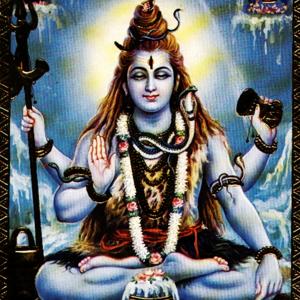


As we near the finale of the Vidyeśvara-saṁhitā, the most important and powerful practices of Śiva-yoga are being discussed. Sincere devotees dedicate themselves to wearing bhasma and rudrākṣa, and chanting the pañcākṣara-mantra. We should never forget the meaning of realizing Śiva, which is transforming our consciousness from the ordinary external jagrat to svapna, the ineffable suṣupti and finally turīya.
The sages said, “O Sūta, Sūta the fortunate disciple of Vyāsa, obeisance to thee. Please explain again the glorification of the holy ashes, of the Rudrākṣa and of Śiva’s names. Lovingly explaining the three, please delight our minds.” Sūta said, “It is good that you have referred to this matter that is highly beneficent to the world. You are blessed, holy and ornaments to your families since you own Śiva as your sole great favourite deity. The anecdotes of Śiva are dear to you all forever. Those who adore Śiva are blessed and content. Their birth is fruitful and their family is elevated. Sins never touch those from whose mouth the names Sadāśiva, Śiva etc. come out forever, as they do not touch the burning charcoal of the khadira wood. The mouth that utters ‘Obeisance to Thee, holy Śiva,’ is on a par with holy centres, destroying all sins.”
The sages said, “O good sage, we have heard before that the offering of naivedya (eatables) made to Śiva should not be taken by others. Please tell us decisively about this, and also about the greatness of Bilva.” Sūta said, ”O sages, all of you please hear now attentively. I shall explain everything with pleasure. All of you who take up Śiva’s sacred rites are really blessed. A devotee of Śiva who is pure and clean, devoutly performing good rites and of fixed resolve certainly shall partake of Śiva’s naivedya. He shall abandon all thoughts which are unworthy of being entertained. Even at the sight of Śiva’s naivedya, all sins disappear. When it is taken, crores of merits flock in, in no time. A thousand sacrifices are of no avail. Hundred millions of sacrifices are useless. When Śiva’s naivedya is eaten, one will attain identity with Śiva. If in a family Śiva’s naivedya becomes popular with the members, that house becomes sacred, and it also can make others sacred.”
The Vidyeśvara-saṁhitā is a compendium of different methods for worshiping Śiva. It is full of valuable suggestions for delighting Śiva. There’s something for everyone, from beginner to most advanced, from King to beggar, from children to renunciants. Take some good advice from Vidyeśvara-saṁhitā and start doing something to please Lord Śiva today with whatever energy, intelligence, resources and time you have. Śiva is unique among gods in that He reciprocates our service immediately. He is just waiting for you to take initiative.
The sages said, “O Sūta, Sūta the fortunate disciple of Vyāsa, obeisances to Thee. Thou hast clearly explained the procedure of the worship of the earthen phallic images. Now kindly explain the number of phallic images as based on the wishes one may have. Thou art favourably disposed to the distressed and the miserable.” Sūta said, “O sages, you listen to the rules of procedure in the worship of the earthen phallic image, by following which a man reaps full satisfaction. If anyone worships another deity without making the earthen phallic image, his worship shall be fruitless. His restraint and charitable gifts go in vain. The number of earthen phallic images in regard to different desires is being stipulated which will, O foremost among sages, certainly yield the benefit. The first invocation, installation and worship are all separate. Only the shape of the phallic image is the same. Everything else is different.”
Sūta said, “Now, the mode of worshipping an earthen phallic image according to the Vaidik rites is being explained. It yields worldly pleasures and salvation to the Vaidik worshippers. The devotee shall take bath in accordance with the rules prescribed in the sacred code. He shall duly perform his sandhyā prayers. After performing the brahma-yajña, one of the five daily sacrifices, he shall perform tarpana (a rite of offering water oblation to the manes). After finishing the daily rites he shall apply ashes and wear rudrakṣa, all along remembering Lord Śiva. With great devotion he shall then worship the excellent earthen phallic image according to Vaidik injunctions in order to realise the full benefit. The worship of the earthen phallic image shall be performed on the bank of a river, or a tank, or on top of a mountain, or in a forest, or in a Śiva temple. It must be in a clean place.”
The sages said, “O Sūta, Sūta, be long-lived. Thou art a blessed devotee of Śiva. The greatness of Śiva’s phallic image in according excellent benefit has been well explained by you. Now speak about the greatness of the earthen phallic image of Śiva which is far superior to all others.” Sūta said, “O sages, all of you please listen with great devotion and respect. Now I am going to speak on the greatness of the earthly phallic image of Śiva. The earthly phallic image of Śiva is the most excellent of all such images of Śiva. Many brāhmāṇas have achieved great things by worshipping it. O brāhmāṇas, Hari, Brahmā, Prajāpati and other sages have attained all they desired by worshipping this earthly phallic image. Devas, Asuras, men, Gandharvas, serpents, Rākṣasas and many others have attained greatness by worshipping it.”
Chapter 18 is about bondage and liberation, and the means of liberation. A jīva is said to be in bondage if he is tied up by the noose of the eightfold primary tattvas: prakṛti etc. When freed from them he is called liberated. Perfect control and subjugation of prakṛti and its offshoots is mokṣa (salvation). A jīva when freed from bondage is called a liberated soul. The set of eight that binds is: prakṛti, buddhi (cosmic intellect), ahaṁkāra (cosmic ego) of the nature of attributes, and the five tanmatras—the cosmic principles of earth, water, air, fire and space.
“Turīya is not that which is conscious of the internal (subjective) world, nor that which is conscious of the external (objective) world, nor that which is conscious of both, nor that which is a mass of all sentiency, nor that which is simple consciousness, nor that which is insentient. (It is) unseen (by any sense organ), not related to anything, incomprehensible (by the mind), uninferable, unthinkable, indescribable, essentially of the nature of consciousness constituting the Self alone, the negation of all phenomena, the Peaceful, all-Bliss and Non-dual. This is what is known as the fourth: turīya. This is the Ātman and it is to be realised.” —Māṇḍūkya Upaniṣad, Mantra 7 Download Māṇḍūkya Upaniṣad: https://archive.org/download/mandukyaupanishadswaminikhilanandar.k.mutt1936_202003_845_e/Mandukya%20Upanishad%20%20Swami%20Nikhilananda%20R.K.%20Mutt%201936_text.pdf
“(The third is) the state of deep sleep wherein the sleeper does not desire any objects nor does he see any dream. The third quarter is the prajñā (wisdom, intelligence) whose sphere is deep sleep, in whom all (experiences) become unified and undifferentiated, who is verily a mass of consciousness entire, who is full of bliss and who experiences bliss (ānandamaya), and who is the path leading to the knowledge (of the two other states).” —Māṇḍūkya Upaniṣad, Mantra 2
From the publisher's feed