
Sign up to save your podcasts
Or



“All this is verily Brahman. This Ātman (Self) is Brahman. This Ātman has four quarters.” All this is verily Brahman. All that has been said to consist merely of ĀŪṀ (in the previous mantra) is Brahman. That Brahman which has been described (as existing) inferentially is now pointed out as being directly known, by the passage, “This Self is Brahman”. The word this, meaning that which appears divided into four quarters, is pointed out as the innermost Self, with a gesture (of hand) by the passage,‘This is Ātman'. That Ātman indicated by ĀŪṀ, signifying both the higher and the lower Brahman, has four quarters (padas). —Māṇḍūkya Upaniṣad Kārikā 1.2
“Therefore I shall now describe that Brahman, which is free from limitations, unborn and which is the same throughout; and from this, one understands that it is not (in reality) born though it appears to be manifested everywhere.” —Māṇḍūkya Upaniṣad Kārikā 3.1
Where does the world go when we go to sleep? Ādi Śaṅkarācārya writes in his commentary on Māṇḍūkya Upaniṣad mantra 7 that it doesn't disappear—because like the rope mistaken for a snake, the world never existed in the first place. So when we change from jagrat to svapna and suṣupti consciousness, only the *delusion* that the world is real and permanent disappears.
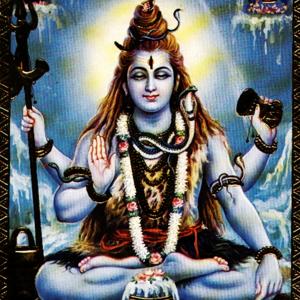
These chapters conclude the Vidyeśvara-saṁhitā. They are the most necessary for performing worship that delights Śiva. Chanting the pañcākṣara-mantra, wearing tripuṇḍra and rudrākṣa are the most important methods of Śiva-bhakti. The methods of delighting Lord Śiva have been given first to create a foundation for understanding Śiva as portrayed in the succeeding Rudra-saṁhitā.
“A rudrākṣa of a single face is Śiva Himself. It bestows worldly pleasures and salvation. The sin of brāhmaṇa-slaughter is washed off at its mere sight. Where it is adored, Fortune cannot be far off. Harms and harassments perish. All desires are fulfilled. A rudrākṣa with two faces is Īśā, the Lord of devas. It bestows the fulfilment of all desires. Especially, that rudrākṣa quickly quells the sin of cow-slaughter. A rudrākṣa with three faces always bestows means of enjoyment. As a result of its power all lores become firmly established. A rudrākṣa of four faces is Brahmā Himself. It quells the sin of man-slaughter. Its vision and its contact instantaneously bestow the achievement of the four aims of life. A rudrākṣa with five faces is Rudra Himself. Its name is kālāgni. It is lordly. It bestows all sorts of salvation, and achievement of all desired objects. A five-faced rudrākṣa dispels all sorts of sins such as accrue from sexual intercourse with a forbidden woman and from eating forbidden food. A rudrākṣa with six faces is Kartikeya. A man who wears it on the right arm is certainly absolved of the sins of brāhmaṇa-slaughter and the like.”
Sūta said, “O sage Saunaka, highly intelligent, of the form of Śiva, noble-minded, please listen to the greatness of rudrākṣa. I shall explain it briefly. Rudrākṣa is the favourite bead of Śiva. It is highly sanctifying. It removes all sins by sight, contact and japas. O sage, formerly the greatness of rudrākṣa was declared to the Goddess by Śiva, the supreme soul, for rendering help to the worlds.” Śiva said: “O Śivā, Maheśānī, be pleased to hear the greatness of rudrākṣa. I speak out love for You from a desire for the benefit of the devotees of Śiva. O Maheśānī, formerly I had been performing penance for thousands of divine years. Although I had controlled it rigorously, my mind was in flutter. Out of sport, I being Self-possessed just opened My eyes, O Goddess, from a desire to help the worlds. Drops of tears fell from My beautiful half-closed eyes. From those teardrops there cropped up the rudrākṣa plants. They became immobile. In order to bless the devotees they were given to the four varṇas devoted to the worship of Viṣṇu.”
“He who makes tripuṇḍra duly with the ash is freed from groups of great as well as small sins. A brahmacārin, a householder, a forest-dweller or an ascetic, brāhmaṇas, kṣatriyas, vaiśyas, śūdras, the low and the base people become pure by means of tripuṇḍra and uddhūlana applied in the prescribed manner, and get heaps of sins destroyed. A person regularly applying the ash is freed from the sins of slaughter of women and cows, and that of heroes and horses. There is no doubt about it. By means of tripuṇḍra, the following and similar other sins of innumerable sorts are destroyed immediately: theft of others’ wealth, outraging the modesty of other men’s wives, censuring others, usurping and forcibly occupying others’ fields, harassing others, theft of plants, parks etc., arson, acceptance from base people of the gifts of cow, gold, buffalo, sesame seeds, blankets, cloths, cooked rice, food grains, water etc.; sexual intercourse with prostitutes, women of the tribal castes, fisher-women, slave-women, actresses, widows, virgins and women in their menstrual periods, selling of flesh, hides, gravy etc. and salt, calumny, perjury, deceitful arguments and utterance of falsehood.”
Sūta said, “The ashes of auspicious nature are of two types. I shall explain their characteristics; please listen attentively. One is known as Mahābhasma, and the second is known as svalpa (little). The Mahābhasma is of three types: śrauta (Vaidik), smārta (from smṛti rites) and laukika (from ordinary fire). Svalpa is ordinary ash which is of various forms. The śrauta and smārta ashes are to be used only by the twice-born. The laukika and svalpa can be used by everyone. Sages have said that the twice-born should apply the holy ashes while repeating mantras. Others can simply apply them without any mantra. When dry cow-dung is reduced to ashes it is called agneya (fiery). O great sage, this ash can be used for tripuṇḍra. The ashes resulting from agnihotra and other sacrificial rites shall be used for tripuṇḍra by men seeking intelligence.”
From the publisher's feed