
Sign up to save your podcasts
Or

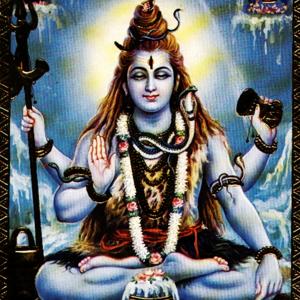


The second mantra of Māṇḍūkya Upaniṣad reads: sarvaṁ hy etad brahma | ayam ātmā brahma | so ’yam ātmā catuṣpāt || “All this is verily Brahman. This Ātman is Brahman. This Ātman has four quarters.” What is Reality? It depends on your point of view, your state of consciousness.The "four quarters" are four states of consciousness: jagrat, svapna, suṣupti and turīya. Śiva also looks different from different states of consciousness.
Download Māṇḍūkya Upaniṣad: https://archive.org/download/mandukyaupanishadswaminikhilanandar.k.mutt1936_202003_845_e/Mandukya%20Upanishad%20%20Swami%20Nikhilananda%20R.K.%20Mutt%201936_text.pdf
Taking a break from the extensive Śiva Purāṇa series, we go into the deep meaning of ĀŪṀkara and its identity with Śiva. The amazing Mūṇḍaka Upaniṣad reveals the deep connection between ĀŪṀ and the four states of consciousness. This mini-series will investigate (vicāra) the path of consciousness leading to complete Self-realization.
“The precincts of a temple, a cowshed, a sanctuary or one’s own courtyard shall be selected for the performance of sacrifice. It shall be on a raised platform at least two hastas high. It shall be well decorated. Paddy weighing a bhara shall be spread on the ground to make a large circle. Diagrams of lotuses shall be made in the middle, and in the eight quarters on the border of the circle. A big pot round which a thread is tied, shall be placed in the middle and eight other similar pots shall be placed in the eight quarters. All of them shall be fumigated with Guggulu (mukul myrrh). In the eight pots bunches of mango leaves shall be placed with Darbha grass. They shall be filled with water purified by mantras and five kinds of articles. Precious gems shall be put in the nine vessels, one in each. The sensible devotee shall ask his preceptor to preside as a priest. The presiding priest shall be accompanied by his wife. He shall be well-versed in the rituals. Gold idols of the guardians of the quarters and Viṣṇu shall be put in the different vessels. Viṣṇu shall be invoked and worshipped in the central vessel.”
“O sages of good rites, in the case of widows, whether they be in childhood, youth or old age, a rasa-liṅga is specially recommended if they continue to perform rites. A liṅga of pure crystal bestows all sorts of worldly enjoyment on women. The worship of the pedestal grants all cherished desires of the worshipper in this world. A ritualist shall perform all the worship in a vessel. At the conclusion of abhiśeka (ceremonial bath) the naivedya consisting of cooked rice of the śāli variety shall be offered. When the worship is over, the liṅga shall be kept in a casket and placed separately in the house. Persons who worship their own liṅga shall, after the worship is over, offer as food those articles of diet to which they are accustomed. All non-ritualists shall worship the subtle liṅga. In place of floral offerings they shall use sacred ashes for adoration and food. After worship they shall keep the liṅga on their head forever. The ash is of three types: derived from ordinary fire, Vaidik fire and Śiva fire.”
The sages said, “O foremost among those who know everything, please explain the nature of bondage and liberation.” Sūta said, “I shall explain bondage, liberation and the means of liberation. Please listen attentively. A jīva is said to be in bondage if he is tied up by the noose of the eightfold primary tattvas: prakṛti etc. When freed from them he is called liberated. Perfect control and subjugation of prakṛti and its offshoots is mokṣa (salvation). A jīva when freed from bondage is called a liberated soul. The set of eight that binds is: prakṛti, buddhi (cosmic intellect), ahaṁkāra (cosmic ego) of the nature of attributes, and the five tanmatras—the cosmic principles of earth, water, air, fire and space. The body is evolved out of these eight. The body carries on activities. The activities generate the body. Thus birth and activities continue in a mutually-generating series.”
Chapter 17 deals with ĀŪṀ, the prāṇava—it’s meaning, practice and benefits. Alone or in combination with other bījas, words or phrases, prāṇava acts as a strong boat to take one across the ocean of material existence.
“Liberation is in the form of realising the nature of Ātman. It is a relaxation and resting in one’s own soul. It is based on sacred rites, penance, japa, knowledge, meditation and virtue. Relaxation is assured at the vision of Śiva. Śiva, the merciful, removes ignorance even as the sun removes all impurities and darkness by means of its rays. When ignorance is dispelled, the knowledge of Śiva begins to function. On acquiring the knowledge of Śiva a person achieves relaxation. He becomes gratified at the acquisition of relaxation. Again by means of ten million japas he acquires Brahmā’s region. A further ten million japas enable him to achieve Viṣṇu’s region. By a further ten million japas he attains Rudra’s region, and by a further ten million japas, Īśvara’s region is attained. Again by a similar japa performed with concentration he attains Kālacakra, the first in the Śivaloka.”
“The Brahmacaryaloka accepted by Śiva is beyond that. There in the Jñānakailāśa that has five coverings, the primary phallic form of Śiva is stationed in the company of primary energy of Śiva. It has five zones and five Brahma-kalās. This is called the abode of Śiva, Śivalaya, the supreme Ātman. There alone stays Parameśvara in the company of Parāśakti. He is skilled in the performance of the five divine functions of creation, maintenance, evanescence and blessing. His body is Existence, Knowledge and Bliss. He is always in meditation. He is ever bent on blessing. He is seated in the pose of trance. He shines resting in His own Self. His vision is possible gradually through sacred rites, meditation etc. By performing the daily rites and worships, the mind is diverted toward the sacred rites of Śiva, the performance whereof gives the sight of Śiva. Those who come within His vision are certainly liberated.”
The sages said, “O lord, tell us the greatness of the syllable ĀŪṀ and that of the six liṅgas, O great sage. Also please tell us about the worship of the devotees of Śiva in order of realization.” Sūta said, “All of you, sages, have now requested a very good thing. Only Śiva can explain this properly—no one else. Still I shall explain the same with Śiva’s grace. May Śiva increasingly guard us, you and everyone else. The syllable ĀŪṀ, praṇava means an excellent boat to cross the ocean of worldly existence. Pra—of the prakṛti; the world evolved out of it. Nāvam—nāvāṁ varam—an excellent boat. Or praṇava may mean, “there is no world for you;” or it may mean ‘‘that which leads to salvation.” Or it may mean, “that which leads to new knowledge.” After annihilating all actions it gives the person who repeats the mantra or worship, a fresh knowledge of the pure soul. This praṇava is twofold: the subtle and the gross.”
Chapter 16 deals with deity worship, its performance and results. The rituals of deity worship are karma-yoga. Problems due to bad karma can be solved by performing karma-yoga. For example, if one is forced to work for a living due to poverty, deity worship brings sufficient wealth. Similarly with difficulties due to disease, ignorance etc.
From the publisher's feed