
Sign up to save your podcasts
Or

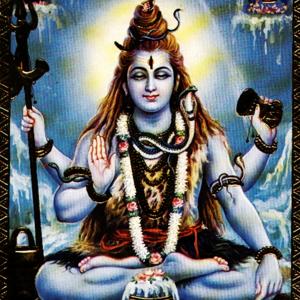


The sages asked, “How is the phallic form of Śiva to be installed? What are the characteristic features of the form? How is He to be worshipped? What is the appropriate time and place for worship? What sort of person must the performer be?”
“Obeisance to Thee of the bodiless form. Obeisance to Thee of the formless lustre. Obeisance to Thee, the Lord of everything. Obeisance to Thee, the soul of everything and of the embodied form. Obeisance to Thee, stated by the praṇava, Oṁkāra. Obeisance to Thee, having praṇava as Thy symbol. Obeisance to Thee the author of the five duties. Obeisance to Thee of five faces. Obeisance to Thee, identical with Pañcabrahma. Obeisance to Thee of five-fold functions. Obeisance to Thee the Ātman, Brahman of endless attributes and power. Obeisance to Śiva the preceptor, possessed of both embodied and bodiless forms.”
This 9th chapter of Vidyeśvara-saṁhitā contains so many important philosophical points it needs its own separate explanation. Even so, we barely scratch the surface of its deep content. This chapter reveals the original form of worship of Śiva as the Supreme Lord. Brahmā and Viṣṇu offer Him all kinds of royal honor, and the remnants are distributed as prasādam. Then Śiva assumes the role of preceptor and initiated them into the praṇava-mantra, ĀŪṀ. He then explains His manifestation as the śiva-liṅgam and reveals that among all gods, only He is Brahman, the Supreme Absolute.
“Thus blessing Brahmā and Viṣṇu who had been made humble, the Lord resuscitated by His nectar-like power all the soldiers of the two deities that had been killed in the battle before, and spoke to them to remove their foolishness and mutual enmity: ‘I have two forms: the manifest and the unmanifest. No one else has these two forms. Hence all others are non-Īśvaras. Dear sons, first in the form of the column and afterwards in this embodied form I have expounded to you my formless Brahma-nature, and embodied Īśa-nature. These two are present only in Me and not in anyone else. Hence no one else—not even you two—can claim īśatva (Īśvara-nature). It is out of your ignorance of this fact that you were swept away by your false prestige and pride, surprising as it is. I rose up in the middle of the battlefield for quelling the same.”
Brahmā and Viṣṇu as portrayed in the Śiva Purāṇa are not only personalities in higher realms of the world—they also represent deep psycho-spiritual truths. All paurāṇik stories are literally true on one level, but on another, they are profound allegories and metaphors.
Nandikeśvara said, “Mahādeva then created a wonderful person named Bhairava from the middle of His brows to quell the pride of Brahmā. This Bhairava knelt before the Lord in the battlefield and said, ‘O Lord, what shall I do? Please give me Your directive quickly.’ Śiva said sarcastically, ‘Dear, here is Brahmā, the first deity of the universe. Worship him with your sharp-pointed quick-moving sword.’ Immediately Bhairava caught hold of the śikhā of Brahmā’s fifth head that was guilty of haughtily uttering a falsehood, and furiously shook his sword to cut it off. Your father trembled like a plantain tree in a whirlwind, with his ornaments scattered here and there, his cloth ruffled and loosened, garland displaced, the upper cloth hanging loose and the glossy śikhā dishevelled, and fell at the feet of Bhairava.”
"Seeing that auspicious wonderful phenomenon assuaging their weapons, they asked each other “What is this wonderful form?” “What is this column of fire that has risen up? It is beyond the range of the senses. We have to find out its top and bottom.” Jointly deciding like this, the two heroes proud of their prowess immediately set about assiduously in their quest. “Nothing will turn up if we are together.” Saying this, Viṣṇu assumed the form of a boar and went down in search of the root. Brahmā in the form of a swan went up in search of the top. Piercing through the netherworlds and going very far below, Viṣṇu could not see the root of the fiery column. Utterly exhausted, Viṣṇu in the form of a boar returned to the former battleground."
Nandikeśvara said, “Once, long ago, O foremost among yogīs, Viṣṇu was having a nap on his serpent-couch. He was surrounded by the goddess of fortune and his attendants. Brahmā, foremost among Vedic scholars chanced to come there. He asked the lotus-eyed handsome Viṣṇu who was lying there, ‘Who are you lying here like a haughty person even after seeing me? I have come here. Get up, O dear, and see me who am your lord. Expiatory rites are ordained for that spiteful wretch who behaves like a haughty fool at the visit of an honourable elderly person.’ On hearing these words Viṣṇu was angry. But assuming a calm exterior he said, ‘O dear, Hail thee. Welcome. Please sit on this couch. How is it that thy face is agitated and thy eyes look curious?’
Sūta said, “A person incompetent to perform the three methods of śravana, kīrtana and manana shall install the śiva-liṅga (phallic emblem) or mūrti (Deity image) of Śiva and worship Them every day. Thus he can cross the ocean of worldly existence. Since Śiva has a bodiless aspect in virtue of His being the Supreme Brahman, in conformity with the Vedic implication, the niṣkala-liṅga is used only in His worship. Since He has an embodied form as well, His embodied form is also worshipped and accepted by all people. According to the determination of the Vedas, the embodied form alone is to be used in the worship of other deities who are only individual embodied souls. Devas have only the embodied aspect in their manifestation. Both the phallic and the embodied forms are mentioned for Śiva in sacred literature.”
Śrī Śiva Purāṇa teaches three principal things: bhakti, jñāṇa and vairāgya or devotion, Self-realization and detachment. They only appear to be separate; actually they are one thing, the spiritual Path. It also teaches three methods for advancement on the Path: śravana, kīrtana and mañana, or hearing from Realized beings, chanting or repeating what one has heard, and contemplation of Śiva in various aspects.
From the publisher's feed