
Sign up to save your podcasts
Or

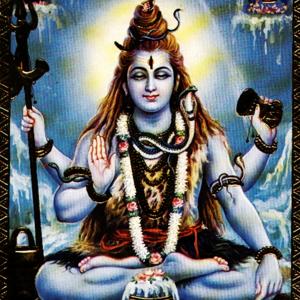


The sages said, “O holy one, what is śravana? How is kīrtana performed? What is manana? Please expound these precisely.” Brahmā said: “O wise men, the means of śravana (hearing), famous in the world, is listening to words concerning Śiva, in whatever manner, howsoever and wherever they are produced, with the same steady attention as in the sporting dalliance with women. By kīrtana (glorification) is meant the clear expression of Śiva’s exploits, attributes, forms, sports, names etc. in good taste by reciting traditional lore and singing songs of praise, in Sanskrit or even in one’s mother tongue. Regarding manana (deliberation), the mind is fond of reasoning and deliberation. The ability of the mind to ponder and evaluate the efficacy of the worship, mantra-japa, the attributes of Īśa, His form, His divine sports and multifarious names, is the result of the benign glance of Īśvara. Hence steady continuation of deliberation is the most important of all the means.”
The sages said, “What is that great sadya (the Achievable)? What is that great sādhana (means of achievement)? Of what sort is the sādhaka (performer of the rite)? Please explain these precisely.” Brahmā answered: “The attainment of Śiva’s region is the sadya. The sādhana is devotional service rendered unto Him. The sādhaka is the person who is free from desire even for permanent existence, which attitude is the result of His grace.”
Chapter 1 of Vidyeśvara-saṁhitā opens with a wonderful mangalācāranam full of beautiful names of Śiva, itself a perfect example of the process of śravanam: hearing about Śiva from authentic sources. Then the sages ask Sūta Gosvāmī the only question that really matters: “Please tell us the easiest remedy for the immediate destruction of the sins of the denizens of Kaliyuga.” Sūta’s reply is the essence of Chapter 2.
Sūta said, “O saintly men, the question that you put to me is very pertinent. Prompted by my love towards you all, and remembering my preceptor Vyāsa the benefactor of the three worlds, I shall tell you everything. All of you listen attentively. The entire essence of Vedānta is contained in the excellent Śiva Purāṇa. It dispels all sins. It affords the attainment of the highest truth, Brahman. O brāhmaṇas, the great glory of Śiva that destroys the sins of the Kali age, unfolds itself in the Śiva Purāṇa and yields the fruits of dharma, artha, kāma and mokṣa. By the single-minded study of that most excellent Śiva Purāṇa, excellent brāhmaṇas attain salvation.”
“O Sūta, how can these deluded people who have abandoned their traditional virtues get salvation here and hereafter? Hence our minds are always agitated. Indeed there is no virtue equal to helping others. Since thou art conversant with the essentials of all tenets, please tell us the easiest remedy for the immediate destruction of the sins of these people, the denizens of Kaliyuga.”
There are so many good philosophical points in this chapter! Too many to cover in this video—you should watch or read the whole thing yourself. The theme is compassion and mercy. Thus Cañculā approaches Pārvatī, the Divine Mother, seeking the redemption of her fallen husband from hellish condition of life.
Cañculā said, ‘O Mother of all, daughter of the mountain, O beloved of Śiva, bestower of all pleasures having the form of the Supreme Brahman, Thou art worthy of being served by Viṣṇu, Brahmā and other gods. Thou art both endowed with and devoid of attributes. Thou art the subtle primordial Prakṛti with Existence, Knowledge and Bliss for Thy forms. Thou createst, maintainest and annihilatest. Thou hast the three guṇas. Thou sustainest Brahmā, Viṣṇu and Maheśa.’ "Thus I have narrated this holy anecdote that removes sins and is highly delightful to Śiva and Pārvatī, in pure and increasing devotion. Anyone who listens to this account with devotion and recites it piously shall enjoy immense pleasures and obtain liberation.”
The story of Cañculā’s fall and redemption is instructive of the power of Śiva Purāṇa. It shows how a little contact with a pure brāhmaṇa devotee can have enormous effect. It also reminds us that, while social fashions of morality may change with the times, the actual standards do not. We will have to experience the consequences of our actions not as measured by popular opinion, but by the unchanging laws of Dharma.
From the publisher's feed