
Sign up to save your podcasts
Or

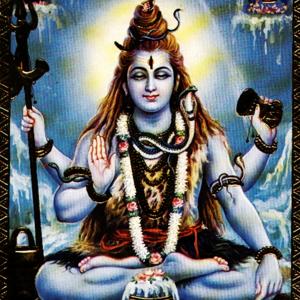


The sages said, “O excellent one, please explain the rules of worship of clay deities, by following which all desired results will be achieved.” Sūta said, “You have requested a very good thing. Deity worship bestows all wealth always. It suppresses misery instantaneously. I shall explain it; please listen. It wards off premature and foul death. It prevents even a timely death. O brāhmaṇas, it bestows womenfolk, sons, wealth, grains etc. The worship of deities made of clay and other materials is conducive to the attainment of all cherished desires in the world. From it the devotee derives food, medicine, cloth etc. Both men and women are authorized in this. The clay should be brought from the beds of rivers, lakes or wells. It should be washed well and pasted with scented powder and milk. The deity should be made with the hands on a raised platform.”
Great line: “Theism is that feeling in which one fully realises that all actions are consequential." Here we learn how to please God by sacrifice and obtain unparalleled benefits: "Whatever one does—whether it is great or small, whatever be the means employed—if that is dedicated to deities it becomes conducive to enjoyment." And finally, the great phāla-śruti: "He who hears this chapter, or reads it or he who facilitates the hearing of the same shall derive the fruit of Devayajña." and "If he performs the sacred rites with dedication to God, he shall attain salvation. He who reads or hears this chapter becomes righteous and endowed with knowledge.”
The sages said, “O Sūta, foremost among those who know everything, please expound to us the qualification, time and place for Devayajña and its results.” Sūta replied, “The pure house accords normal benefit in the rites of Devayajña etc. The gośala (cowshed) is ten times more beneficial than that. The bank of a tank is of ten times more benefit than that, and the root of a Tulasī, Bilva or Aśvattha tree is again of ten times more benefit than that. Similarly a temple, the bank of a holy tank, the bank of an ordinary river, the bank of a holy river and the banks of the seven holy Gaṅgās are each of ten times more benefit than the previous. The seven holy Gaṅgās are Gaṅgā, Godāvarī, Kāverī, Tāmraparṇikā, Sindhu, Sarayū and Revā. The shore of the sea is of ten times more benefit than the rivers. The summit of a mountain is ten times more beneficial than the seashore.”
The sages said, “O lord, please tell us in detail all these rites: the fire sacrifice, the sacrifice to gods, Brahmayajña, the worship of the preceptor and the gratification of brāhmaṇas.” "...Indigent men shall worship devas with austerities, and rich men by spending money. They shall do virtuous actions with sufficient faith again and again. After enjoying pleasures in heaven they are reborn again in the world. For better enjoyment the rich shall always plant trees for shade, dig tanks etc., install and worship deities, and carry on virtuous activities. After the lapse of some time, when the virtue becomes ripe he shall achieve perfect knowledge. O brāhmaṇas, he who hears this chapter, or reads it or facilitates the hearing of the same, shall derive the same fruit as devayajña.”
This chapter reveals the benefits of regular worship of Śiva and other deities. The basic principle of worship is service. When God is delighted, we immediately experience the same delight. One thing I forgot to mention is the very nice interpretation of the Gāyatrī mantra at the end of the chapter.
"An excellent brāhmaṇa must repeat the mantra a thousand times in the morning every day. Others shall repeat as many times as they can. In the midday Gāyatrī shall be repeated a hundred times; in the evening at least twenty times along with Śikhāṣṭaka [a set of eight prayers.] He shall meditate on Vidyeṣa, Brahmā, Viṣṇu, Īśa, Jīvatman and Parameśvara stationed in the twelve esoteric centres of the body, from Mūlādhāra (base of the spine) to the Brahmarandhra (the mystical aperture in the crown of the head ), as identical with Brahman, with the conception of sohaṁ (‘l am He’) and continue the japa. He shall then meditate on them as stationed outside the body as well.“
The sages said, “Kindly tell us the mode of good conduct whereby the sensible man quickly attains higher worlds. Please tell us about virtue and evil that cause attainment of heaven or hell." Sūta said, “A brāhmaṇa endowed with strict adherence to good conduct is perfectly wise. A brāhmaṇa learned in the Vedas and of good conduct is called a vipra. A brāhmaṇa endowed with only one of these two is a mere dvija.
Sūta said, “O wise sages, please listen to the narrative of holy centres with Śiva’s temples, all of which accord salvation. Thereafter I shall tell you their traditions for the welfare of the people. The Earth, fifty crores of yojanas in extent, abounding in mountains and forests, supports the people at the bidding of Śiva. The Lord has Himself raised up these temples and holy centres in different places for the liberation of the residents of those localities. These temples, whether self-risen or not, in view of their being accepted as a frequent resort by the sages and devas, are intended for the redemption of the people. In these holy centres and temples, ablutions, charitable gifts, japa etc. must be regularly performed. Otherwise men are sure to be affected by ailments, penury, dumbness etc. If a man dies anywhere in Bhāratavarṣa he shall be reborn again as a man if he has resided in a holy centre where there is a self-risen phallic emblem of Śiva.”
From the publisher's feed