
Sign up to save your podcasts
Or

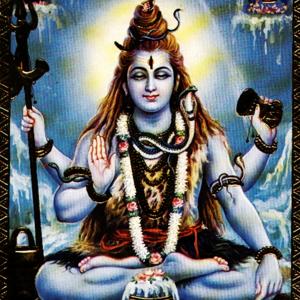


“The man of self-restraint should be above all praise, salutation and all rites prescribed by the smṛti in connection with departed ancestors. He should have this body and the Ātman as his support, and depend upon chance—that is, for his physical wants, he should be satisfied with those things that chance brings to him.” —Māṇḍūkya Upaniṣad Kārakā 2.37
The story of Guṇanidhi continues with him, now named Śrīda, as the guardian of the quarter in the heavenly city of Alakā. He performs severe penance for 200,000 years, realizing his identity with Śiva, who appears to him and out great mercy, appoints him to the post of Kubera.
Brahmā said, “O Nārada, hear the story of Śiva’s arrival at Kailāśa, the best of mountains, thanks to the power of penance of Kubera. The Lord of the Universe, after bestowing the boon of lordship of treasures upon Kubera, returned to His excellent abode and thought within Himself thus: ‘My complete manifestation, born of Brahmā, can look after the activity of Dissolution. Now, assuming that form I shall go to Kailāśa, the residence of Guhyakas. Rudra, born of My heart, My perfect manifestation, is the single Supreme Brahman. He is worthy of being served by Viṣṇu, Brahmā and others. He is not different from Me. He is unsullied. In that form I shall become that friend of Kubera, shall remain near him and perform great penance.’
Brahmā said, “In the kalpa called Pādma, I created my mental son Pulastya, whose son Viśravas begot the son Vaiśravaṇa. He propitiated the three-eyed God Śiva with a very severe penance and enjoyed the city of Alakā built by Viśvakṛt. When that kalpa was over and the Meghavāhana-kalpa had started, the son of Yajñadatta, Śrīda, performed a severe penance. Realising the efficacy of devotion to Śiva accruing from the mere illumination of His temple with lamps, he reached Kāśī for the illumination of his thought. Under the lustre of the gems of the mind, he repeated the mantras of eleven Rudras with loyal devotion and unswerving concentration of the mind. He could realise his identity with Śiva. He then performed very severe penance for two hundred thousand years—a penance which was enhanced by the fire of austerity, was free from interference from lust and anger, was windless, inasmuch as the breath was curbed, and was pure in form with pure vision.
“Therefore knowing the Ātman to be such indeed, develop mindfulness of nonduality. Having grasped nonduality, one should prefer to pass through the world like a dumb fool.” —Māṇḍūkya Upaniṣad Kārakā 2.36
Guṇanidhi the son of brāhmaṇa Yajñadatta, spoiled by his indulgent mother, became a sinful rascal. When his father found out, he disowned Guṇanidhi and put away his wife. Guṇanidhi became an indigent wanderer. Yet he was saved by ŚIva’s grace, by way of just a little pious activity.
“The wise, who are free from attachment, fear and anger, and who are well-versed in the meaning of the Vedas, verily realize this Ātman as totally devoid of all imaginations such as prāṇa etc., free from the illusion of the manifold, and nondual.” —Māṇḍūkya Upaniṣad Kārakā 2.35
“This Ātman is imagined both as unreal objects that are perceived, and as the nonduality. The objects (bhavas) are imagined in the nonduality itself. Therefore, nonduality alone is the highest bliss.” —Māṇḍūkya Upaniṣad Kārakā 2.33
Brahmā said, “Guṇanidhi, the son of the Dīkṣita Yajñadatta, came to know of this. Regretfully he cursed himself and set off from that place. After wandering aimlessly for a long time, he, the wicked fellow, felt the abandonment keenly; losing all hope, he halted at a place. He thought to himself: ‘Where am I to go? What shall I do? I have not studied much, nor am I rich enough. Only a wealthy man can be happy in a foreign land, although he has to face the fear of thieves there. Of course, this fear is present everywhere. I am born in the family of priests officiating in sacrifices. Why am I reduced to this wretched plight? Fate is powerful indeed, controlling all our future actions. I cannot even beg as I have no acquaintance, no money. Where shall I seek refuge? Everyday, even before sunrise, my mother used to feed me with sweet pudding. From whom shall I beg today? My mother too is away from me.’
“This manifold does not exist as identical with Ātman, nor does it ever stand independent by itself. It is neither separate from Brahman nor is it non-separate. This is the statement of the wise.” —Māṇḍūkya Upaniṣad Kārakā, Śloka 34
From the publisher's feed