
Sign up to save your podcasts
Or



We start with a simple question “How old were you when you discovered sparkling water?” and end up everywhere: LaCroix slander, Topo Chico devotion, why block cheese > pre-shredded, and how pineapple on pizza became a personality quiz. Along the way, we talk about depression turning soda cravings into seltzer habits, being a “food freak” vs. “food cautious,” sushi redemption arcs, and Thai home-cooking love. Then it gets real: an Uber Eats drop off that turned dangerous, three kids yelling “ICE” for laughs, and the case for calling out your friends before the cops do. We close with a story about breaking up with a childhood best friend over weed, losing religion, finding our voices, and the weird way taste buds and beliefs mature together.
Eva is back for this episode, and what starts as lighthearted banter quickly unravels into something deeper. We drift from MySpace nostalgia and high school what-ifs to stories of secret crushes, masking, and the strange ways memory rewrites our past. Along the way we reflect on missed chances, adolescent anxieties, and how the digital spaces we grew up in shaped who we are now. It’s messy, funny, vulnerable, and like high school itself, equal parts cringe and unforgettable.
We start with a scientific (read: chaotic) burger debrief. Skechers’ burger sits at a respectable 7/10 while Sonic takes the walk of shame, then spiral into a ramen taxonomy masterclass: Hokkaidō miso broth vs. Hakata, thin-firm vs. thick-chewy noodles, spice levels that flirt with danger and why “cheap chicken broth” isn’t always a red flag.
Then I blindfold my co-host for a field trip to a Maid Café, where we cast moi moi kyun to open the door, order blue Oreo potions, get Sonic and Kirby latte art, and request Slipknot. Our maid (self-proclaimed “metal maid”) absolutely growls, the room blinks, and we all achieve post-burger, post-ramen, post-scream clarity. It’s theme park energy in a cafeteria layout, culture shock with great service and yes, a polaroid with demon horns.
Maid Cafe | Asayoru Maid Cafe
Welcome to a chaotic little game we’re called Hot or Not where the takes are absolute, the rules are fake, and commitment is allegedly 100%. We run three rapid-fire rounds Everyday Life, Culture & Internet, and Relationships & Self and decide whether common trends deserve hype or a hard pass.
Expect spicy disagreements (Crocs, self-checkout lanes), a feral rant about vegan “cheese,” and a surprisingly thoughtful detour on minimalism (the art movement vs. the beige lifestyle brand). We also argue about sticker-bombed cars as community finding and admit that cold showers are just legal torture. In the Relationships round, we get honest about ghosting (context matters), the joy of having your partner as your lock screen, soft-launching on IG, and why sharing phone passcodes can feel either intimate or invasive, depending on the scars you’ve collected.
Hit play if you like big opinions, fast laughs, and zero fence sitting. Then tell us your own Hot/Not list. Bonus points if you can beat our 5-in-a-row streak without catching feelings.
Charlie Kirk was killed while answering a question about transgender mass shooters on the first stop of his “American Comeback Tour.” In those final moments, he repeated a lie, that trans people are a major driver of mass shootings even though they account for just 0.11% of such incidents over the past decade. Seconds later, gun violence. The very epidemic he defended claimed his life.
In this episode of So I Was Told, we cut through the selective outrage, the hypocrisy, and the pearl-clutching over “political violence.” This isn’t just politics. This is about mental health. PTSD, trauma, grief, fear — gun violence is a public health crisis. And when retribution comes, it won’t land first on the powerful, it will land, as always, on the margins: Black, brown, queer, and trans people.
Neutrality is a myth. Silence is consent. Which side are you on?
Sources for Show Notes
Pew Research Center. What the data says about gun deaths in the U.S. (March 5, 2025).
Johns Hopkins Bloomberg School of Public Health. Guns remain leading cause of death for children and teens. (March 2024).
The Daily Beast. Charlie Kirk was asked about mass shootings moments before assassination. (Sept 2025).
People Magazine. Charlie Kirk was answering a question about gun violence when he was fatally shot. (Sept 2025).
Wikipedia. List of mass shootings in the United States in 2025. (Accessed Sept 2025).
The Times. Charlie Kirk: Who was he? (Sept 2025).
So I was told freedom is doing whatever you want, whenever you want. But what if that’s the biggest lie we’ve bought into?
In this episode, I break down how indulging in every craving doesn’t liberate us, it enslaves us. We’ll talk dopamine, addiction, and the “hedonic treadmill” that keeps our brains hooked. We’ll look at how capitalism profits from keeping us dissatisfied, why discipline is actually the key to agency, and how tying identity to desire leaves us emptier than ever.
I’ll weave in philosophy, modern neuroscience, and real-world stats from America’s trillion-dollar credit card debt to studies linking heavy social media use with anxiety and depression. And I’ll leave you with one question: if you can’t say no, are you really free?
Because indulgence feels like liberation in the moment, but long-term? It’s just a prettier set of chains.
Sources:
Epictetus. Discourses. (c. 108 CE). — Stoic philosophy on freedom and self-mastery.
Mischel, W., Shoda, Y., & Rodriguez, M. (1972). “Cognitive and attentional mechanisms in delay of gratification.” Journal of Personality and Social Psychology. — The original Stanford marshmallow experiment.
Mischel, W., Shoda, Y., & Peake, P. (1988). “The nature of adolescent competencies predicted by preschool delay of gratification.” Journal of Personality and Social Psychology. — Long-term outcomes of delayed gratification.
Schultz, W. (2018). “Reward prediction error.” Nature Neuroscience, 21(2). — Research on dopamine, tolerance, and addiction cycles.
Twenge, J. M., & Campbell, W. K. (2009). The Narcissism Epidemic: Living in the Age of Entitlement. Free Press. — On indulgence, consumption, and mental health decline.
Baudrillard, J. (1998). The Consumer Society: Myths and Structures. Sage. — On consumption and identity.
Twenge, J. M., Haidt, J., & Campbell, W. K. (2023). “Trends in adolescent mental health and social media use.” JAMA Psychiatry. — Correlation between indulgence in social media and rising anxiety/depression.
Federal Reserve Bank of New York. (2025). Quarterly Report on Household Debt and Credit. — U.S. credit card debt surpassing $1.13 trillion.
Most people think the purpose of life is to “find yourself” or “chase your happiness.” That’s why most people are still miserable. In this episode I dig into the hard truth: self-centered living is a scam. Backed by decades of research from the Harvard Study of Adult Development to Viktor Frankl’s Man’s Search for Meaning, we’ll unpack why a life that revolves around you is guaranteed to be empty, and why the only path to real fulfillment is living for others.
Sources
Waldinger, R. & Schulz, M. (2010). The Harvard Study of Adult Development.
Kasser, T. (2002). The High Price of Materialism. MIT Press.
Post, S. G. (2005). Altruism, happiness, and health: It’s good to be good. International Journal of Behavioral Medicine, 12(2), 66–77.
Mauss, I. B., et al. (2011). Can seeking happiness make people unhappy? Emotion, 11(4), 807–815.
Frankl, V. (1959). Man’s Search for Meaning.
What would it feel like to live with no secrets? To wake up without rehearsing lies in your head or guarding a version of yourself from the world? Your secrets are not protecting you; they’re draining you. Every secret is weight you carry, energy you waste, and shame you feed. In this episode, I cut through the myth that secrecy keeps you safe and get real about why it actually keeps you stuck.Sources:
Michael Slepian’s research on secrecy (Columbia University) — studies showing the average person holds 13 secrets at once, and how secrecy weighs on mental energy.
Journal of Experimental Psychology (2012) — study showing people with secrets literally saw hills as steeper and tasks as harder.
Sidney Jourard’s work on self-disclosure (1970s) — showing openness builds trust and connection.
Laurenceau & Barrett (1998) — research proving intimacy grows through vulnerability and responsiveness.
James Pennebaker’s expressive writing studies — writing down your secrets reduces stress and improves physical health.
The headlines aren’t letting up. From climate disasters and political chaos to the creeping feeling that we’re running out of time.
But giving up isn’t the answer and blind optimism won’t save us either. In this solo episode, I break down Adaptive Hope. The flexible, grounded, and stubborn kind of hope that can actually survive in times like these.
We’ll talk about what Adaptive Hope is, why it works, and five ways you can practice it today with real-world examples you can try this week. Because hope isn’t about pretending things aren’t bad; it’s about finding ways to keep going because they are.
Academic & Research Sources:
Bender, Darren, and Andrea Rawluk. “Adaptive Hope: A Conceptual Framework for Understanding Hope and Social–Ecological Change.” Ecology and Society, vol. 28, no. 2, 2023. https://ecologyandsociety.org/vol28/iss2/art14/
Human Flourishing Lab. The Science of Hope: A Review of the Research. 2023. https://humanflourishinglab.org/wp-content/uploads/2023/10/HFL-The-Science-of-Hope.pdf
Ojala, Maria. “Hope and Climate Change: The Importance of Hope for Environmental Engagement among Young People.” Frontiers in Communication, vol. 4, 2019. https://www.frontiersin.org/articles/10.3389/fcomm.2019.00020/full
Stanley, Skye K., et al. “Climate Distress and the Role of Social Support in Young Adults.” Frontiers in Psychology, vol. 14, 2023. https://pmc.ncbi.nlm.nih.gov/articles/PMC10446227/
Albrecht, Glenn. “Solastalgia: The Distress Caused by Environmental Change.” Australasian Psychiatry, vol. 15, 2007. https://en.wikipedia.org/wiki/Solastalgia
From the publisher's feed
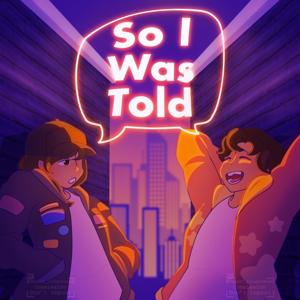
Welcome to So I Was Told, the anti-podcast podcast where culture meets candor. Join us as we dive into social politics, mental health, and the messy realities of deconstructing harmful…
Expect a bit of chaos, the occasional NSFW topic, and some colorful language along the way. Whether we're dissecting societal norms or just calling out the nonsense, this is your space for honest conversations and unapologetic truths.
Tune in, get uncomfortable, and maybe learn a thing or two! You might even laugh along the way.