
Sign up to save your podcasts
Or



We're taking a week break to be with our friends and family, but in the meantime...Kirbs is breaking down the mess and meaning of Thanksgiving, Black Friday, and the retail blackout because nothing exposes our relationship with gratitude and capitalism quite like this week does.
We go from “be thankful” to “panic-buy everything” in under 12 hours, and we're pretty over it.
What does gratitude look like when life is complicated? How does Black Friday trap us in manufactured urgency and why is choosing not to participate actually a form of protest?
We dig into intentional spending, opting out of the noise, and redirecting our support toward actual people and local communities, not corporations built on scarcity and chaos.
If you’re tired of feeling guilty for what you buy, guilty for what you don’t buy, or just ready to reclaim some peace this holiday season, then this one’s for you.
What happens when the internet flattens every subculture into an “aesthetic”? And what does it mean to build identity through music when the dance floor is no longer neutral if it ever was?
In this episode, we sit down with ZAKU.86, an LA DJ, record collector, city pop obsessive, and former punk kid who somehow became a cultural bridge between Japanese, Korean, Taiwanese, Chinese, and Southeast Asian sounds. We talk about growing up feeling uncool while everyone else had Mustangs and perfect high school lives, buying turntables with stimulus checks, digging through crates like it’s religion, and accidentally becoming the guy who shifts energy in rooms people don’t expect.
We get into the collapse of real subculture, the myth of “apolitical art”, nostalgia as survival, and why city pop isn’t just cute music, but a whole archive of memory, migration, and longing.
If you care about music history, identity, third spaces, or what happens when cultural obsession becomes community, this episode is for you.
This week, I’m sitting down with a guest whose life looks nothing like the script most of us were handed.
Melanie AyLin (_melanie.aylin) first gen kid, fulltime nomad, community builder, festival worker, and desert sunrise chaser joins me to talk about what it really costs to choose yourself when everyone expects you to play it safe.
At 19, she dropped out of college, converted multiple vehicles into homes, and hit the road with nothing but instinct and stubborn courage. Since then she’s lived everywhere and nowhere: national parks, parking lots, Burning Man, Joshua Tree, and more concerts and festivals than most people see in a decade.
In this episode, Melanie and I dig into:
the immigrant roots that shaped her fire
turning loneliness into chosen solitude
sustainability and off-grid living
how rejection becomes redirection
building real community in spaces built to be temporary
the moment she realized she didn’t want to wait to “feel ready” for her own life
If you’ve been craving freedom or feeling stuck in your routine, Melanie’s story is going to challenge you in the best way because she’s proof you can build a whole life out of courage and curiosity.
When artist and writer Eva (@birdlets) asked their therapist for help, they ended up locked in a psych ward. In this one-year anniversary episode, we talk about surviving childhood abuse, an eating disorder that nearly killed them, a $130K porn lawsuit pinned on an ex, and the long climb back to self-trust.
⚠️ CW: sexual assault, eating disorders, psychiatric abuse, self-harm.
Why are this year’s costumes mid while horror cafés and niche coffee shops are thriving? We get into men flopping photo poses (sorry, Travis), Eric André winning, Sabrina-core, the Xbox → Sega pipeline, and how third spaces beat corporate beige. The nerds won, the vibes are local, and Halloween doesn’t end on Oct 31 it just moves to your favorite spooky café.
In this solo episode, I break down why we need monsters and why we keep making new ones. Drawing from Frankenstein, queer horror, and modern psychology, “The Myth of the Monster” explores what happens when difference gets mistaken for danger.
We talk dehumanization bias, cultural fear, and the instinct to exile whatever reminds us we’re not as healed as we pretend.
Sources:
Shelley, M. (1818). Frankenstein; or, The Modern Prometheus.
Allport, G. (1954). The Nature of Prejudice. Addison-Wesley.
Haslam, N. (2006). “Dehumanization: An Integrative Review.” Personality and Social Psychology Review, 10(3), 252–264.
Benshoff, H. M. (1997). Monsters in the Closet: Homosexuality and the Horror Film. Manchester University Press.
Farrimond, K. (2020). “Horror as a Safe Space for Queer Identity.” Feminist Media Studies.
Cohen, J. J. (1996). “Monster Culture (Seven Theses).” In Monster Theory.
Tufekci, Z. (2018). Twitter and Tear Gas: The Power and Fragility of Networked Protest. Yale University Press.
Eva (@birdlets) is back to talk spooky with us! In this episode, we map the spectrum of October: from pumpkin-patch cozy to slasher-movie chaos. We talk why Jennifer’s Body sits weirdly (and importantly) in the queer canon, and how horror can be cathartic when you feel physically safe, mentally detached, and in control. We trade childhood Halloween stories, Bloody Mary bathroom lore, and a couple UFO tales that had the jets circling (yes, really). It’s anxiety, nostalgia, and autumn aesthetics in one place with a tease for next time: the micro-revival of horror culture in everyday spaces.
Cold fronts, rain-memory, and Horror Nights chainsaws. Salem plans, pumpkin pie beef, Sonic nostalgia, VR ethics and a real talk pit stop on SAD, sleep, and why your October mood isn’t just “in your head.” Press play cause we’re carving deeper.
Spooky season used to start on October 1. Now it rolls in with a PSL in late August. In pt. 1 of this spooky series, we ask why Halloween keeps creeping earlier, how retail turned September into Spirit Month, and why Thanksgiving got ghosted. We swap school-parade nostalgia, Cartoon Network Blair Witch memories, and debate whimsical-cozy vs. gore-for-sport horror. Also on the table: climate change, capitalism, and the seasonal identity crisis.
In this episode, we break down what real hope looks like when life’s falling apart: not blind optimism, not “good vibes only,” but psychological grounding, micro-rituals, and the small ways we keep going. We’ll talk about the science behind hope (Snyder’s Hope Theory), how to rebuild it through agency and action, and what it means to treat hope as resistance instead of denial.
If you’ve been running on empty, this one’s for you.
Sources:
1. Snyder, C. R. (1994). The Psychology of Hope: You Can Get There from Here.
Foundational text on Hope Theory, defining hope as a cognitive process made of three components: goals, pathways, and agency.
2. Berkeley Well-Being Institute. “What Is Hope and How to Cultivate It.”
Explains hope as a measurable mindset, outlines Snyder’s Hope Theory, and links to practical exercises for building it.
3. Psychology Today. “How to Build Hope in Troubled Times.”
https://www.psychologytoday.com/us/blog/your-personal-renaissance/202504/how-to-build-hope-in-troubled-times
4. EAP at The University of Texas at Austin. “The Science and Power of Hope.”
https://eap.utexas.edu/news/lessons-science-and-power-hope
5. Our Mental Health. “Unlock Success with Hope Theory: Achieve Goals and Enhance Well-being.”
https://www.ourmental.health/positive-psychology/unlock-success-with-hope-theory-achieve-goals-and-enhance-well-being
6. Brown, Brené. (2010). The Gifts of Imperfection.
7. Solnit, Rebecca. (2004). Hope in the Dark: Untold Histories, Wild Possibilities.
From the publisher's feed
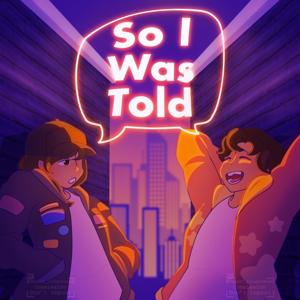
Welcome to So I Was Told, the anti-podcast podcast where culture meets candor. Join us as we dive into social politics, mental health, and the messy realities of deconstructing harmful…
Expect a bit of chaos, the occasional NSFW topic, and some colorful language along the way. Whether we're dissecting societal norms or just calling out the nonsense, this is your space for honest conversations and unapologetic truths.
Tune in, get uncomfortable, and maybe learn a thing or two! You might even laugh along the way.