
Sign up to save your podcasts
Or

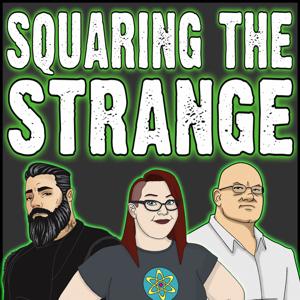


This week Ben and Celestia recount some woo encounters "in the field" that, for a few reasons, they chose not to battle. Then for our main topic we sit down with Mick West, author of the newly released book Escaping the Rabbit Hole: How to Debunk Conspiracy Theories Using Facts, Logic, and Respect. Mick outlines his history in debunking, from chemtrails and Metabunk to the creation of this book, and we go over the different approaches he outlines to help loved ones not fall prey to the lure of conspiracy thinking. We discuss the harm that conspiracy thinking can inflict, and also the creeping culture of conspiracies and its effect on politics and the general population.
This week we start with a quick look at a dog-buys-cookies story that took Celestia down a path of searching out pet videos and, finally, reading about whether or not monkeys can be taught to understand currency. Then Ben revisits an investigation he did on the Pokemon Panic, a wave of illness that struck Tokyo children in the 1990s during an episode of the incredibly popular show--a phenomenon that was referenced again this summer as journalists warned of the strobe effects in Incredibles 2. But what are the numbers, and how exactly does photosensitive epilepsy work? And what was to blame for the thousands of children falling ill that week in Tokyo?
This week we start with an announcement and then a look at a Bridezilla tale and a psychic mountain lion encounter. Then Ben, Celestia, and Pascual discuss skeptical burnout, a phenomenon that hits almost every skeptic at some point. What makes us susceptible to this kind of exhaustion, and how can we best fight against it? We all share some stories and outlooks.
This week we start with a discussion of Spike Lee's Black Klansman movie and the notion of holding narrative movies "based on" real events to some imagined standard of full accuracy. Then all aboard for the ghost train express! Ben and Celestia discuss the lure of the locomotive (and train wrecks) in the American imagination, the flickering lights said to be distant spiritual echoes of trains, and the dangers of ghost-trainspotting on elevated trestles. Ben looks into fabled "virtual underground" trains in Russia that have sprung up as folkloric pranks. We go over the legend of Abraham Lincoln's phantom funeral train, and Ben recounts a faked ghost train video he was tasked with examining.
We start with a look at some so-called logos unveiled as a fundraiser and compare them to NASA's logo to see how a real Space Force manages branding. Then Pascual, our resident spider-apologist, schools us on the brown recluse, possibly the most feared spider in America. We'll look into the many things regularly mistaken for recluse bites, as well as why people seem more willing to assume (and advertise) they've been bitten. And we'll also dip into some spidery folklore and urban legends!
This week is a potpourri of space and sci-fi strangeness, starting with a look back (and forward) at Project Blue Book, the Air Force study of UFO sightings 1952-1969 soon to be a new drama series on the so-called History Channel. Joining Ben and Celestia is F. Andrew Taylor, journalist and cartoonist, who spent the San Diego Comic Con drawing attendees' descriptions of UFO encounters to help promote the series for the History Channel. Then we head to the Star Trek convention in Las Vegas, where Celestia was able to chat with physicist Dr. Erin Macdonald (formerly of LIGO, who specializes in general relativity) and emergency physician and skeptic Dr. Angela Mattke, both avid Trekkies and science communicators.
This week is a potpourri of space and sci-fi strangeness, starting with a look back (and forward) at Project Blue Book, the Air Force study of UFO sightings 1952-1969 soon to be a new drama series on the so-called History Channel. Joining Ben and Celestia is F. Andrew Taylor, journalist and cartoonist, who spent the San Diego Comic Con drawing attendees' descriptions of UFO encounters to help promote the series for the History Channel. Then we head to the Star Trek convention in Las Vegas, where Celestia was able to chat with physicist Dr. Erin Macdonald (formerly of LIGO, who specializes in general relativity) and emergency physician and skeptic Dr. Angela Mattke, both avid Trekkies and science communicators.
This week Celestia is skeptical of Rule 34, as even creatures that don't really exist are making news this week for being in porn. Ben takes us on a quasi-serious tour of Bigfoot "erotica," some of it presented by authors as true tales. Then we discuss a compelling urban legend from Costa Rica: the mystery of the Toucan Man, a figure said to abduct children by luring them into the forest with his flute music. Ben puts the pieces together after talking with an eye-witness (or at least an ear-witness).
Celestia opens with a mea culpa and introduction, then is joined by Ben and Pascual to talk about some mysterious abilities animals are said to have. We look into a few things you might not know about that famous horse Clever Hans, as well as a lesser-known "psychic horse" named Lady Wonder. And then we look into evidence and rumors about how some animals might sense earthquakes, as well as a viral panic about Yellowstone's volcano triggered by a photo of jogging bison.
Ben and Celestia discuss a few topics in the world of pregnancy that are best viewed through a skeptical lens. Ben touches on some folkloric warnings for expectant mothers. Celestia takes us on a tour of "baby brain," the idea that women lose cognitive ability while pregnant, and looks at self-reported studies versus objective tests and imaging. Then we move on to CAM in popular pregnancy books, and (just to make Ben squirm) we look at the recent trend of women eating their placentas.
From the publisher's feed
4,038 Listeners
2,669 Listeners
113 Listeners

3,205 Listeners
430 Listeners

1,438 Listeners
2,861 Listeners
2,599 Listeners
1,985 Listeners
2,658 Listeners

13 Listeners
238 Listeners

1,190 Listeners

267 Listeners
782 Listeners