
Sign up to save your podcasts
Or

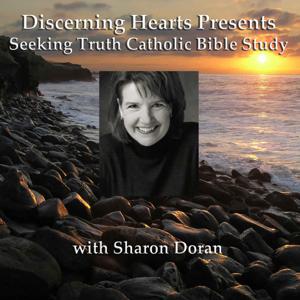

We begin our study of the Gospel of Luke with an overview lecture, beginning with what we know about the author himself. From the historian, Eusebius, we learn that Luke was a physician from Antioch, an ancient Greek city located in Asia Minor. Antioch was the center of the early Church, and it was here that the followers of Jesus came to be known as “Christians.” Luke, a companion of St. Paul, is responsible for the Gospel of Luke and the Acts of the Apostles, which comprise the greatest percentage of the New Testament.
The word “Gospel” means “Good News” and comes from the Greek word, “euangelion.” During the first century, the fastest growing religion was the imperial cult of Roman emperor worship. The word “euangelion” took on religious significance with the announcement of the “good news” of a new emperor, a new “god.” For Christians, however, the “euangelion” meant the “good news” of the new King of Kings, Jesus Christ.
As a physician, Luke wrote his Gospel to bring the medicine needed for our wounded souls. The new medicine came from the new tree of life, the cross, and the medicine of immortality is the Eucharist. “Every time this mystery is celebrated, “the work of our redemption is carried on” and we “break the one bread that provides the medicine of immortality, the antidote for death, and the food that makes us live forever in Jesus Christ (CCC 1405).”
Through the incarnation, Christ joined in our humanity and introduced His kingdom to the world. As the final High Priest, Jesus completes the perfect sacrifice on the cross. God desires that we cooperate with His plan of salvation, joining in His suffering, to complete “what is still lacking in regard to Christ’s afflictions, for the sake of his body, which is the church (Col 1:24).” “Christ loved the church and gave himself up for her to make her holy, cleansing her by the washing with water through the word, and to present her to himself as a radiant church, without stain or wrinkle or any other blemish, but holy and blameless (Eph 5:25-27).”
Christ has cleansed the Church, making her holy, yet we know that the Church is made up of sinners in need of healing. Jesus, the divine physician, has left us with the healing sacraments of Reconciliation and Anointing of the Sick. What is hidden in shame and secrecy needs to be brought to the light so that healing can take place: “Everyone who does evil hates the light, and will not come into the light for fear that their deeds will be exposed. But whoever lives by the truth comes into the light, so that it may be seen plainly that what they have done has been done in the sight of God (John 3:20-21).”
©2019 Seeking Truth Catholic Bible Study
Sharon Doran serves as the teaching director of “Seeking Truth.” An experienced Bible Study teacher, Sharon has a passion for scripture that will motivate and challenge you to immerse yourself in God’s Word and apply His message to your everyday life.
“Seeking Truth” is an in-depth Catholic Bible Study commissioned by the Archdiocese of Omaha in response to John Paul II’s call to the New Evangelization as well as Pope Benedict XVI’s exhortation for all Catholics to study scripture. To learn more, go to www.seekingtruth.net
The post ST-Luke Ep 1 – The Gospel of Luke – An Overview Part 1 – Seeking Truth with Sharon Doran – Discerning Hearts Podcast appeared first on Discerning Hearts Catholic Podcasts.
 View all episodes
 By Sharon Doran

4.9
2525 ratings
We begin our study of the Gospel of Luke with an overview lecture, beginning with what we know about the author himself. From the historian, Eusebius, we learn that Luke was a physician from Antioch, an ancient Greek city located in Asia Minor. Antioch was the center of the early Church, and it was here that the followers of Jesus came to be known as “Christians.” Luke, a companion of St. Paul, is responsible for the Gospel of Luke and the Acts of the Apostles, which comprise the greatest percentage of the New Testament.
The word “Gospel” means “Good News” and comes from the Greek word, “euangelion.” During the first century, the fastest growing religion was the imperial cult of Roman emperor worship. The word “euangelion” took on religious significance with the announcement of the “good news” of a new emperor, a new “god.” For Christians, however, the “euangelion” meant the “good news” of the new King of Kings, Jesus Christ.
As a physician, Luke wrote his Gospel to bring the medicine needed for our wounded souls. The new medicine came from the new tree of life, the cross, and the medicine of immortality is the Eucharist. “Every time this mystery is celebrated, “the work of our redemption is carried on” and we “break the one bread that provides the medicine of immortality, the antidote for death, and the food that makes us live forever in Jesus Christ (CCC 1405).”
Through the incarnation, Christ joined in our humanity and introduced His kingdom to the world. As the final High Priest, Jesus completes the perfect sacrifice on the cross. God desires that we cooperate with His plan of salvation, joining in His suffering, to complete “what is still lacking in regard to Christ’s afflictions, for the sake of his body, which is the church (Col 1:24).” “Christ loved the church and gave himself up for her to make her holy, cleansing her by the washing with water through the word, and to present her to himself as a radiant church, without stain or wrinkle or any other blemish, but holy and blameless (Eph 5:25-27).”
Christ has cleansed the Church, making her holy, yet we know that the Church is made up of sinners in need of healing. Jesus, the divine physician, has left us with the healing sacraments of Reconciliation and Anointing of the Sick. What is hidden in shame and secrecy needs to be brought to the light so that healing can take place: “Everyone who does evil hates the light, and will not come into the light for fear that their deeds will be exposed. But whoever lives by the truth comes into the light, so that it may be seen plainly that what they have done has been done in the sight of God (John 3:20-21).”
©2019 Seeking Truth Catholic Bible Study
Sharon Doran serves as the teaching director of “Seeking Truth.” An experienced Bible Study teacher, Sharon has a passion for scripture that will motivate and challenge you to immerse yourself in God’s Word and apply His message to your everyday life.
“Seeking Truth” is an in-depth Catholic Bible Study commissioned by the Archdiocese of Omaha in response to John Paul II’s call to the New Evangelization as well as Pope Benedict XVI’s exhortation for all Catholics to study scripture. To learn more, go to www.seekingtruth.net
The post ST-Luke Ep 1 – The Gospel of Luke – An Overview Part 1 – Seeking Truth with Sharon Doran – Discerning Hearts Podcast appeared first on Discerning Hearts Catholic Podcasts.
50 Listeners
518 Listeners
21 Listeners

24 Listeners
4 Listeners
18 Listeners
10 Listeners
34 Listeners
21 Listeners
25 Listeners
3 Listeners
2 Listeners
7 Listeners
20 Listeners
3 Listeners
3 Listeners
18 Listeners
13 Listeners
3 Listeners