
Sign up to save your podcasts
Or

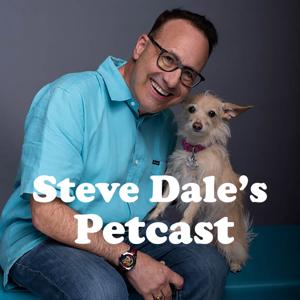


Talk about heavyweight guests, In this Merrick Pet Care Petcast, Dr. Mark Johnston, chairman of the trustees of Our Special Friends and VP World Small Animal Veterinary Association Foundation with Dr. Patrick Flynn, president elect of the Human Animal Bond Association and Professional Services Veterinarian at Zoetis.
This Petcast features the very first announcement: International Human Animal Bond Day is November 8. And Dr. Johnson and Dr Flynn both explain that indeed it’s all about celebrating our relationships with dogs, cats and other companion animals but the human animal bond is truly much deeper than that. And what exactly is this bond? Both offer fascinating examples.
Also, another exciting announcement, the Human Animal Bond Academy, which launches soon.
Arguably, there’s an epidemic of overweight and obese cats. Dr. RuthAnn Lobos, lead veterinarian Merrick Pet Care feels so strongly about this topic because, though we love them more than ever before, our cats are suffering more as a result. As one example, diabetes in cats is at an all-time high. We discuss other repercussions of cats being overweight or obese.
Dr. Lobos offers tips on both prevention – so the cat isn’t overweight or obese in the first place. And we absolutely talk about how to get that extra weight to gradually come off.
Dr. Danielle Conway is residency trained in veterinary nutrition and certified in veterinary acupuncture, herbal medicine and chiropractic medicine. In this Merrick Pet Care Petcast, she offers our aging pets the fountain of youth.
Dr. Conway is all about integrating traditional and what was once termed non-traditional or alternative medicine. However, today we know these are merely different modalities and what works best for most pets is a multi-modal approach, using the best of what is most appropriate for an individual pet.
We talk about how to determine if your dog or cat is in pain – sometimes it’s not so clear.
From Omega 3 fatty acids to help with mobility and joint pain to acupuncture to diet to massage therapy– we talk about options which there are more of than ever before.
Dr. RuthAnn Lobos, lead veterinarian Merrick Pet Care discusses disaster preparedness. Thing is everyone thinks, “I can plan sometime” but really it’s not going to happen to me. Dr. Lobos explains that increasingly disasters are happening. She also offers information how to create a disaster preparedness emergency kit.
Dr. Lobos also offers the secret to tell if your dog is overheating. We explain that indeed dogs overheat far more easily than people, and some breeds in particular.
Dr. Lobos says there’s good and bad news about swimming. It’s physically great exercise, and keeps dogs cool but there are concerns about algae blooms and leptospirosis. And we discuss dogs left in hot cars.
Veterinary behaviorist Dr. Lisa Radosta discusses separation anxiety in dogs. She says due to adopted pandemic puppies not being appropriately socialized and dogs adopted who have been rehomed previously several times, and a sudden big change in lifestyles for so many families, there indeed may be more separation anxiety happening right now.
Dr. Radosta talks on this Merrick Pet Care Petcast about what to do about separation anxiety in dogs. And even offers brilliant ideas which may prevent separation anxiety in the first place, something you may have not heard about before.
Check out expert advice from Dr. Radosta and colleagues at the RealDogNerds.com It’s a platform for learning about pet behavior.
Some experts feel that half or more of all indoor only cats live day to day at least slightly dehydrated. So, I found an expert, Dr. RuthAnn Lobos, lead veterinarian Merrick Pet Care. Dr. Lobos explains just how complex this issue of dehydration is, but there’s little doubt that at least some – a significant percent of cats – may indeed be dehydrated. So now, what? She describes how pet parents might determine if their kitty isn’t getting enough water. We talk about behavior changes pet parents can make (like adding water dishes and/or changing their locations), innovative products like Hydra Care (helps cats consume more liquid and even absorb more water directly into their cells. In a Purina study, cats drinking Hydra Care consumed on average 50 percent more liquid daily), and most of all there’s that never ending discussion about feeding moist vs. dry food.
Steve Dale’s Petcast is brought to you by Merrick Pet Care.
The pandemic has been great for no one – except for dogs and cats at shelters in the U.S. As the pandemic hit, adoptions and fostering in so many cities hit record numbers. I chat with Dr. Ellen Jefferson, president and CEO Austin and American Pets Alive. So, why have adoptions and fosters in so many cities hit new highs? Dr. Jefferson offers many helpful tips on acclimating dogs or cats into any new setting, whether it’s the White House or your house. And tips on how to successfully introduce new pets into homes with existing animals? We talk about foster sleepovers, and what exactly they are. And once you do adopt is there a super-secret way to make the bond stick with that new family? And finally, Dr. Jeferson offers tips on diet and treats in the new home.
Steve Dale’s Petcast brought to you by Merrick Pet Care.
Dr. RuthAnn Lobos, lead veterinarian at Merrick Pet Care, instructs you to pay attention to your dog’s tongue to discern if your pup may be doing overdoing the physical exertion, particularly in hot weather. We discuss how to choose the right amount of exercise for the right dog or cat. Yes, cat. And the notion of exercise is important for so many reasons, including the fact that over half of our pets are overweight or obese. And Dr. Lobos describe how this may impact their general health and why obesity truly is a disease. Remember these words: Movement is a good thing!
Steve Dale’s Petcast brought to you by Merrick Pet Care.
Appropriate to kick off the first ever Steve Dale Petcast with a conversation about the human animal bond. Without that bond, none of us would have pets. What would be the point? Enjoy this wide-ranging conversation with Dr. Maggie O’Haire, associate professor Human Animal Interaction Purdue University College of Veterinary Medicine. Dr. O’Haire agrees with my belief that dogs may understand us better than we understand them. And she reveals results of her studies to support the notion that veterans with post-traumatic stress disorder syndrome do far better with a service dog. Dr. O’Haire’s research makes a huge difference, as service dogs are supported by our government for people with physical disabilities, yet not for war heroes with PTSD who would benefit by having a psychiatric service dog.
From the publisher's feed

40 Listeners
6 Listeners

10 Listeners

23 Listeners

35 Listeners

41 Listeners

29 Listeners

164 Listeners