
Sign up to save your podcasts
Or

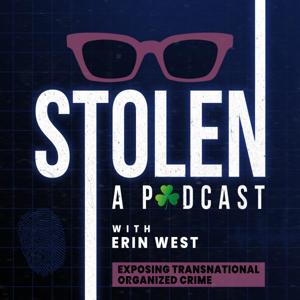


Episode 53: Who knew that creating a deepfake video that merged Will Smith and Cardi B into one person would become a viral success? Who knew that the creator of that video would now be focused on stopping the criminal use of the same technology?
Now you can be anybody you want to be. You can be Beyoncé at a concert. You can be skydiving as an alligator. — Carl Bogan on the simplicity of deepfake technology
Carl Bogan joins Erin to talk about the evolution of deepfakes — from his pioneering viral video to today’s need to protect businesses and consumers from video impersonation in scams and fraud.
Carl is the visual effects pioneer who created the original viral deepfake in 2019 and has since seen his invention weaponized at scale. What began as a technical experiment to solve a startup's content problem became a two-decade reckoning with tech that’s now available to anyone with a phone and an internet connection.
You don’t give a baby a knife. We’re a bunch of babies running around with knives. — Carl Bogan
Episode notes and video: https://operationshamrock.org/podcast/stolen
--
Episode Sponsors
Thank you to our Stolen podcast sponsors, BioCatch and Scamnetic.
Subscribe to Stolen for straight truth, survivor-centered storytelling, and bold conversations about the scamdemic and the people fighting back.
Erin West and AARP's Kathy Stokes flip the script on the 50th episode of Stolen.
It’s not about risky behavior. It’s that the scams are coming at us in every possible communication channel. We can’t avoid it. — Kathy Stokes, AARP
Episode 50: Erin and Kathy dig into one of the most overlooked dimensions of the scam epidemic: the language we use — and the harm it causes. AARP’s Fraud Watch Network handles roughly 100,000 calls a year from victims and their families, and works to shift how the public, media, and policymakers talk about people who have been targeted by financial crime.
It is a systemic failure. When we can all agree on that, then we can all be doing a hell of a lot more than we're doing right now. — Kathy Stokes, AARP
Episode notes and video: https://operationshamrock.org/podcast/stolen
--
Episode Sponsors
Thank you to our Stolen podcast sponsors, BioCatch and Scamnetic.
Subscribe to Stolen for straight truth, survivor-centered storytelling, and bold conversations about the scamdemic and the people fighting back.
Episode 52: UK survivor-turned-advocate Anna Rowe breaks down the brain chemistry behind romance fraud — cortisol, dopamine, trauma bonds — and why victims blame themselves instead of the criminals manipulating them.
You don’t see anything wrong. All the red flags appear beige because of what’s going on in your body. — Anna Rowe, co-founder LoveSaid.org
From the dopamine flood of love bombing to the cortisol spikes of intermittent reinforcement, Anna outlines the biological and emotional mechanisms that leave victims compliant, confused, and blaming themselves.
Anna and Erin also tackle the systemic failures that prevent victims from healing, including the lack of training for banking staff, victim-blaming media headlines, and law enforcement’s slow adoption of trauma-informed language.
Episode notes and video: https://operationshamrock.org/podcast/stolen
--
Episode Sponsors
Thank you to our Stolen podcast sponsors, BioCatch and Scamnetic.
Subscribe to Stolen for straight truth, survivor-centered storytelling, and bold conversations about the scamdemic and the people fighting back.
Episode 51: Erin West sits down with Dr. David Maimon, a Georgia State University professor and cybercrime researcher for SentiLink, to dig into what the data tells us about online fraud, where it’s headed, how scammers select victims, and why our approaches to stopping them may need to change.
Current trends are alarming:
Thank you to our Stolen podcast sponsors, BioCatch and Scamnetic.
---
Subscribe to Stolen for straight truth, survivor-centered storytelling, and bold conversations about the scamdemic and the people fighting back.
Episode 49: BioCatch's Sharell Barshishat joins Erin West to dive deep into the fascinating (and alarming) intersection of banking, fraud, and technology.
Sharell breaks down how tech is changing the fraud-fighting playbook for banking. From spotting bots at account opening to detecting a pig butchering victim’s hesitation mid-transfer, Sharell explains how technology can read what people do — not just who they are — to identify fraud in real time.
He and Erin also discuss why stopping scams requires a unified approach across sectors, from banks to social media to government. From Telegram discussions to behavioral biometrics, the stakes have never been higher.
• AI is accelerating the fraud threat landscape — fast.
• Behavior never lies, even when people do.
• Fraud travels on a highway of mule accounts.
• Australian banks show what’s possible with political will.
• Scams are a banking problem, not just a victim problem.
Episode notes and video: https://operationshamrock.org/podcast/stolen
Thank you to our Stolen podcast sponsors, BioCatch and Scamnetic.
Subscribe to Stolen for straight truth, survivor-centered storytelling, and bold conversations about the scamdemic and the people fighting back.
Deep in Cambodia's remote border region, journalists Lindsey Kennedy and Nathan Southern found something that wasn't on any map — a sprawling scam compound now known as Mansion 8. In this episode of Stolen, host Erin West and The Eyewitness Project team break down how a field discovery became an international sanctions target, what the UK action means for pig butchering networks, and why the crackdown is far from over.
You Can Help: Donate to the GoFundMe campaign to help trafficking survivors return to their home countries.
Episode Notes and Video https://operationshamrock.org/podcast/stolen
Sponsors
Thank you to our Stolen podcast sponsors, Biocatch and Scamnetic.
---
Subscribe to the Stolen podcast for straight truth, survivor-centered storytelling, and bold conversations about the scamdemic and the people fighting back.
When no one believed them, The Eyewitness Project's Nathan and Lindsay kept reporting. Now the world is paying attention. Erin West talks with the investigative journalists whose frontline work in Cambodia is driving real change in how governments and law enforcement respond to transnational scam compounds.
In the first of a two-part conversation, Lindsey and Nathan trace the arc from Sihanoukville’s casino boom and China’s capital flight crackdown to the rise of sprawling scam compounds that now dot Cambodia’s borders.
Episode notes and video: https://operationshamrock.org/podcast/stolen
--
Episode Sponsors
Thank you to our Stolen podcast sponsors, Biocatch and Scamnetic.
---
Subscribe to Stolen for straight truth, survivor-centered storytelling, and bold conversations about the scamdemic and the people fighting back.
Episode 46: Erin West sits down with Marc Evans, an active metropolitan fraud detective and the founder of Fraud Hero, for a deep dive into the mechanics of modern social engineering scams. Marc brings front-line insight into the schemes hitting hardest right now—from tech-support cons and business email compromise to casino heists pulled off entirely over the phone. He traces his own path into fraud investigation, including a personal brush with identity theft that almost cost him his law-enforcement career before it began.
Marc and Erin unpack how scammers exploit psychology — manufacturing authority, urgency, and trust — to steal money before victims even realize what has happened. They talk about how cryptocurrency ATMs have become the payment method of choice for scammers, and cover the efforts to rein them in. Marc shares his vision for Fraud Hero, an education platform designed to stop scams before they start by giving everyday people and businesses the knowledge he uses on the job.
Amy Nofziger has spent 24 years running AARP's Fraud Watch Network Helpline — and the one thing she wants every victim to know is this: you are not alone, and this is not your fault.
In this episode, Erin and Amy dig into why shame keeps victims silent, why the loneliness epidemic is a scammer's best weapon, why brilliant people fall hardest, and why if your gut felt off — that was your body trying to protect you. If you've been scammed, love someone who has, or just want to understand why these crimes are so devastatingly effective, this episode is for you.
BioCatch prevents financial crime by recognizing patterns in human behavior, continuously collecting 3,000 anonymized data points – keystroke and mouse activity, touch screen behavior, physical device attributes, and more – as people interact with their digital banking platforms. With these inputs, BioCatch's models reveal patterns that distinguish the criminal from the legitimate.
Scamnetic is a leader in AI-powered scam detection and prevention, protecting individuals, businesses, and financial institutions from digital scams. With solutions like KnowScam and IDeveryone, Scamnetic delivers real-time scam insights, identity verification, and intervention. Restoring trust, reducing losses, and empowering organizations to safeguard customers in an increasingly complex digital world.
What if the person on your screen isn't real? Author and cybersecurity expert Perry Carpenter joins Erin West to break down how deepfakes, AI-generated voice cloning, and synthetic media have become the scammer's most powerful weapons — and why your own desire to believe is their greatest asset.
Perry is the author of Faik: A Practical Guide to Living in a World of Deepfakes, Disinformation, and AI-Generated Deception, and he doesn't pull punches. In this episode, he live-demos deepfake face-swapping technology that costs $60 and installs like any app, explains why deepfake detection software is always one step behind, and reveals how scam operations run Telegram channels where criminals share tips, troubleshoot their tech, and celebrate their "sales goals."
Erin and Perry also dig into the psychology that makes victims so vulnerable — and what regular people can do right now to stay grounded in a world where reality is increasingly malleable.
You'll learn:
Perry and Erin will both be speaking at SXSW 2026 — catch them live in Austin.
Stolen is hosted by Erin West, former Santa Clara County prosecutor and founder of Operation Shamrock.
Learn more about Operation Shamrock: operationshamrock.org
BioCatch prevents financial crime by recognizing patterns in human behavior, continuously collecting 3,000 anonymized data points – keystroke and mouse activity, touch screen behavior, physical device attributes, and more – as people interact with their digital banking platforms. With these inputs, BioCatch's models reveal patterns that distinguish the criminal from the legitimate.
Scamnetic is a leader in AI-powered scam detection and prevention, protecting individuals, businesses, and financial institutions from digital scams. With solutions like KnowScam and IDeveryone, Scamnetic delivers real-time scam insights, identity verification, and intervention. Restoring trust, reducing losses, and empowering organizations to safeguard customers in an increasingly complex digital world.
From the publisher's feed
Scams, cryptofraud, investment fraud, celebrity impersonation, romance baiting, sexploitation, crypto ATM fraud, job scams, toll scams, human trafficking...
Stolen is a weekly podcast that uncovers the global rise of the transnational scam industry. Stolen investigates the global rise of digital crime — and the people caught in the crossfire. Join host Erin West — prosecutor, cybercrime investigator, global keynote speaker, and your guide into the dark corners of the internet.
Hear from law enforcement, cyberfraud experts, and the survivors who’ve lived through the crimes. These are the voices behind the headlines and the crimes that cross borders and boundaries.

90,968 Listeners

30,698 Listeners

38,675 Listeners

26,806 Listeners

111,874 Listeners

14,911 Listeners

1,088 Listeners

19,119 Listeners

6,057 Listeners
57,591 Listeners

15,917 Listeners

19,270 Listeners

4,206 Listeners
12 Listeners

12,495 Listeners