
Sign up to save your podcasts
Or

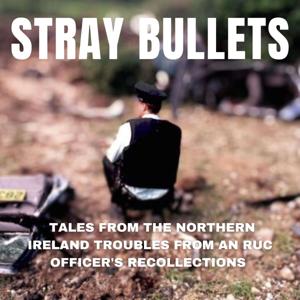


Part I of II:
In this episode I discuss the perception of the Royal Ulster Constabulary held by the Irish Nationalist / Republican community which grew from incidents such as Burntollet Bridge and police baton charges in Derry during the beginning of the Troubles. To do so I look at the actions of the State in respect of that community as well as some of my own encounters and thoughts. To conclude I consider the Hunger Strikes of 1980/81.
In Part II I continue my thoughts on the legacy of the Hunger Strikes through to the Good Friday Agreement and the subsequent dissolution of the RUC. I will pepper this episode with my own thoughts and experiences in respect of the ceasefires, policing for change and the advent of the PSNI.
Thank you to all who continue to indulge my podcasts. I am immensely grateful.
*'In Bloody Protest For A Glorious Thing' is a line from The Mother by Patrick Pearse
Click here if you’d like to send me a comment or question. Thank you.
Support the show
Médecins Sans Frontières
Unicef
PEN International
Since the establishment of Northern Ireland in 1921, and the Royal Ulster Constabulary a year later, it has been acknowledged that the RUC was overwhelmingly comprised of those from the protestant community within Northern Ireland. This factor led, in small part, to a lineage of 'police families'; fathers, mothers, sons and daughters continuing the tradition of their forbearers by enlisting as RUC officers. When the Troubles ignited in 1969 it saw the RUC become over-stretched and constantly having to adapt and counter an increasingly hostile landscape of terrorism which took a heavy toll on mundane policing practices. It wasn't long before Loyalist paramilitaries assumed a role by which they envisaged themselves as having to protect their own communities given a, perceived, growing absence of police from those areas. But just how did Loyalist terrorists see themselves in relation to the RUC and how did that relationship crumble over the period of the Troubles? This is what I hope to discuss in the episode. However, I have not been able to include all I wished and therefore there may be a further episode considering Loyalism and the RUC.
Click here if you’d like to send me a comment or question. Thank you.
Support the show
Médecins Sans Frontières
Unicef
PEN International
In this episode I recount a gun and rocket attack against members of the Royal Ulster Constabulary which took place in Newry during the very late 1980s. The attack was coordinated by the south Armagh Provisional IRA along with elements of the Newry PIRA.
As ever, the identity of any individuals involved has been heavily cloaked through changes and alterations to names, locations, characteristics and nuances. The location of the attack remains the same.
In the following episode I will be taking a break from these retellings and focus on attitudes towards policing in Northern Ireland, both in a Troubles and post-Troubles context.
Click here if you’d like to send me a comment or question. Thank you.
Support the show
Médecins Sans Frontières
Unicef
PEN International
In this episode I recount a sniper attack upon a joint army / RUC foot patrol in West Belfast. To better relate the incident I have characterised both state and non-state actors. I have also used a narrative framework to provide a clearer image of those involved. This account is lifted from personal involvement as well as information available to me at the time, and later. As ever, names and some details have been omitted or altered.
The primary characters in this episode are:
Dee - a member of a PIRA Belfast Active Service Unit
Samuel - a British Army a PFC based in Springfield Road RUC Station, Belfast
Sandy - a RUC neighbourhood officer stationed in Springfield Road RUC
--------------------------------------------------------------------------------------------------------------------
Law in the Country of Cats
When two men meet for the first time in all
Eternity and outright hate each other,
Not as a beggar-man and a rich man,
Not as cuckold-maker and cuckold,
Not as bully and delicate boy, but
As dog and wolf because their blood before
They are aware has bristled into their hackles,
Because one has clubbed the other to death
[...]
When two men at first meeting hate each other
Even in passing, without words, in the street,
[...]
There will be that moment's horrible pause
As each looks into the gulf in the eye of the other,
Then a flash of violent incredible action,
Then one man letting his brains gently to the gutter
[...]
Ted Hughes
Click here if you’d like to send me a comment or question. Thank you.
Support the show
Médecins Sans Frontières
Unicef
PEN International
West Belfast. Early 1990s. Royal Ulster Constabulary officers are lured to address. Waiting for them is an Improvised Explosive Device and a 'murder corridor' engineered and primed by the Provisional Irish Republican Army.
Presented in a narrative framework this episode explores the impact on ordinary members of the public who find themselves caught up in a plot to murder police and / or soldiers. As with previous episodes the incident is one I recall. I have embellished the characterisations from memory and recorded statements, however as with the location and time the actual incident took place I have changed or altered names and locations as well as the identity of anyone involved, including police.
Thank you for your continued support and interest. This podcast also helps me deal with my Complex PTSD as well as to try and understand my past in such a way that I may imform my present.
Coming soon: Episode Seven - an account of a sniper attack on police.
Click here if you’d like to send me a comment or question. Thank you.
Support the show
Médecins Sans Frontières
Unicef
PEN International
This episode details a gun attack on members of the Royal Ulster Constabulary at Grosvenor Road RUC station, Belfast in 1992. One officer received a gunshot wound as a result of the attack.
The incident also involves a Special Branch asset (tout / agent) and his handler.
To better relate the incident I have created three narrators:
Jude - a member of the Provisional IRA
Mark - a Special Branch officer
Richard - a member of the RUC Full-Time Reserve
The above are based on real people involved in the incident. I have also taken the opportunity to expand upon their personalities given information known to me and on speaking to a number of parties involved - directly and indirectly. Obviously, names and specifics of the incident have been altered or changed.
Thank you for listening.
The next episode will recount an incident involving an IED and a very frustrated PIRA active service unit.
Click here if you’d like to send me a comment or question. Thank you.
Support the show
Médecins Sans Frontières
Unicef
PEN International
A narrative account of the attempted murder of a RUC officer during August 1987. This incident occurred in the Royal Victoria Hospital, Belfast. Like so many other incidents at the time it went unreported by local news outlets (during the 1980s and early 1990s the frequency of terrorist attacks usually meant only those causing death, serious injury or extensive damage to property were reported).
Again, I have used 'narrators' in order to enhance the listening experience. Naturally, the names used are not those of the actual persons involved. The sequence of events and location remains unchanged.
Click here if you’d like to send me a comment or question. Thank you.
Support the show
Médecins Sans Frontières
Unicef
PEN International
This episode is based on an actual occurrence I experienced a number of times in the 1980s. It's recounted in narrative form using three narrators, the primary one being an RUC officer. If this format is preferred by you please let me know (Twitter: @redbrickedslums). If it proves so I'll upload further tales from the Troubles using this form. Thank you.
Click here if you’d like to send me a comment or question. Thank you.
Support the show
Médecins Sans Frontières
Unicef
PEN International
In this episode I'm looking at how Troubles era Belfast has been represented in fiction. I'll be providing some thoughts and examples of such. Another aspect I touch on is that of 'The Other', which gives me an opportunity to recite some Heaney, too.
In Part Two - which will form Stray Bullets episode 3 - I'll be talking about my observations and thoughts on the tribalism, sectarianism and totems which I encountered during my service in the Royal Ulster Constabulary and, latterly, the Police Service of Northern Ireland, from the mid-1980s.
My novel The Bitter End of Dreams is still available via Amazon and you can send me any feedback etc at Twitter: @redbrickedslums
Click here if you’d like to send me a comment or question. Thank you.
Support the show
Médecins Sans Frontières
Unicef
PEN International
In this first episode - or introduction - I talk a bit about my background, how I came to write a novel set during the Troubles, and why I decided to blend genres. I'll also give an explanation as to why I chose Mithraism over Christianity as the novel's primary religion.
Click here if you’d like to send me a comment or question. Thank you.
Support the show
Médecins Sans Frontières
Unicef
PEN International
From the publisher's feed
The Stray Bullets podcast, hosted by E.S. Haggan, frequently discusses the Royal Ulster Constabulary (RUC), often drawing on Haggan's experiences as a former RUC/PSNI…
The podcast delves into various aspects of the RUC, including:
The podcast provides a unique perspective on the RUC and the Troubles, informed by Haggan's personal experiences and detailed discussions of his novel.
'There are no facts, only interpretations.'
Friedrich Nietzsche