
Sign up to save your podcasts
Or

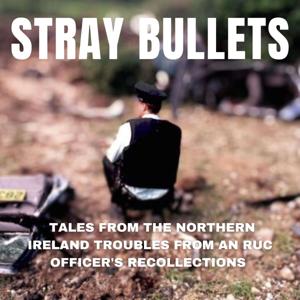


In this episode I am focusing on two Troubles' murders, those of RUC Sgt Hugh Brendan McCormac and Pat Finucane. Both men were slaughtered in front of their wives and young children. While this episode concludes the theme of 'Doorstep Murders' I felt that these two cases - from the thousands murdered during the Troubles - demonstrated how the killers thought nothing of murdering their victims in very close proximity to the respective families.
I do go digress here and there, but I sincerely hope I am able to adequately convey my thoughts without exhausting your patience.
I was also minded of, but didn't have time to include in the episode, the following poem by Michael Longley...
The Civil Servant
He was preparing an Ulster fry for breakfast
When someone walked into the kitchen and shot him:
A bullet entered his mouth and pierced his skull,
The books he had read, the music he could play.
Hlay in his dressing gown and pyjamas
While they dusted the dresser for fingerprints
And then shuffled backwards across the garden
With notebooks, cameras and measuring tapes.
They rolled him up like a red carpet and left
Only a bullet hole in the cutlery drawer
Later his widow took a hammer and chisel
And removed the black keys from his piano.
Click here if you’d like to send me a comment or question. Thank you.
Support the show
Médecins Sans Frontières
Unicef
PEN International
In this episode I return to narrative form through which to recount an actual doorstep shooting that occurred in Belfast 1979. As always, names have been changed as well as the Provisional IRA gunman's ground support being slightly altered.
After the main body of the occurrence there follows an account of the victim's recollections and thoughts (this may be similar to the Victim Impact Statements of today).
This is then immediately followed by segments from a (wider) interview of the gunman post-Good Friday Agreement and in the USA.
Click here if you’d like to send me a comment or question. Thank you.
Support the show
Médecins Sans Frontières
Unicef
PEN International
This is just a very succinct update on upcoming episodes and the future of the podcast.
Many thanks. I owe a massive debt of gratitude to all who have - and continued to - listen to my thoughts, experiences and reflections on my time as an officer in the Royal Ulster Constabulary during the Northern Ireland Troubles.
Click here if you’d like to send me a comment or question. Thank you.
Support the show
Médecins Sans Frontières
Unicef
PEN International
In this episode I briefly recount some of my experiences as an RUC baton gunner. Obviously this is a very contentious subject and I am very cognizant of this. Seventeen civilians were killed by rubber or plastic bullets during the Troubles, eight of the dead were children, all of the dead were catholic. Many others have been gravely injured by the weapon.
There remain arguments for its use, as well as arguments against. As I say these are wholly my own thoughts and experiences surrounding my role as an RUC baton gunner.
I hope you find something of interest in this episode and, as always, I appreciate your time in listening to such.
Click here if you’d like to send me a comment or question. Thank you.
Support the show
Médecins Sans Frontières
Unicef
PEN International
In this episode I take a look at Dissident Irish Republican micro-groups. Rather than a case of considering some of their 'military actions', I'll be focusing on republican ideology as well as theology.
How do dissidents view themselves as opposed to Sinn Fein?
What drives their appetite for continuing violence?
Is there much difference between dissidents and organised crime groups?
I hope to, if not answer some of the above then give food for thought, plus look briefly at the statement by PIRA / Sinn Fein that there was 'no alternative' to waging a campaign of violence.
Click here if you’d like to send me a comment or question. Thank you.
Support the show
Médecins Sans Frontières
Unicef
PEN International
In this the second, and concluding part, of my look at the recent BBC TV drama Blue Lights, a drama based on frontline policing in the PSNI, I'll be ruminating on aspects such as threats against police, extra-marital affairs in the RUC / PSNI, the depiction of MI5 and Special Branch in the drama.
Obviously this episode is peppered with SPOILERS,
I do think I saw a little subtext in the drama too - I'm most likely wrong, but I thought I'd discuss it anyway to see if it makes sense. This element would very briefly concern the RUC's transition into the PSNI.
Thank you again, and I hope you enjoy this episode.
Click here if you’d like to send me a comment or question. Thank you.
Support the show
Médecins Sans Frontières
Unicef
PEN International
Using this opportunity to have a break, of sorts, from specific topics which I'd encountered throughout my RUC / PSNI career. Instead, I'm looking at the recent BBC TV drama Blue Lights, a drama based on frontline policing in the PSNI.
I'll spend this episode and the following looking at some of the characterisations and narrative strands within Blue Lights while reflecting upon similar in the context of my career in policing both the Troubles and the 'peace'.
I hope you enjoy them. From looking at my notes I think my concluding Blue Lights episode will be slightly longer as I'll be looking at affairs between the ranks (anonymous, of course), MI5 and Special Branch, as well as how - I interpreted - the scriptwriters had embodied the RUCs transition into the PSNI.
Thank you, as ever.
Click here if you’d like to send me a comment or question. Thank you.
Support the show
Médecins Sans Frontières
Unicef
PEN International
In this episode I'll be recounting an incident which occurred in Ballymurphy, West Belfast, 1993.
It involved uniformed RUC officers, CID and members of the British Army. The local PIRA ASU were also involved in the planning and preparation of an attack on the security forces.
I'll also be reflecting upon our memorialising and structuring of folk-memory in the context of the Northern Ireland Troubles. The episode is presented within a narrative framework.
Click here if you’d like to send me a comment or question. Thank you.
Support the show
Médecins Sans Frontières
Unicef
PEN International
During the Troubles the squeeze of a trigger or flick of a switch could quickly turn the events of the day from mundane to inhumane. For the majority of the time the victims of shootings or bombings would have been vastly unaware of their fate. But sometimes not. How do you process the possibility of confronting someone who wants to murder you?
The following occurrence in this episode actually unfolded in the manner recounted. I was present along with two of my colleagues. We were in uniform and on duty. It's a shorter episode that those which have gone before and I hope its brevity does not dilute the gravity of the situation.
Thanks for listening.
Click here if you’d like to send me a comment or question. Thank you.
Support the show
Médecins Sans Frontières
Unicef
PEN International
In Part II of 'In Bloody Protest For A Glorious Thing' I continue my thoughts on militant Republicanism in the context of 'Heroic-Sacrifice' and a mythic past to which the Patriot Dead added their names for 'Ireland's freedom'.
Ultimately what I wanted to do was look at the literary and historical sources extant in Irish Republicanism which informed its evolving ideology as well as providing PIRA volunteers with the mental tools whereby they could quite happily someone like myself while feeling wholly justified and unconcerned.
Maybe the oppressed learn from the brutal methodology of their oppressor? One thing I have come to understand - a long time ago - is that our conflict, the Troubles, is far from simply black and white. The interpretations of who is on the 'Good side' as opposed to who is on the 'bad side' is very subjective and depends on the narrator at the time.
This was an incredibly difficult episode for me to assemble, construct, and complete. My mental health took a bit of a bashing, but I think it remains therapeutic in some way?
Anyway, thank you again for your generosity of interest. In the next episode I would like to recount several occurrences which happened to me while in the RUC, but which may be a little more light-hearted than those proceeding.
Click here if you’d like to send me a comment or question. Thank you.
Support the show
Médecins Sans Frontières
Unicef
PEN International
From the publisher's feed
The Stray Bullets podcast, hosted by E.S. Haggan, frequently discusses the Royal Ulster Constabulary (RUC), often drawing on Haggan's experiences as a former RUC/PSNI…
The podcast delves into various aspects of the RUC, including:
The podcast provides a unique perspective on the RUC and the Troubles, informed by Haggan's personal experiences and detailed discussions of his novel.
'There are no facts, only interpretations.'
Friedrich Nietzsche