
Sign up to save your podcasts
Or

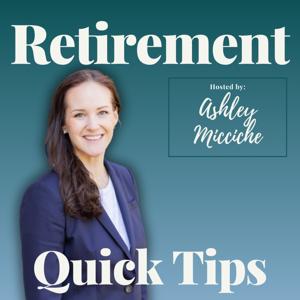

The theme this week on the Retirement Quick Tips Podcast is: Stupid Stock Market Predictions
Probably my favorite dire prediction of all time that never came true is Y2K. I remember being scared about Y2K. I was in high school at the time, and was spending the night at a friends house on NYE. I remember thinking that maybe I should go home because I was pretty worried about what would happen and the chaos that would ensue in the days and weeks after everything crashed. Computers would stop functioning. The stock market would crash. There would be a run on the banks. The world as we knew it would collapse.
There were lots of books written about Y2K, one of which was Time Bomb 2000, among many others. You couldn’t ignore the doomsday drumbeat at the time…as you may recall it wasn’t just books but all over the news, everyone was talking about what would happen when all the computers turned to double zero?
All we could do was wait, and if you were the doomsday preparer type, you had your bunker built and ready to go, stocked with food and water to last until we emerged out the other side of the apocalypse. And then what happened? Absolutely nothing.
What’s the lesson here? Yet another doomsday scenario that was spectacularly wrong. What if you were convinced that this would be the end of the world. After all, everyone else seemed to be convinced that something bad was going to happen to Cinderella at midnight.
If you were convinced it was true, you would sell all your stocks, buy guns, gold, and canned food, quit your job and use all of your free time and stock proceeds to build yourself an apocalypse shelter.
Is it good to be prepared for worst case scenarios? Yes. Within reason. I live in Oregon where a devastating earthquake could happen at any time. I keep running shoes in my office at work. I have food and water for several days and other emergency supplies, both at work and at home. But drastically changing my life to prepare for something that might actually never happen is not prudent, and it can be devastating when you apply these doomsday preparation principles to your finances.
A wise person once told me: Invest based on probabilities, not possibilities. When you invest based on possibilities, anything is possible and you’ll fall for anything. When you make investment decisions based on probabilities, you’re much more likely to find the middle road and reduce the likelihood that you’ll make a bad decision.
That’s it for today. Thanks for listening! My name is Ashley Micciche and this is the Retirement Quick Tips podcast.
----------
>>> Subscribe on Apple Podcasts: https://apple.co/2DI2LSP
>>> Subscribe on Amazon Alexa: https://amzn.to/2xRKrCs
>>> Visit the podcast page: https://truenorthra.com/podcast/
----------
Tags: retirement, investing, money, finance, financial planning, retirement planning, saving money, personal finance
 View all episodes
 By Ashley Micciche

4.9
5252 ratings
The theme this week on the Retirement Quick Tips Podcast is: Stupid Stock Market Predictions
Probably my favorite dire prediction of all time that never came true is Y2K. I remember being scared about Y2K. I was in high school at the time, and was spending the night at a friends house on NYE. I remember thinking that maybe I should go home because I was pretty worried about what would happen and the chaos that would ensue in the days and weeks after everything crashed. Computers would stop functioning. The stock market would crash. There would be a run on the banks. The world as we knew it would collapse.
There were lots of books written about Y2K, one of which was Time Bomb 2000, among many others. You couldn’t ignore the doomsday drumbeat at the time…as you may recall it wasn’t just books but all over the news, everyone was talking about what would happen when all the computers turned to double zero?
All we could do was wait, and if you were the doomsday preparer type, you had your bunker built and ready to go, stocked with food and water to last until we emerged out the other side of the apocalypse. And then what happened? Absolutely nothing.
What’s the lesson here? Yet another doomsday scenario that was spectacularly wrong. What if you were convinced that this would be the end of the world. After all, everyone else seemed to be convinced that something bad was going to happen to Cinderella at midnight.
If you were convinced it was true, you would sell all your stocks, buy guns, gold, and canned food, quit your job and use all of your free time and stock proceeds to build yourself an apocalypse shelter.
Is it good to be prepared for worst case scenarios? Yes. Within reason. I live in Oregon where a devastating earthquake could happen at any time. I keep running shoes in my office at work. I have food and water for several days and other emergency supplies, both at work and at home. But drastically changing my life to prepare for something that might actually never happen is not prudent, and it can be devastating when you apply these doomsday preparation principles to your finances.
A wise person once told me: Invest based on probabilities, not possibilities. When you invest based on possibilities, anything is possible and you’ll fall for anything. When you make investment decisions based on probabilities, you’re much more likely to find the middle road and reduce the likelihood that you’ll make a bad decision.
That’s it for today. Thanks for listening! My name is Ashley Micciche and this is the Retirement Quick Tips podcast.
----------
>>> Subscribe on Apple Podcasts: https://apple.co/2DI2LSP
>>> Subscribe on Amazon Alexa: https://amzn.to/2xRKrCs
>>> Visit the podcast page: https://truenorthra.com/podcast/
----------
Tags: retirement, investing, money, finance, financial planning, retirement planning, saving money, personal finance

1,952 Listeners
445 Listeners

807 Listeners
1,330 Listeners
534 Listeners
752 Listeners

547 Listeners
695 Listeners

623 Listeners

930 Listeners
831 Listeners

204 Listeners
585 Listeners
430 Listeners

1,067 Listeners