
Sign up to save your podcasts
Or

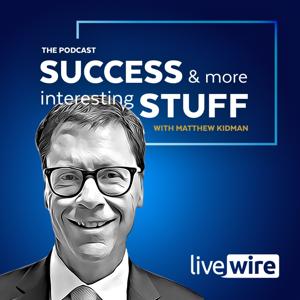


A revolution has taken place in share investing since the turn of the century. American firms have led the charge with the likes of Vanguard and Blackrock taking passive investing around the globe.
Disenchantment with active fund managers has seen funds flow into the passive sector, accelerated by the emergence of exchange traded funds, or simply ETF’s.
In Australia, the revolution arrived late. Active managers held sway for many years before eventually the dam wall broke. The American behemoths came hard, but they didn’t have it their own way.
Aussie startup Betashares grew out of the GFC and took up the fight. Cobbled together by Alex Vynokur, an immigrant from the former Soviet Union, it wasn’t long before Betashares captured the attention of market participants around the country.
15 years on and Betashares has more than 90 ETF’s, $37 billion assets under management and 150 employees. It is the second largest ETF provider in the Aussie market and in 2023 managed to rank number one for inflows with 37 per cent market share.
As a 16-year-old Vynokur and his family left the Ukraine as the walls of the former Soviet Union came crumbling down. Alex had no English and had to start from scratch. He caught on quickly and in a few short years was studying Law at UNSW.
A brief stint working as a lawyer was followed by a job at finance house Pengana with Malcolm Turnbull and Russell Pillemer. He deduced that not all active managers were able to beat the market. Around the same time, he latched onto the emergence of ETFs. Mortgaging his house and taking time for a fact-finding tour of the US saw him kick off Betashares.
In this episode of Success and More Interesting Stuff, Alex discusses his view on the future of both passive and active investment styles, the incredible growth of Betashares and his passion for making an impact on war-stricken Ukraine.
The company’s land rent model is spreading across Victoria at an ever-increasing rate. To date, more than 30 villages within driving distance of Melbourne have been built or are in the planning stage. In total, more than 5,700 homeowners have been accommodated with many more to come.
Lifestyle Communities started life modestly. At the helm was property veteran James Kelly ably assisted by his partners Bruce Carter and Dael Perlov. The company debuted on the ASX four years later, quietly backdooring into a listed cash box. Over the next 17 years, only the insiders and some unsuspecting investors have enjoyed the stunning 2,500% return. Today the company has a market value of $1.7 billion.
Today, Kelly, at 64 years old, is a prime candidate to be a Lifestyle Communities customer. I get the feeling though that he is still happy to keep the accelerator to the floor.
I first met James not long after the company listed on the ASX in 2006. He has always been an engaging, upbeat individual, defying the typecast property developer image. In this podcast, he takes investors through the journey, and shares what keeps him inspired after 21 years in the business.
Note: This episode was recorded on Wednesday 28 February 2024.
Timecodes:
0:00 - Intro
2:33 - From an idea in a cafe to a $1.8 billion company - coming up with the Lifestyle Communities concept
5:36 - The transformation of the retirement industry
7:17 - Early financing struggles and selling the concept
11:28 - The intrinsic desire to be part of a community
13:03 - James Kelly's upbringing, family life and first foray into property
16:03 - The lasting impact and legacy of property investment and development
17:14 - The key to successful property development
19:04 - Experiences that created the leader James Kelly is today
25:52 - The importance of pricing risk as a busy owner
29:22 - The Lifestyle Communities model and its first development
34:09 - Backdoor listing on the ASX
37:18 - Lifestyle's most recent capital raise and plans for the future
40:38 - The transformation of Lifestyle's share register
41:56 - The opportunity in Generation X
45:56 - Why leaders/managers should focus on being kind
47:46 - How to solve Australia's housing crisis
50:32 - Why James Kelly won't be retiring any time soon
Time stamps
Every year, fund manager Eley Griffiths invites stockbrokers from across the country to a lavish dinner. In the cutthroat world of the share market, stockbrokers rarely get treated by their clients. Eley Griffiths, the $1.2 billion small company manager known affectionately as EGG, is a rare breed.
The fact that EGG is currently celebrating its 20th year is a testament to the value that everyone contributes to the process of grinding out returns in the volatile small company market. It is a deliberate strategy and reflects the founder's personality.
Ben Griffiths is a 30-year-plus veteran of the market. The son of a comedian, Griffiths has always loved an audience, and appreciated their participation in the show, whether it be the speech at the annual dinner, or the day-to-day process of picking stocks.
Leaving school, Griffiths found himself on the trading floor of the ASX. He's old enough to remember the 87 stock market crash. From this came many lessons, including a desire to switch to funds management. He found a home as a dealer at Mercantile Mutual and was planted in the middle of a treasure trove in the form of Greg Matthews, David Paradice, Peter Mellett, and John Morgan. He progressed from dealer to analyst, and then portfolio manager. At the turn of the century, he had a brief stint at BT where he worked with Brian Eley, and before long the two had hatched a plan to form EGG and do it their way.
Looking back over 20 years, there were some difficult times. The first 12 months were a real grind, and then years later, Eley became seriously ill before passing away in 2018. Through all this EGG has moved forward with Griffiths at the helm. In the 20th year, the group is branching out into the mid-cap fund. No doubt there are plenty more returns, and broker dinners to be had.
Time stamps
Graham "Skroo" Turner grew up in splendid isolation. His family owned an orchard in Southeast Queensland, and he rode a pushbike to school, which was so small it only required one teacher. Even when he went to university, he avoided humans and decided to study vet science.
Skroo, now seventy-four years old, still sits atop of Flight Centre (ASX:FLT), Australia's largest travel agency, which operates in twenty-four countries. He is the fearless leader of thousands of employees and has a unique management technique that has allowed the company to scale well beyond its humble beginnings.
While Flight Centre was officially born in the early 1980s in Australia, its predecessor, Top Deck, kicked off in 1973, dreamt up over a beer with some friends at Oktoberfest in Munich, Germany. The Top Deck story is legendary in Australian corporate history, with Skroo and his clan driving buses out of London to all parts of the globe, including Afghanistan and Morocco.
He was back in London a few weeks ago to celebrate the 50th birthday of Top Deck and enjoy a beer with some of the old crew who shared his sense of adventure.
Skroo has come a long way in the 50 years and has run into a few potholes and even roadblocks. There was 9-11, The GFC, and of course the COVID-19 virus that induced a near-death experience for Flight Centre. Somehow he has battled through and still seems to enjoy it. In fact, not much has changed. He still looks and sounds like an orchard farmer from Queensland, retaining his laid-back manner that disguises an entrepreneur with a mean competitive streak.
In this episode of Success and More Interesting Stuff, Turner talks about growing up on a farm, how he began his career in tourism, his unique approach to management as well as the highs and lows of Flight Centre’s journey.
Time stamps
It's been just over a decade since Andrew Alcock took a risk on a small up-and-coming investment platform. The gamble has certainly paid off. Since joining the firm in July 2013, HUB24's (ASX: HUB) share price has skyrocketed around 4200% - turning an ASX-listed microcap into a market-leading 30-bagger.
In the early months of 2013, HUB24 was on its knees. The company experienced a boardroom battle, an emergency capital raising, and a lack of leadership. Born out of the stockbroking outfit InvestorFirst, the company was losing millions of dollars a year and its future was doubtful.
The boardroom bloodbath saw founder Otto Buttula depart, and Bruce Higgins installed as the new chairman. The company looked externally for a fresh start - and a CEO who could bring new ideas and a large dose of optimism.
In a bold decision, they landed on Alcock, an unknown quantity to the listed market. At the time, Alcock was running the AMP-owned planning group Genesys Wealth Advisers.
HUB24’s share price in July 2013 was hovering around $1 a share and the company had just posted a loss of $9.7 million with funds under advice of just $479 million. Alcock obviously knew the industry better than most and saw a bright future for HUB24.
Fast forward a decade and things have changed. HUB24, along with its close rival Netwealth, have ushered in a new breed of financial platforms, leading the charge against the incumbents – MLC, BT, and ironically, AMP.
Today, HUB has over $80 billion in funds under advice and in FY23 it booked a net profit of just under $60 million. The company’s share price trades at around $33 with a market capitalisation of $2.8 billion.
Alcock who, as a youngster on Sydney's North Shore dreamed of playing the keyboards in a band, has clocked up 10 years in charge of HUB24 - and he believes the next decade looks even brighter for the investment platform. Along with his right-hand man Jason Entwistle and a burgeoning team, there is a belief that the surge towards the top of the charts will continue.
In this episode of Success and More Interesting Stuff, Alcock openly shares his inspirational journey to the top, some of the challenges along the way, as well as some of the exciting initiatives for HUB24 in the future.
Note: This interview was recorded on Thursday 23 November 2023.
Soon after graduating, Anton discovered the world of funds management and was hooked on the idea immediately. Through taking advantage of chance opportunities, Anton was able to migrate into an equities manager role, where he began building a personal brand as a reliable investor.
After receiving encouragement from clients, Anton struck out on his own and founded Investors Mutual Limited in 1998. The timing put Tagliaferro and his team at the formation of the tech bubble.
Bolstered by a background in accounting, and some unorthodox methods of avoiding the pressures of the crowd, Tagliaferro avoided falling into the common pitfalls of Dot-com stocks.
This led to several years Anton described as the most brutal in the business, as indices bloated with overvalued tech stocks, leaving his value portfolio in the dust. He persevered, however, and when the tech bubble eventually burst, his fund's fortunes flipped and would end up drastically outperforming the market overall.
This demonstration of high conviction investing, in the face of much criticism, built Tagliaferro and IML a reputation in the market, and their funds under management grew accordingly.
Recently, Anton has been able to move into retirement, which he now spends contributing to the development of soccer in Australia. That being said, he still keeps an eye on the markets and hasn't ruled out a return to the industry.
In this podcast, Anton shares his origin story, his serendipitous journey into funds management, and the challenges he has faced along the way. He also provides his view on the current market landscape and opens up about his plans for the future.
Timecodes:
Nick Scali is a furniture powerhouse. Since listing in May 2004, the store count has grown from 10 to 107 without having to tap shareholders for additional capital. Who knew Australians had such an insatiable appetite for leather lounges?
Equally as impressive as store growth are the financial returns investors have enjoyed. Since listing, sales have increased by 1,068%, net profit has increased by 1,407%, and the dividend has increased by 1,263%. From a listing price of $1 to the current share price of $10.79, Nick Scali (ASX:NCK) has been a 10-bagger for shareholders who have stayed the course.
The driving force behind this impressive story is Anthony Scali, son of founder Nick, an ambitious Italian immigrant who came to Australia in 1955 at just 18. After a brief stint selling televisions in Melbourne, Nick moved to Sydney and opened his first store in 1962 on the Hume Highway in Ashfield.
Anthony Scali worked in the family business from a young age and progressively played a more significant role in the running of the growing retailer. He officially took over the CEO role when the company was listed on the ASX and says he has no plans on stepping aside and has eyes for further expansion into the UK.
In this episode of Success and More Interesting Stuff, Anthony talks about the mindset and approach that has created one of Australia’s most iconic retailers.
Time codes:
00:00 - Introduction
01:56 - The Nick Scali advertisements
02:47 - Slow and steady growth
04:15 - Why investors are cautious on retailers
05:25 - The start of Nick Scali
08:43 - Nick Scali’s business philosophies
12:16 - How Anthony got started in the furniture business
14:01 - Moving from niche to mainstream offerings
15:31 - Lessons in debt and property
18:32 - Nick Scali (ASX:NCK) lists on the ASX
20:41 - Passing the CEO baton from Nick to Anthony
24:07 - Growing the family business
26:21 - The initial plan for store growth
27:50 - The ingredients for success in retail
35:25 - The Nick Scali niche - quality and value
37:55 - Anthony Scali’s approach to management
40:45 - Anthony Scali sells down some of his shareholding
43:54 - The vision for Nick Scali in Australia and New Zealand
45:49 - Taking the Nick Scali concept to the UK
49:32 - The outlook for the Australian market
50:57 - Antony Scali on succession planning but no plans to retire
53:45 - Property investments still intriguing, even after the 1990s experience
By the time most people reach their mid-forties, they are thinking about an exit strategy for their working life. That was not the case for Robert Kelly AM, who, in 1975, after a series of harrowing business experiences, was dusting himself off and preparing to start all over again.
Kelly is the Founder, Managing Director and CEO of Steadfast (ASX: SDF), the ASX-listed insurance broking firm with a market capitalisation of ~$6 billion. Insurance is a harsh industry where the big players compete on price and price alone. Steadfast, under Kelly’s stewardship, has taken a different path choosing to focus on relationships and networks to win the loyalty of their clients.
The strategy has proven successful, and Steadfast commands more than one third of Australia’s intermediated insurance market. It appears that the job is not done and at age 76 Kelly recently renewed his contract as Steadfast Managing Director and CEO until 2026.
In this episode of Success and More Interesting Stuff, Mathew Kidman explores the highs and lows of Kelly’s business career, including the life-changing advice he received from Rugby League legend Jack Gibson.
From the publisher's feed

10 Listeners
90 Listeners
19 Listeners

45 Listeners

1 Listeners
12 Listeners
57 Listeners
18 Listeners

22 Listeners

6 Listeners
8 Listeners
47 Listeners
10 Listeners
23 Listeners

28 Listeners