Sustainable Design Lab

Sustainable Design Lab

Download on the App Store

Sustainable Design Lab episodes

  • The 10 Sustainable Packaging Trends Defining 2026
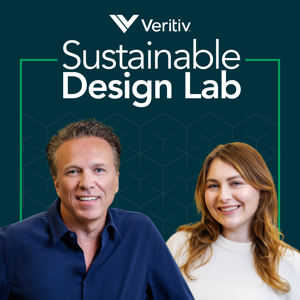
    Welcome to the Sustainable Design Lab podcast by Veritiv. Hosted by Chris Bradley and Brodie Vander Dussen, this show is your go-to resource for cutting-edge insights into the world of sustainable packaging. Join us as we reimagine packaging innovation and turn every decision into a powerful act of sustainability.

    In this episode, Chris and Brodie walk through the 10 biggest sustainable packaging trends shaping 2026, based on insights gathered from hundreds of suppliers, prototypes, regulatory developments, and real-world design challenges.

    What You’ll Learn:

    • How to leverage fiber-based formats as a competitive advantage
    • Why natural polymers represent required innovation in 2026
    • How specialty coatings unlock fiber functionality
    • The path to premium sustainability
    • How to build circular systems from day one

    Chris Bradley is the Chief Marketing Officer at Veritiv and co-host of the Sustainable Design Lab podcast. As a leading authority in sustainable packaging innovation, he specializes in helping companies navigate Extended Producer Responsibility (EPR) regulations and develop cost-effective sustainable packaging solutions. Chris's expertise spans packaging design optimization, regulatory compliance, and sustainable material innovation, making him uniquely qualified to guide businesses through the emerging landscape of EPR legislation.

    Brodie Vander Dussen is the Senior Manager of the Sustainable Design Lab at Veritiv and co-host of the Sustainable Design Lab podcast, recognized for her expertise in sustainable packaging innovation and circular economy principles. With vast experience evaluating suppliers, analyzing emerging materials, and identifying industry trends, she brings practical insights into how brands can transition from sustainability aspirations to executable design strategies.

    Download the full report here! To see how these ink innovations fit into the broader 2026 sustainability landscape.

    The information presented in this episode is for general informational and educational purposes only and does not constitute legal advice. Sustainable Design Lab is handcrafted by our friends over at: fame.so 

    Previous guests include: Sam Boex & Bella Collins of Flexi-Hex, Nathan Pajka of Metsä Board, John Felts of Cruz Foam

    Check out our three most downloaded episodes:

    1. Plastic-Free Paper Packaging: Flexi-Hex on Designing for Luxury and Sustainability
    2. How Metsä Board Is Redesigning Packaging From Forest to Shelf with Nathan Pajka
    3. The Future of Foam: Compostable Materials That Perform with John Felts

    13 min
  • The PHA Toolbox: CJ Biomaterials on Performance, Proof, and End-of-Life
    Welcome to the Sustainable Design Lab podcast by Veritiv. Hosted by Chris Bradley and Brodie Vander Dussen, this show is your go-to resource for cutting-edge insights into the world of sustainable packaging. Join us as we reimagine packaging innovation and turn every decision into a powerful act of sustainability.

    In this episode, Leah Ford and John Licata of CJ Biomaterials break down how PHAs are literally grown by bacteria in massive fermentation tanks, how CJ is scaling from lab to full production, and where PHAs are already shining.

    What You’ll Learn:

    • How to differentiate PHAs from other biopolymers
    • Why paper coating represents the near-term commercial breakthrough for PHAs
    • Designing credible compostable packaging
    • How to validate compostability claims without greenwashing
    • The hidden advantage of PHAs in worst-case environmental scenarios

    Leah Ford is Director of Global Marketing and Communications at CJ Biomaterials, bringing over 20 years of experience in the biopolymers industry. Her expertise spans the critical intersection of regulatory compliance, scientific innovation, and market perception, domains essential to advancing compostable materials. Leah is a trusted advisor to brands navigating sustainability claims, helping bridge the gap between cutting-edge PHA technology and real-world consumer trust.

    John Licata is Director of Applications at CJ Biomaterials, leading the material science innovations that are transforming polyhydroxyalkanoates (PHAs) from laboratory concepts into scalable, commercial solutions. With deep expertise in fermentation technology, polymer chemistry, and biopolymer formulation, John has been central to developing PHA compounds tailored for diverse applications, including paper coatings, food packaging, and nonwovens.

    The information presented in this episode is for general informational and educational purposes only and does not constitute legal advice. Sustainable Design Lab is handcrafted by our friends over at: fame.so 

    Previous guests include: Sam Boex & Bella Collins of Flexi-Hex, Nathan Pajka of Metsä Board, John Felts of Cruz Foam

    Check out our three most downloaded episodes:

    1. Plastic-Free Paper Packaging: Flexi-Hex on Designing for Luxury and Sustainability
    2. How Metsä Board Is Redesigning Packaging From Forest to Shelf with Nathan Pajka
    3. The Future of Foam: Compostable Materials That Perform with John Felts
    37 min
  • Cold Chain Masterclass Part 3: Engineering Design Strategies That Actually Work
    Welcome to the Sustainable Design Lab podcast by Veritiv. Hosted by Chris Bradley and Brodie Vander Dussen, this show is your go-to resource for cutting-edge insights into the world of sustainable packaging. Join us as we reimagine packaging innovation and turn every decision into a powerful act of sustainability.

    In the final episode of the Cold Chain Packaging Masterclass, Chris and Brodie move from diagnosis to design. This conversation focuses on how cold chain systems should be engineered to tolerate real-world variability, not ideal lab conditions. Through ten practical design strategies, the episode explains why cold chain excellence comes from understanding failure, stabilizing systems, and removing hidden assumptions that quietly erode performance at scale.

    What You’ll Learn:

    • Why cold chain design should begin with failure modes rather than material selection
    • How designing for undefined “worst cases” drives cost, weight, and carbon without improving reliability
    • Why repeatability, not validation, separates prototypes from engineered systems
    • How small dimensional and mechanical tolerances quietly reduce thermal margin
    • Why orientation dependence and PCM movement introduce invisible risk
    • How stabilizing systems first reduces the need for excess insulation and energy
    • What rightsizing reveals about system maturity, sustainability, and cost control

    Chris Bradley is the Chief Marketing Officer at Veritiv, where he leads design, marketing, and sustainability with a focus on building recyclable, compostable, and reusable packaging systems. With more than 25 years of experience, he has driven innovation for leading CPG brands including Clorox, Colgate-Palmolive, Nestlé, and Procter & Gamble. Chris is an inventor with over 40 patents and a long track record of award-winning work in sustainable design. He is also a pioneer in reusable packaging, grounded in decades of hands-on experience bringing scalable solutions to market.

    Brodie Vander Dussen is a sustainable packaging strategist focused on helping brands build responsible, future-ready packaging systems. With deep expertise across materials, substrates, and formats, she works across CPG, retail, and circular startups, combining technical insight with practical problem-solving. Brodie is an active voice in the sustainable packaging community through podcasting, education, and industry collaboration, and is a frequent speaker at global events including Paris Packaging Week and the Sustainable Packaging Innovation Forum.

    The information presented in this episode is for general informational and educational purposes only and does not constitute legal advice. 

    Any references to recyclability in this episode are provided for general informational purposes only. Actual recyclability depends on local regulations and the availability of appropriate recycling facilities in your area. Please check with your local recycling program to confirm whether specific materials or packaging formats discussed can be recycled where you live.Sustainable Design Lab is handcrafted by our friends over at: fame.so 

    Previous guests include: Sam Boex & Bella Collins of Flexi-Hex, Nathan Pajka of Metsä Board, John Felts of Cruz Foam

    Check out our three most downloaded episodes:

    1. Plastic-Free Paper Packaging: Flexi-Hex on Designing for Luxury and Sustainability
    2. How Metsä Board Is Redesigning Packaging From Forest to Shelf with Nathan Pajka
    3. The Future of Foam: Compostable Materials That Perform with John Felts
    14 min
  • Cold Chain Masterclass Part 2: Biopharma, GLP-1 Logistics & Where Systems Break
    Welcome to the Sustainable Design Lab podcast by Veritiv. Hosted by Chris Bradley and Brodie Vander Dussen, this show is your go-to resource for cutting-edge insights into the world of sustainable packaging. Join us as we reimagine packaging innovation and turn every decision into a powerful act of sustainability.

    Part 2 of the Cold Chain Packaging Master Class moves into biopharmaceutical cold chain, where failure carries consequences that go beyond cost or delay. Chris and Brodie explain how biopharma cold chain systems break in practice, not because the science is wrong, but because real-world variability exposes weak assumptions. From fragile biologics and GLP-1 therapies to lane handoffs, temperature bands, and hidden failure modes, this episode shows why systems that look validated often fail quietly, long before alarms ever trigger.

    What You’ll Learn:

    • Why biopharmaceutical cold chain failure affects patient outcomes, not just logistics performance
    • How biopharma risk compounds across product sensitivity, time at temperature, and regulatory exposure
    • Why GLP-1 therapies expose weak cold chain systems through scale and operational pressure
    • Where lane-based validation breaks down in real-world biopharmaceutical shipments
    • What distinguishes high-performing biopharma cold chain systems that prevent excursions rather than document them

    Chris Bradley is the Chief Marketing Officer at Veritiv, where he leads design, marketing, and sustainability with a focus on building recyclable, compostable, and reusable packaging systems. With more than 25 years of experience, he has driven innovation for leading CPG brands including Clorox, Colgate-Palmolive, Nestlé, and Procter & Gamble. Chris is an inventor with over 40 patents and a long track record of award-winning work in sustainable design. He is also a pioneer in reusable packaging, grounded in decades of hands-on experience bringing scalable solutions to market.

    Brodie Vander Dussen is a sustainable packaging strategist focused on helping brands build responsible, future-ready packaging systems. With deep expertise across materials, substrates, and formats, she works across CPG, retail, and circular startups, combining technical insight with practical problem-solving. Brodie is an active voice in the sustainable packaging community through podcasting, education, and industry collaboration, and is a frequent speaker at global events including Paris Packaging Week and the Sustainable Packaging Innovation Forum.

    The information presented in this episode is for general informational and educational purposes only and does not constitute legal advice. 

    Any references to recyclability in this episode are provided for general informational purposes only. Actual recyclability depends on local regulations and the availability of appropriate recycling facilities in your area. Please check with your local recycling program to confirm whether specific materials or packaging formats discussed can be recycled where you live.Sustainable Design Lab is handcrafted by our friends over at: fame.so 

    Previous guests include: Sam Boex & Bella Collins of Flexi-Hex, Nathan Pajka of Metsä Board, John Felts of Cruz Foam

    Check out our three most downloaded episodes:

    1. Plastic-Free Paper Packaging: Flexi-Hex on Designing for Luxury and Sustainability
    2. How Metsä Board Is Redesigning Packaging From Forest to Shelf with Nathan Pajka
    3. The Future of Foam: Compostable Materials That Perform with John Felts

    12 min
  • Cold Chain Masterclass Part 1: Foundations, Physics & System Design
    Welcome to the Sustainable Design Lab podcast by Veritiv. Hosted by Chris Bradley and Brodie Vander Dussen, this show is your go-to resource for cutting-edge insights into the world of sustainable packaging. Join us as we reimagine packaging innovation and turn every decision into a powerful act of sustainability.

    This episode kicks off a new Cold Chain Packaging Master Class series. Brodie and Chris lay the foundation by unpacking what cold chain packaging actually is, how thermal science behaves inside these systems, and why sustainability, performance, and cost can no longer be treated as separate decisions. From insulation and phase change materials to testing, lane variability, and regulatory pressure, this episode sets the baseline for understanding how modern cold chain systems must be designed.

    What You’ll Learn:

    • Why cold chain packaging is a system problem, not a material choice
    • How thermal science (conduction, convection, radiation) drives real-world performance
    • The tradeoffs across insulation options, from EPS to fiber and cellulose systems
    • How phase change materials and testing determine success or failure in real lanes
    • Why regulation, freight economics, and sustainability pressures are reshaping cold chain design

    Chris Bradley is the Chief Marketing Officer at Veritiv and co-host of the Sustainable Design Lab podcast. As a leading authority in sustainable packaging innovation, he specializes in helping companies navigate Extended Producer Responsibility (EPR) regulations and develop cost-effective sustainable packaging solutions. Chris's expertise spans packaging design optimization, regulatory compliance, and sustainable material innovation, making him uniquely qualified to guide businesses through the emerging landscape of EPR legislation.

    Brodie Vander Dussen is the Senior Manager of Sustainable Design Lab at Veritiv and co-host of the Sustainable Design Lab podcast, recognized for her expertise in sustainable packaging innovation and circular economy principles. With vast experience evaluating suppliers, analyzing emerging materials, and identifying industry trends, she brings practical insights into how brands can transition from sustainability aspirations to executable design strategies.

    The information presented in this episode is for general informational and educational purposes only and does not constitute legal advice. 

    Any references to recyclability in this episode are provided for general informational purposes only. Actual recyclability depends on local regulations and the availability of appropriate recycling facilities in your area. Please check with your local recycling program to confirm whether specific materials or packaging formats discussed can be recycled where you live.Sustainable Design Lab is handcrafted by our friends over at: fame.so 

    Previous guests include: Sam Boex & Bella Collins of Flexi-Hex, Nathan Pajka of Metsä Board, John Felts of Cruz Foam

    Check out our three most downloaded episodes:

    1. Plastic-Free Paper Packaging: Flexi-Hex on Designing for Luxury and Sustainability
    2. How Metsä Board Is Redesigning Packaging From Forest to Shelf with Nathan Pajka
    3. The Future of Foam: Compostable Materials That Perform with John Felts

    24 min
  • A Billion Pounds Better: 4ocean’s Vision for the Future of Packaging
    Welcome to the Sustainable Design Lab podcast by Veritiv. Hosted by Chris Bradley and Brodie Vander Dussen, this show is your go-to resource for cutting-edge insights into the world of sustainable packaging. Join us as we reimagine packaging innovation and turn every decision into a powerful act of sustainability.

    In this episode, Alex Schulze, Co-founder and CEO of 4ocean, shares how 4ocean’s mission connects to packing innovation, EPR, and the plastic neutrality model that’s helping brands take measurable action toward a cleaner planet.

    What You’ll Learn:
    • The true scale of the ocean plastic problem
    • Why making sustainability cool matters for driving behavior change at scale
    • How to design packaging for worst-case scenarios
    • Why consumers drive change faster than regulation

    Alex Schulze is the Co-founder and CEO of 4ocean, an organization dedicated to removing plastic and waste from oceans, rivers, and coastlines. Since 2017, 4ocean has recovered over 45 million pounds of plastic through a grassroots model that employs local fishermen and engages coastal communities in cleanup operations across multiple continents.

    The information presented in this episode is for general informational and educational purposes only and does not constitute legal advice. 

    Sustainable Design Lab is handcrafted by our friends over at: fame.so 

    Previous guests include: Sam Boex & Bella Collins of Flexi-Hex, Nathan Pajka of Metsä Board, John Felts of Cruz Foam

    Check out our three most downloaded episodes:

    1. Plastic-Free Paper Packaging: Flexi-Hex on Designing for Luxury and Sustainability
    2. How Metsä Board Is Redesigning Packaging From Forest to Shelf with Nathan Pajka
    3. The Future of Foam: Compostable Materials That Perform with John Felts
    37 min
  • Designed to Disappear: Notpla’s Approach to Natural Polymer Engineering
    Welcome to the Sustainable Design Lab podcast by Veritiv. Hosted by Chris Bradley and Brodie Vander Dussen, this show is your go-to resource for cutting-edge insights into the world of sustainable packaging. Join us as we reimagine packaging innovation and turn every decision into a powerful act of sustainability.

    In this episode, Pierre Yves Paslier, Co-Founder of Notpla, dives into how seaweed is revolutionizing food service packaging and how Notpla is specifically transforming seaweed into scalable packaging solutions.

    What You’ll Learn:

    • How biomimicry inspired the concept of ‘packaging as a fruit peel’
    • The realities of scaling a material innovation company
    • Why certification, transparency, and data are key to rebuilding trust in sustainability claims
    • The rise of natural polymers as a new material category
    • How Notpla is shaping a truly circular economy

    Pierre Yves Paslier is the Co-Founder of Notpla, a London-based material innovation company transforming seaweed into sustainable packaging solutions. With a background as a plastics packaging engineer at L'Oréal, Pierre brings both technical expertise and a mission-driven perspective to reimagining the future of packaging. He is a pioneer in the natural polymers movement, having won The Earthshot Prize in 2022 and scaled Notpla to replace over 30 million single-use plastic units across 10 countries.

    The information presented in this episode is for general informational and educational purposes only and does not constitute legal advice. 

    Sustainable Design Lab is handcrafted by our friends over at: fame.so 

    Previous guests include: Sam Boex & Bella Collins of Flexi-Hex, Nathan Pajka of Metsä Board, John Felts of Cruz Foam

    Check out our three most downloaded episodes:

    1. Plastic-Free Paper Packaging: Flexi-Hex on Designing for Luxury and Sustainability
    2. How Metsä Board Is Redesigning Packaging From Forest to Shelf with Nathan Pajka
    3. The Future of Foam: Compostable Materials That Perform with John Felts
    34 min
  • The Power of Radical Collaboration — Lessons from Lonely Whale
    Welcome to the Sustainable Design Lab podcast by Veritiv. Hosted by Chris Bradley and Brodie Vander Dussen, this show is your go-to resource for cutting-edge insights into the world of sustainable packaging. Join us as we reimagine packaging innovation and turn every decision into a powerful act of sustainability.

    In this episode, Emy Kane and Tim Silman of Lonely Whale dive into radical collaboration, the magic of seaweed-based materials, and how real-world testing, brand partnerships, and storytelling are creating ripple effects across global packaging.

    What You’ll Learn:

    • How to structure innovation prizes that drive real-world adoption, not just awareness
    • Why end-of-life performance and supply chain responsibility matter more than single-metric solutions
    • The radical collaboration framework for moving sustainability from corporate positioning to measurable impact
    • How storytelling creates cultural momentum for unfamiliar materials
    • Why infrastructure and policy gaps demand human-centered system design, not just consumer responsibility
    • How to start piloting next-generation materials in your organization today

    Emy Kane is an Executive Director at Lonely Whale, a nonprofit organization pioneering innovative solutions to ocean plastic pollution since 2015. With a background in marine biology and ecosystem science, Emy brings a passion for interconnected environmental systems and community engagement to her work. She has been instrumental in developing Lonely Whale's radical collaboration framework, which brings together brands, policymakers, scientists, and cultural leaders to drive systemic change.

    Tim Silman is an Innovation Programs Director at Lonely Whale, bringing expertise in circular economy systems, waste management, and venture-scale sustainability solutions. With a background in sustainability innovation and prior experience designing and running prize-based programs, Tim has led the rigorous evaluation and acceleration of next-generation packaging materials, including the Tom Ford Plastic Innovation Prize. His work focuses on translating scientific validation into real-world market adoption, bridging the gap between promising innovations and scalable corporate deployment.

    The information presented in this episode is for general informational and educational purposes only and does not constitute legal advice. 


    Sustainable Design Lab is handcrafted by our friends over at: fame.so 

    Previous guests include: Sam Boex & Bella Collins of Flexi-Hex, Nathan Pajka of Metsä Board, John Felts of Cruz Foam

    Check out our three most downloaded episodes:

    1. Plastic-Free Paper Packaging: Flexi-Hex on Designing for Luxury and Sustainability
    2. How Metsä Board Is Redesigning Packaging From Forest to Shelf with Nathan Pajka
    3. The Future of Foam: Compostable Materials That Perform with John Felts
    40 min
  • Beyond the Bin: The Realities of Recyclable and Compostable Packaging with Julia Mangin
    Welcome to the Sustainable Design Lab podcast by Veritiv. Hosted by Chris Bradley and Brodie Vander Dussen, this show is your go-to resource for cutting-edge insights into the world of sustainable packaging. Join us as we reimagine packaging innovation and turn every decision into a powerful act of sustainability.

    In this episode, Julia Mangin, Director of Sustainability and Government Affairs at Recology, pulls back the curtains on the challenges and opportunities in waste recovery systems, offering crucial insights for packaging professionals and sustainability leaders.

    What You’ll Learn:

    • Why end markets ultimately determine what's truly recyclable, regardless of material composition
    • How the three-bin system pioneered by Recology transforms waste into resources
    • The infrastructure gap affects composting access
    • Why compostable packaging faces challenges in modern facilities
    • How multi-material packaging can succeed through collaboration between brands and recyclers
    • Why fiber-based compostable solutions show more promise than bioplastics in commercial composting systems

    Julia Mangin is the Director of Sustainability and Government Affairs at Recology, a pioneering waste management company known for introducing curbside composting and modern recycling systems on the West Coast. With over a decade of experience at Recology, starting as an intern and advancing to a leadership role, Julia has become a leading voice in sustainable waste management and circular economy initiatives. She specializes in infrastructure development, policy advocacy, and the practical implementation of recycling and composting programs.

    The information presented in this episode is for general informational and educational purposes only and does not constitute legal advice. 


    Sustainable Design Lab is handcrafted by our friends over at: fame.so 

    Previous guests include: Sam Boex & Bella Collins of Flexi-Hex, Nathan Pajka of Metsä Board, John Felts of Cruz Foam

    Check out our three most downloaded episodes:

    1. Plastic-Free Paper Packaging: Flexi-Hex on Designing for Luxury and Sustainability
    2. How Metsä Board Is Redesigning Packaging From Forest to Shelf with Nathan Pajka
    3. The Future of Foam: Compostable Materials That Perform with John Felts
    29 min
  • The Future of Foam: Compostable Materials That Perform with John Felts
    Welcome to the Sustainable Design Lab podcast by Veritiv. Hosted by Chris Bradley and Brodie Vander Dussen, this show is your go-to resource for cutting-edge insights into the world of sustainable packaging. Join us as we reimagine packaging innovation and turn every decision into a powerful act of sustainability.

    In this episode, John Felts, CEO and Co-founder of Cruz Foam, unpacks what it takes to make compostables like Cruz Foam perform in the real world, how brands are responding to these accelerating foam bands and EPR, and learn some lessons that Cruz Foam has learned from scaling at speed.

    What You’ll Learn:

    • How Cruz Foam evolved from surfboard materials to scalable packaging solutions
    • Why starch-based materials offer superior performance and cost-effectiveness compared to pure chitin
    • The key factors driving foam alternatives adoption amid increasing EPR legislation and material bans
    • How to evaluate compostable versus recyclable solutions for different applications and supply chains
    • The critical performance metrics for cold chain applications and how bio-based materials compare to EPS
    • How to assess the total cost of ownership when transitioning from traditional to sustainable foam materials

    John Felts is the CEO and Co-founder of Cruz Foam, a pioneering company in sustainable packaging solutions. With a background in chemical engineering and materials science from UC Santa Barbara and the University of Washington, John and the Cruz Foam team have led the development of patented protective packaging solutions made from natural materials like chitin and starch. His innovative work has transformed Cruz Foam from a surfboard material concept into a scalable, high-performance, sustainable alternative to traditional petroleum-based foams. Under his leadership, Cruz Foam has created compostable packaging solutions that work with existing supply chains while providing comparable performance to traditional EPS in areas like cold chain and protective packaging.

    The information presented in this episode is for general informational and educational purposes only and does not constitute legal advice. 


    Sustainable Design Lab is handcrafted by our friends over at: fame.so 

    Previous guests include: Sam Boex & Bella Collins of Flexi-Hex, Nathan Pajka of Metsä Board, John Felts of Cruz Foam

    Check out our three most downloaded episodes:

    1. Plastic-Free Paper Packaging: Flexi-Hex on Designing for Luxury and Sustainability
    2. How Metsä Board Is Redesigning Packaging From Forest to Shelf with Nathan Pajka
    3. The Future of Foam: Compostable Materials That Perform with John Felts
    35 min

About Sustainable Design Lab

From the publisher's feed

Welcome to the Sustainable Design Lab podcast by Veritiv. Hosted by Chris Bradley and Brodie Vander Dussen, this show is your go-to resource for cutting-edge insights into the world of sustainable packaging.