
Sign up to save your podcasts
Or

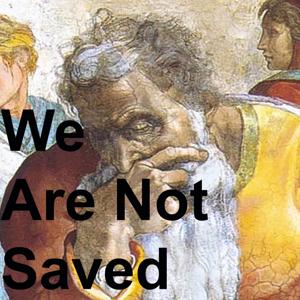

In which I mostly talk about the Shroud of Turin. Murray only spends seven pages on the it, so my review is not comprehensive. Actually, never mind. That's what the top sections are for.
Taking Religion Seriously
By: Charles Murray Published: 2025 152 Pages
Briefly, what is this book about?
Murray's journey from agnosticism to belief, a journey that is largely intellectual rather than spiritual. Because it was largely intellectual, it's also more explicable. This allows Murray to write a different sort of conversion story, one that's more amenable to being mapped out as a straightforward guide with sources and citations.
What authorial biases should I be aware of?
Murray has been a libertarian thinker for decades, though he's probably best known for The Bell Curve which he co-authored. So Murray is approaching things from a conservative/libertarian milieu. That said, it's a very balanced book. When he provides his sources for a particular idea he also includes sources that are critical of that idea.
Who should read this book?
I've read a lot of books that fall in this general area. Too many to list (consider The New Testament in Its World, Modern Physics and Ancient Faith and Believe just in the last six months) I would read Murray before reading any of them. It's clear, comprehensive, short, and meaty. Even if you're a raging atheist I would read this book because it's the quickest way to understand your opponents' best arguments.
Specific thoughts: The surprising strength of the Shroud of Turin
 View all episodes
 By Jeremiah

4.7
1818 ratings
In which I mostly talk about the Shroud of Turin. Murray only spends seven pages on the it, so my review is not comprehensive. Actually, never mind. That's what the top sections are for.
Taking Religion Seriously
By: Charles Murray Published: 2025 152 Pages
Briefly, what is this book about?
Murray's journey from agnosticism to belief, a journey that is largely intellectual rather than spiritual. Because it was largely intellectual, it's also more explicable. This allows Murray to write a different sort of conversion story, one that's more amenable to being mapped out as a straightforward guide with sources and citations.
What authorial biases should I be aware of?
Murray has been a libertarian thinker for decades, though he's probably best known for The Bell Curve which he co-authored. So Murray is approaching things from a conservative/libertarian milieu. That said, it's a very balanced book. When he provides his sources for a particular idea he also includes sources that are critical of that idea.
Who should read this book?
I've read a lot of books that fall in this general area. Too many to list (consider The New Testament in Its World, Modern Physics and Ancient Faith and Believe just in the last six months) I would read Murray before reading any of them. It's clear, comprehensive, short, and meaty. Even if you're a raging atheist I would read this book because it's the quickest way to understand your opponents' best arguments.
Specific thoughts: The surprising strength of the Shroud of Turin

1,993 Listeners

2,461 Listeners

113,121 Listeners

131 Listeners

7,244 Listeners
5,239 Listeners

443 Listeners
11,025 Listeners
2,854 Listeners
13 Listeners
292 Listeners
2,029 Listeners