
Sign up to save your podcasts
Or



Send us Fan Mail
This is a special edition commemorating the First Day of the Month of Ramadan, where Muslims practice fast from before sunrise to sunset every day, without consuming drinks or food and abstaining from certain activities. But what does this have to do with architecture? My take on this short podcast is to propose that, it has a lot to do with architecture, in particular "phenomenology" and "sensory" aspects of architecture, including design. Do listen to the podcast and Ramadan Mubarak ~ Happy Fasting to those practicing and able to fast!
© 2022 Talk Architecture, Author: Naziaty Mohd Yaacob
Photo (artwork): "Flying seeds with leaves, Kuala Lumpur" by Naziaty Mohd Yaacob
Support the show
Do subscribe for premium content and special features which will help to support and sustain Talk Architecture podcast on a more in-depth explanation on design thesis and processes. These special commentaries and ‘how to’ explanations are valuable insights and knowledge not found elsewhere!
Send us Fan Mail
The 'architecture anarchist' is a recent trend amongst the young architectural graduates to comment about architecture but without design practice experience. Is that acceptable? However, this could be due to the "instability" of the architecture profession in terms of not allowing for a diversity of thoughts to emerge in architecture education. Are fewer architecture graduates interested to pursue the traditional practice of architecture? I counted 60% of my batchmates pursued to practice in architecture or be an academic, whereas someone 25 years my junior said her batch, only 30% became architects and academic. This discussion is just a starter in the light of the vocal 'architecture anarchist', which could just be a trend of 'anarchist' or the lesser extreme, 'socialist' or 'leftist' stance among the Malaysian youths. What do you think? Please contact me @designsazve IG handle, if you want to discuss this topic in a future podcast.
© 2022 Talk Architecture, Author: Naziaty Mohd Yaacob
Photo (artwork): "Talk Architecture" by Naziaty Mohd Yaacob; Bus Stop drawing by Kamelia Jambari
Support the show
Do subscribe for premium content and special features which will help to support and sustain Talk Architecture podcast on a more in-depth explanation on design thesis and processes. These special commentaries and ‘how to’ explanations are valuable insights and knowledge not found elsewhere!
Send us Fan Mail
Architecture education is the key factor to making accessibility happen to include all people into mainstream development. This piece discusses the salient points needed to happen to make an impact in society: 1) The anthropometric and ergonomic aspects in the first year and universal design is integrated into the main studio course at first degree; 2) Continuous professional development where the understanding of disability and universal design is made compulsory to renew the professional architect's license and; 3) Government funding makes it compulsory to submit an access plan and design for all in all submissions.
© 2022 Talk Architecture, Author: Naziaty Mohd Yaacob
Photo: #AccessBlitz walk around KL in 2018, taken by Boa Er
Support the show
Do subscribe for premium content and special features which will help to support and sustain Talk Architecture podcast on a more in-depth explanation on design thesis and processes. These special commentaries and ‘how to’ explanations are valuable insights and knowledge not found elsewhere!
Send us Fan Mail
My explanation on how we integrate and assess theory in the students assignment and studio work for second year first semester.
© 2022 Talk Architecture, Author: Naziaty Mohd Yaacob
Photo: Talk Architecture image by Naziaty Mohd Yaacob
Support the show
Do subscribe for premium content and special features which will help to support and sustain Talk Architecture podcast on a more in-depth explanation on design thesis and processes. These special commentaries and ‘how to’ explanations are valuable insights and knowledge not found elsewhere!
Send us Fan Mail
As a social entrepreneur, I would like to pose two ideas of which the first one being, whether it is possible to teach a blind person to be an architect? A different way to approach architecture design, where we may call it "sensory design" or "multi-sensory design" or an extension of "universal design" even.
For the second idea, we could be more experimental in our design practice approach, learning from Chris Downey's TedTalk the idea of "awareness of your capacity to organize your environment in a completely different way through sound, through touch, through smell" and other references discussed earlier.
So with these two notional ideas in mind, there is a potential to change how we perceive architecture design and move ahead in making things work better for our society.
© 2022 Talk Architecture, Author: Naziaty Mohd Yaacob
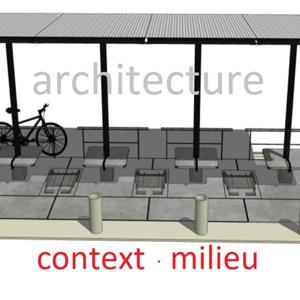
Photo: Universal Design Bus Stop Version 2 by © Universiti Malaya, Author: Naziaty Mohd Yaacob
Support the show
Do subscribe for premium content and special features which will help to support and sustain Talk Architecture podcast on a more in-depth explanation on design thesis and processes. These special commentaries and ‘how to’ explanations are valuable insights and knowledge not found elsewhere!
Send us Fan Mail
The discussion continues with two other articles and principles learned from "multisensory" design and approach, and "sensory design" apart from David Eagleman, the neuroscientist. I extracted some of the principles and discussed them further to summarize some way forward to design the universal design bus stop Version 3 and other designs.
© 2022 Talk Architecture, Author: Naziaty Mohd Yaacob
Photo: Universal Design Bus Stop Version 2 by © Universiti Malaya, Author: Naziaty Mohd Yaacob
Support the show
Do subscribe for premium content and special features which will help to support and sustain Talk Architecture podcast on a more in-depth explanation on design thesis and processes. These special commentaries and ‘how to’ explanations are valuable insights and knowledge not found elsewhere!
Send us Fan Mail
The discussion refers to the "Now concept" episodes and "Architecture and Disability" with reference to a Ted Talk by David Eagleman on "Can We Create New Senses for Humans" where I find this talk by the neuroscientist amazing exploring ideas on sensory substitution and sensory addition working with blind and deaf persons, such as the "umvelt", a sensory interface vest that uses the body sense of touch. Could we approach a similar way when designing architecture or transit designs such as a bus stop.
© 2022 Talk Architecture, Author: Naziaty Mohd Yaacob
Photo: Universal Design Bus Stop Version 2 by © Universiti Malaya, Author: Naziaty Mohd Yaacob
Support the show
Do subscribe for premium content and special features which will help to support and sustain Talk Architecture podcast on a more in-depth explanation on design thesis and processes. These special commentaries and ‘how to’ explanations are valuable insights and knowledge not found elsewhere!
Send us Fan Mail
"Designing an experience is a unique responsibility of an architect. The theory of phenomenology acknowledges this responsibility by implementing sensory design in order to establish experiential, architectural space. Phenomenology demonstrated in architecture is the manipulation of space, material, and light and shadow to create a memorable encounter through an impact on the human senses. This theory promotes the integration of sensory perception as a function of a built form. " [from file:///C:/Users/user/Desktop/essay2.pdf]. The discussion is an explorative one using the design of a bus stop that we had done recently.
© 2022 Talk Architecture, Author: Naziaty Mohd Yaacob
Photo: Universal Design Bus Stop Version 2 by © Universiti Malaya, Author: Naziaty Mohd Yaacob
Support the show
Do subscribe for premium content and special features which will help to support and sustain Talk Architecture podcast on a more in-depth explanation on design thesis and processes. These special commentaries and ‘how to’ explanations are valuable insights and knowledge not found elsewhere!
Send us Fan Mail
The final part of the discussion on the assessment and examination processes called the Portfolio Review which is symptomatic of the architecture education system in Malaysian schools of architecture. Focusing on the Design Thesis.
© 2022 Talk Architecture, Author: Naziaty Mohd Yaacob
Photo: Design Thesis 2019-2020 unit 2 online discussion by Naziaty Mohd Yaacob
Support the show
Do subscribe for premium content and special features which will help to support and sustain Talk Architecture podcast on a more in-depth explanation on design thesis and processes. These special commentaries and ‘how to’ explanations are valuable insights and knowledge not found elsewhere!
Send us Fan Mail
Continuing the discussion on the assessment and examination processes called the Portfolio Review which is symptomatic of the architecture education system in Malaysian schools of architecture. Is it just a way to verify the grades or a way to ensure quality is maintained? What is it for really?
© 2022 Talk Architecture, Author: Naziaty Mohd Yaacob
Photo: Talk Architecture image by Naziaty Mohd Yaacob
Support the show
Do subscribe for premium content and special features which will help to support and sustain Talk Architecture podcast on a more in-depth explanation on design thesis and processes. These special commentaries and ‘how to’ explanations are valuable insights and knowledge not found elsewhere!
From the publisher's feed
Hosted by Naziaty Mohd Yaacob, Ph.D.
Malaysian Architect | Universal Design & Accessibility Expert (MS 1184 Specialist) | Former Associate Professor (28+ years) | Advocate for…
Launched in April 2020, Talk Architecture delivers intimate, reflective conversations on architecture education, practice, and human impact—hosted solely by Naziaty Mohd Yaacob. Rooted in Malaysia yet resonating globally, the podcast connects local insights with universal challenges faced by architects worldwide.
Every episode centres inclusivity, empathy, and equity, drawing on Naziaty’s expertise in universal design, ageing-in-place, sensory architecture, and professional well-being. Global listeners value candid critiques of education models, graduate employability hurdles, and practice realities.
Essential listening for architecture students, professionals, educators, and thought leaders everywhere who are shaping inclusive, resilient built environments in an era of technological and demographic change.
Subscribe on most available platforms, such as Spotify, Apple Podcast, Buzzsprout, Podcaster, Amazon Music etc.