
Sign up to save your podcasts
Or



Send us Fan Mail
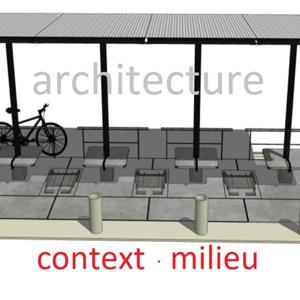
A scenario of the architectural design studio project for a community that would have made a better impact in terms learning for the students, when site-context specific rather than a project that objectifies for 'citation', ' data' and 'research agenda'.
How this sort of project would "fail in the rankings" and not encouraged in schools of architecture.
A closing manifesto is concluded at the end of episode.
© 2026 Talk Architecture, Author: Naziaty Mohd Yaacob.
Support the show
Do subscribe for premium content and special features which will help to support and sustain Talk Architecture podcast on a more in-depth explanation on design thesis and processes. These special commentaries and ‘how to’ explanations are valuable insights and knowledge not found elsewhere!
Send us Fan Mail
Last 29 December 2025, the Vice Chancellor of Universiti Malaya in an article says “Let me be clear: rankings are not the goal; they are a means. The goal is, and has always been, to create knowledge and graduates that make the world a better place. If climbing the rankings comes as a result of doing that goal well, then we should welcome it.
We must remember that our true rank is measured by the positive difference we make for humanity and the world, and as a compass of good, and that alone, remains the most noble of all.”
Today's podcast episode is to address the VC's quote from the architecture education perspective.
© 2026 Talk Architecture, Author: Naziaty Mohd Yaacob.
Support the show
Do subscribe for premium content and special features which will help to support and sustain Talk Architecture podcast on a more in-depth explanation on design thesis and processes. These special commentaries and ‘how to’ explanations are valuable insights and knowledge not found elsewhere!
Send us Fan Mail
The conclusive episode (Part 3) to underline the bigger picture of problems in architecture education where we need to deal with the following:
1. Architecture design studio curriculum needs to be clear on the "design problem" identification and solving them as complexities in the final year project (Part 1) and design thesis (Part 2).
2. The role of the architect as collaborators and teaching in the school architecture how to collaborate and not just merely follow instructions from the part time critics and tutors as it is not really the 'master-apprentice' approach which is not feasible in this day and age any way.
3. The misplaced fascination on university rankings and placing importance on research and publication (70%), leaving academics to focus on teaching at a miserable 30%, thus lessening the quality of studio teaching, hence shifting the responsibility to practice instead when it comes to what we discussed in Part 1 & 2 episodes.
4. A call for the institutions of architecture and the fraternity to 'fight back' on the architecture education aspects and not let Ministry of Higher Education dictate on what architecture education need to be as per points number 1, 2 & 3 above. This is regarding the poor training of students of architecture due to the fascination with university rankings linked to key performance indicators of academics (KPIs).
© 2026 Talk Architecture, Author: Naziaty Mohd Yaacob.
Support the show
Do subscribe for premium content and special features which will help to support and sustain Talk Architecture podcast on a more in-depth explanation on design thesis and processes. These special commentaries and ‘how to’ explanations are valuable insights and knowledge not found elsewhere!
Send us Fan Mail
Part 2 continues the discussion on the systemic problems where "the burden of education has quietly shifted from academia to practice", by referring to Seshan Design SB Handbook and points discussed in Part 1 of the same topic.
Naziaty started by what went wrong in architecture education and how and why we lost our direction. It will span from when I started architecture in 1980 until now. 46 years of reflection plus the on-going discussion on social media especially Facebook.
© 2026 Talk Architecture, Author: Naziaty Mohd Yaacob.
Support the show
Do subscribe for premium content and special features which will help to support and sustain Talk Architecture podcast on a more in-depth explanation on design thesis and processes. These special commentaries and ‘how to’ explanations are valuable insights and knowledge not found elsewhere!
Send us Fan Mail
A frank discussion on a commentary based on Seshan Design's post in a Facebook Group. They highlighted on systemic problems where "the burden of education has quietly shifted from academia to practice", and later gave comments on the problems specifically: the lack of fundamental skills on:
1. Drawing clearly
2. Understanding how buildings put together
3. Accuracy
4. Coordination
5. Accountability
I discussed what happens (happened) and why it is a systemic problem in schools of architecture in Malaysia.
© 2026 Talk Architecture, Author: Naziaty Mohd Yaacob.
Support the show
Do subscribe for premium content and special features which will help to support and sustain Talk Architecture podcast on a more in-depth explanation on design thesis and processes. These special commentaries and ‘how to’ explanations are valuable insights and knowledge not found elsewhere!
Send us Fan Mail
We explain further in depth on the dialogic studio critique methods to explain how we can transform architecture education. In Part 2B, we delve into:
Common Dialogic Critique Methods
Plus the benefits and implementation tips.
© 2025 Talk Architecture, Author: Naziaty Mohd Yaacob.
Support the show
Do subscribe for premium content and special features which will help to support and sustain Talk Architecture podcast on a more in-depth explanation on design thesis and processes. These special commentaries and ‘how to’ explanations are valuable insights and knowledge not found elsewhere!
Send us Fan Mail
Dialogic studio critique methods shift traditional architecture design studios from 'hierarchical, tutor-dominated feedback' (often called "desk crits" or juries) to collaborative, multi-voiced conversations. These approaches, inspired by Donald Schön's "reflection-in-action," Mikhail Bakhtin's polyphony, and Vygotsky's socio-constructivist pedagogy, emphasize mutual dialogue where students actively participate, question, and co-construct knowledge. This fosters deeper comprehension, reduces power imbalances, encourages inquiry, and aligns with ideals of human flourishing and exemplary character (junzi). Traditional critiques can feel adversarial, ambiguous, or judgmental, stifling creativity and student voice. Dialogic methods address this by prioritizing process-oriented, iterative feedback over summative assessment.
Continuing the discussion on the purpose of architecture education, we introduce the 'key principles in dialogue critiques' first in this episode (Part 2A) to explain how we can transform architecture education.
© 2025 Talk Architecture, Author: Naziaty Mohd Yaacob.
Support the show
Do subscribe for premium content and special features which will help to support and sustain Talk Architecture podcast on a more in-depth explanation on design thesis and processes. These special commentaries and ‘how to’ explanations are valuable insights and knowledge not found elsewhere!
Send us Fan Mail
We frequently speak of students as "products" or "graduates"—metrics to be optimized for Lembaga Arkitek Malaysia (LAM) Part I and II exemptions, high QS subject rankings, graduate employability rates, and Key Performance Indicators (KPIs). But where is the student's voice?
Do aspiring architects truly seek personal and societal transformation through design, or have they, too, been captured by the logic of credentials—chasing accreditation compliance, technical proficiency, and industry-ready skills over creative risk-taking and ethical reflection?
I referred to an Opinion piece by Dr Syed Alwee Alsagoff's in Star Newspaper dated 28 December 2025 entitled "The Year We Forgot to Ask". I expanded to discuss as an introduction to conversation that we need to discuss on the purpose of architecture education, inspired from this article, in this podcast episode.
© 2025 Talk Architecture, Author: Naziaty Mohd Yaacob.
Support the show
Do subscribe for premium content and special features which will help to support and sustain Talk Architecture podcast on a more in-depth explanation on design thesis and processes. These special commentaries and ‘how to’ explanations are valuable insights and knowledge not found elsewhere!
Send us Fan Mail
We dive into the conversation on "reforms in architecture education" to understand further how education affects the profession in a profound way. The principles from Mark Alan Hewitt's 2020 reforms explained in arch daily —emphasizing embodied cognition through hand drawing, physical model-making, haptic engagement, and sensory-rich practices—can absolutely be integrated into both the ARB Competency Outcomes Framework and the RIBA Themes and Values framework. Both are deliberately outcomes-based and flexible, allowing schools to innovate in how they deliver competencies without prescribing specific methods. This openness creates space for embodied approaches as effective pedagogical tools to meet required outcomes.
Link here: https://www.archdaily.com/941809/12-ways-to-reform-architectural-education
© 2025 Talk Architecture, Author: Naziaty Mohd Yaacob.
Support the show
Do subscribe for premium content and special features which will help to support and sustain Talk Architecture podcast on a more in-depth explanation on design thesis and processes. These special commentaries and ‘how to’ explanations are valuable insights and knowledge not found elsewhere!
Send us Fan Mail
Another “unfiltered” critic argues that architecture education is the root cause of the profession being undervalued and widely misunderstood. The defense of the profession, we contend, must begin in academia, where the core problem lies in situating architecture schools to comply with—and be dictated by—non-architects who neither understand nor uphold the profession’s essential competencies. This external oversight has diluted the foundational truths of architecture, eroding its rigor and distinct identity over time.
By allowing administrators, accrediting bodies, and university structures dominated by non-practitioners to shape curricula and priorities, schools inadvertently prioritize bureaucratic compliance, interdisciplinary trends, and measurable outcomes over the deep, tacit knowledge and creative judgment that define architectural expertise. This shift not only weakens the training of future architects but also sends a broader signal to society that architecture is a generic design discipline rather than a profound synthesis of art, science, ethics, and cultural responsibility—further contributing to its undervaluation in the public and professional spheres.
Part 2 will be about the "reforms in architecture education".
© 2025 Talk Architecture, Author: Naziaty Mohd Yaacob.
Support the show
Do subscribe for premium content and special features which will help to support and sustain Talk Architecture podcast on a more in-depth explanation on design thesis and processes. These special commentaries and ‘how to’ explanations are valuable insights and knowledge not found elsewhere!
From the publisher's feed
Hosted by Naziaty Mohd Yaacob, Ph.D.
Malaysian Architect | Universal Design & Accessibility Expert (MS 1184 Specialist) | Former Associate Professor (28+ years) | Advocate for…
Launched in April 2020, Talk Architecture delivers intimate, reflective conversations on architecture education, practice, and human impact—hosted solely by Naziaty Mohd Yaacob. Rooted in Malaysia yet resonating globally, the podcast connects local insights with universal challenges faced by architects worldwide.
Every episode centres inclusivity, empathy, and equity, drawing on Naziaty’s expertise in universal design, ageing-in-place, sensory architecture, and professional well-being. Global listeners value candid critiques of education models, graduate employability hurdles, and practice realities.
Essential listening for architecture students, professionals, educators, and thought leaders everywhere who are shaping inclusive, resilient built environments in an era of technological and demographic change.
Subscribe on most available platforms, such as Spotify, Apple Podcast, Buzzsprout, Podcaster, Amazon Music etc.