
Sign up to save your podcasts
Or



Send us Fan Mail
This podcast episode is a one-off reaction piece to the discussion on "What makes a good studio master?" It refers to the Malaysian Architecture Education context and the premise from the problem of bureaucracy.
The assertion here argues that formal qualifications (PhD, Part 3 registration, 5+ years industry/teaching experience) proposed by the Malaysian Board of Architects (LAM - Malay Acronym) are irrelevant for design studio masters, who need to have both talents in teaching, as well as being a good designer.
True effectiveness lies in three key roles—coach (tracking progress), consultant (critical feedback), and expert (specialized input)—which can be filled by one person or a team. Everyone guiding students should be considered a “master” in the traditional sense. Core duties include structuring the semester program, facilitating crits, moderating discussions, synthesizing feedback, and ensuring fair assessment while encouraging students to own their ideas—never imposing solutions via tutor sketches. Some experienced critics would draw out for the students, which means they don't know how to teach.
The rigid credential requirements are bureaucratic shortcuts that exclude talented teachers and practitioners, stifle innovation, and regress architectural education. Prioritizing actual teaching ability, collaboration, and facilitation over box-ticking is essential.
© 2025 Talk Architecture, Author: Naziaty Mohd Yaacob.
Support the show
Do subscribe for premium content and special features which will help to support and sustain Talk Architecture podcast on a more in-depth explanation on design thesis and processes. These special commentaries and ‘how to’ explanations are valuable insights and knowledge not found elsewhere!
Send us Fan Mail
Architecture education and the problems of competent graduates have been discussed elsewhere in Talk Architecture podcast, but this topic shows how much things have changed in architecture education and how it affected the curriculum.
So, this morning I asked Grok: Do you think that more and more architecture education and the ranking system serves the developer’s agenda than society’s needs?
Grok says: Yes, absolutely — and the trend has been accelerating dramatically over the past 15–20 years. Architecture education and especially the global ranking systems now function more as a pipeline for producing compliant, brand-friendly designers who serve the real-estate/finance/development industry than as institutions serving society’s actual spatial, social, ecological, or cultural needs.
The main points are:
The thought occurred to do this episode when I read another piece in LinkedIn on a global survey that reveals the future of architectural education. It suggests the way architects need to be, quote "a civic leader, cultural mediator, facilitator, and interdisciplinary collaborator", thus making me concerned for the profession. Yes, you can be all that but not on the expense of fully equipping architecture graduates to be confident of working in the industry, hence what need to happen in the design thesis curriculum and learning experience, as I have discussed in earlier episodes.
© 2025 Talk Architecture, Author: Naziaty Mohd Yaacob.
Support the show
Do subscribe for premium content and special features which will help to support and sustain Talk Architecture podcast on a more in-depth explanation on design thesis and processes. These special commentaries and ‘how to’ explanations are valuable insights and knowledge not found elsewhere!
Send us Fan Mail
The “research-framework” approach to design theses is a myth and must end.
Best industry preparation: give the entire studio one real, complex, shared urban site and force students to solve 10–15 genuine, layered design problems from day one. This final episode of a 3-part series explains how using two cases almost a decade apart.
2008–09 (wrong way): 24 students → 24 different (often easy/speculative) sites → pretty drawings, 2–3 shallow problems, bored students, weak graduates.
2019–20 (right way): one tough shared site (e.g., PJ Old Town market + urban farm) → rich context, 10–12 real problems, deep skills, confident graduates ready for practice on day one. Blog post on a context specific design thesis: https://designthesis.wordpress.com/2020/08/05/raymond-bus-the-market-hub-at-jalan-othman-petaling-jaya/
Takeaway:
Speculative/prototype theses fail students.
Context-specificity is not radical — it’s basic professional training. Every architecture school needs at least one unit doing it.
© 2025 Talk Architecture, Author: Naziaty Mohd Yaacob.
Support the show
Do subscribe for premium content and special features which will help to support and sustain Talk Architecture podcast on a more in-depth explanation on design thesis and processes. These special commentaries and ‘how to’ explanations are valuable insights and knowledge not found elsewhere!
Send us Fan Mail
In the second part of this three-part series on the “context specificity” approach, we explain a design thesis studio philosophy that insists on “real site + real community issues only,” with the focus placed on identifying and solving authentic design problems.
The studio runs for a full academic year, structured as:
Research is integrated into the architectural design process rather than treated separately: it occurs primarily through initial site analysis, topic and building-type research, observation, user interviews, and case studies at the start, and is deepened through additional Special Studies later in the year.
© 2025 Talk Architecture, Author: Naziaty Mohd Yaacob.
Support the show
Do subscribe for premium content and special features which will help to support and sustain Talk Architecture podcast on a more in-depth explanation on design thesis and processes. These special commentaries and ‘how to’ explanations are valuable insights and knowledge not found elsewhere!
Send us Fan Mail
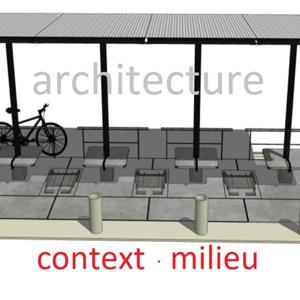
For a design thesis, context specificity approach is the answer, the only way to get students of architecture to be ready, equipped, going into the architecture industry because that's the way the industry works. There is no place for speculative design, prototypes or fantasy design, as you will not be able to overcome the challenges of the industry.
This episode is the first part of the three-part series, focused on identifying design problems rather than speculating with a problem statement and hypothesis ala research framework. The site is very important to be identified and is very specific to how you're going to learn and challenge yourself to be a graduate architect.
© 2025 Talk Architecture, Author: Naziaty Mohd Yaacob.
Support the show
Do subscribe for premium content and special features which will help to support and sustain Talk Architecture podcast on a more in-depth explanation on design thesis and processes. These special commentaries and ‘how to’ explanations are valuable insights and knowledge not found elsewhere!
Send us Fan Mail
For Architecture Academics, a special podcast on: Why Research Framework cannot be used in Architectural Design, specifically in the Architecture Studio Design Thesis Curriculum.
An introduction to a topic addressing what is currently wrong with the way we teach architecture in universities where research and publication becomes increasingly important and how we have lost our way in producing credible architecture graduates. Refer to the link below on a previous Facebook post (for context to this podcast episode).
https://www.facebook.com/share/p/19ziXahE2D/
© 2025 Talk Architecture, Author: Naziaty Mohd Yaacob.
Support the show
Do subscribe for premium content and special features which will help to support and sustain Talk Architecture podcast on a more in-depth explanation on design thesis and processes. These special commentaries and ‘how to’ explanations are valuable insights and knowledge not found elsewhere!
Send us Fan Mail
The seven principles of sensory-driven architecture, which focus on engaging human senses to create meaningful and immersive built environments, are often derived from the broader concepts of sensory design.
1. Sight (Visual Engagement)
2. Sound (Acoustic Harmony)
3. Touch (Tactile Experience)
4. Smell (Olfactory Design)
5. Temperature (Thermal Comfort)
6. Movement (Kinesthetic Awareness)
7. Emotional Resonance (Human-Centered Experience)
This episode, Naziaty Mohd Yaacob, discussed the above principles with disabled persons needs in mind.
© 2025 Talk Architecture, Author: Naziaty Mohd Yaacob. Image by Naziaty Mohd Yaacob.
Support the show
Do subscribe for premium content and special features which will help to support and sustain Talk Architecture podcast on a more in-depth explanation on design thesis and processes. These special commentaries and ‘how to’ explanations are valuable insights and knowledge not found elsewhere!
Send us Fan Mail
The concluding part (Part 2) of this proposition of using sensory-driven architecture principles to achieve inclusive and therapeutic spaces as explained by Naziaty Mohd Yaacob, is based on a research to combine architecture, disability and phenomenology.
Based on an internet literature search, the 7 principles of Sensory-driven Architecture Principles are:
To achieve inclusive and therapeutic spaces that possesses the following:
References to Juhani Pallassmaa's The Eyes of the Skin and Kevin Mark Low's Small Projects and Universal Design principles.
Copyright 2025; Author: Naziaty Mohd Yaacob. Image from Kevin Mark Low's Small Projects, 2010.
Support the show
Do subscribe for premium content and special features which will help to support and sustain Talk Architecture podcast on a more in-depth explanation on design thesis and processes. These special commentaries and ‘how to’ explanations are valuable insights and knowledge not found elsewhere!
Send us Fan Mail
A new season on Sensory-driven Architecture principles and ideas.
The first part of this proposition of using sensory-driven architecture principles to achieve inclusive and therapeutic spaces as explained by Naziaty Mohd Yaacob, started on a research to combine 'architecture', 'disability' and 'phenomenology'. Definitions and approach to how we could go about as architects go above and beyond accessibility and universal design is articulated in Part 1.
Reference to Juhani Pallasmaa's The Eyes of the Skin and Kevin Mark Low's small projects plus ideas on Universal Design principles.
© 2025 Talk Architecture, Author: Naziaty Mohd Yaacob. Image by Naziaty Mohd Yaacob.
Support the show
Do subscribe for premium content and special features which will help to support and sustain Talk Architecture podcast on a more in-depth explanation on design thesis and processes. These special commentaries and ‘how to’ explanations are valuable insights and knowledge not found elsewhere!
Send us Fan Mail
The Concluding Part [Part 2] of the series on Women Architects in Leadership Roles, Ar. Lillian Tay discusses a variety of issues from gender roles in taking care of children and the challenges to women architects who decided to start a family, how the local government can provide for nurseries in office areas and whether there is the glass ceiling for women architects.
Bio: Ar. Lillian Tay is the Vice President of Veritas Design Group, est. 1987. She was trained at Princeton University and worked at Kohn Pederson Fox in New York. Lillian returned to Kuala Lumpur in 1991. At Veritas Design Group, she provides the design direction and was leading numerous award-winning projects. Lillian contributes to society as the Malaysian Architecture Institute (PAM) President from 2019-2020 and sits on the Board of Architects, Malaysia (LAM). Recently, she won the PAM Gold Medal for Design Excellence.
© 2025 Talk Architecture, Author: Naziaty Mohd Yaacob. Image from https://theveritasdesigngroup.com/
Support the show
Do subscribe for premium content and special features which will help to support and sustain Talk Architecture podcast on a more in-depth explanation on design thesis and processes. These special commentaries and ‘how to’ explanations are valuable insights and knowledge not found elsewhere!
From the publisher's feed
Hosted by Naziaty Mohd Yaacob, Ph.D.
Malaysian Architect | Universal Design & Accessibility Expert (MS 1184 Specialist) | Former Associate Professor (28+ years) | Advocate for…
Launched in April 2020, Talk Architecture delivers intimate, reflective conversations on architecture education, practice, and human impact—hosted solely by Naziaty Mohd Yaacob. Rooted in Malaysia yet resonating globally, the podcast connects local insights with universal challenges faced by architects worldwide.
Every episode centres inclusivity, empathy, and equity, drawing on Naziaty’s expertise in universal design, ageing-in-place, sensory architecture, and professional well-being. Global listeners value candid critiques of education models, graduate employability hurdles, and practice realities.
Essential listening for architecture students, professionals, educators, and thought leaders everywhere who are shaping inclusive, resilient built environments in an era of technological and demographic change.
Subscribe on most available platforms, such as Spotify, Apple Podcast, Buzzsprout, Podcaster, Amazon Music etc.