
Sign up to save your podcasts
Or

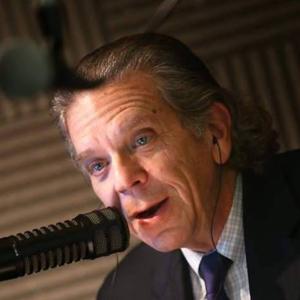


My guest, journalist Jeanne Carstensen uses one devastating 2015 shipwreck to illuminate the global refugee crisis affecting over 100 million displaced people worldwide.
In our conversation, she talks of refugees as a self-selecting population—educated professionals like Afghan bankers and Syrian artists who pay smugglers tens of thousands of dollars to escape violence. Their shared dream: reaching safety and rebuilding lives with dignity. Carstensen argues we're witnessing only the beginning of massive global migration, driven by climate change, authoritarianism, and conflict. Contrary to anti-migrant sentiment portraying refugees as society's "dregs," many are middle-class families risking everything for survival. This single story represents countless others in our interconnected world of forced displacement.
This post is FREE for everyone. Please spread it far and wide. And please consider becoming a paid subscriber to TalkCocktail. It’s $8 a month or just $80 for the entire year!
Also Follow Me on X @jeffs2009
When we stop thinking, we enable harm. In this WhoWhatWhy podcast Elizabeth Minnich warns us that systemic evils don’t need monsters — “it takes all of us” through everyday compliance.
I talk with moral philosopher Elizabeth Minnich, who delivers a timely warning about collective thoughtlessness. Building directly on her experience as Hannah Arendt’s long-time teaching assistant, Minnich reverses Arendt’s famous “banality of evil” thesis.
Where Arendt observed how unremarkable Nazi bureaucrat Adolf Eichmann appeared during his trial — a conventional man simply “doing his job” — Minnich argues the true danger lies in the “evil of banality”: the way unthinking adherence to clichés, career preservation, and social conformity creates the conditions for extensive harm.
A former NATO ambassador shows how Trump has shattered 80 years of global trust in just 120 days, forcing allies to act without America for the first time.
In just 120 days, President Donald Trump has accomplished what no foreign adversary could achieve in eight decades: the systematic destruction of America’s global leadership from within.
On this WhoWhatWhy podcast, I’m joined by Ivo Daalder, former US ambassador to NATO under President Barack Obama, a senior fellow at the Brookings Institution, and director of European affairs on President Bill Clinton’s National Security Council.
He delivers a sobering assessment of how rapidly the post-World War II international order is collapsing. The system that brought unprecedented peace, prosperity, and freedom to billions — built on collective security, free trade, and democratic values — is being deliberately dismantled by the very nation that created it.
Adam Nagourney, a veteran New York Times reporter based in Los Angeles, wrote recently about whether the California Dream had become a mirage.
On this California Sun Podcast, Nagourney reminds me that even as the state has grown into the world’s fourth-largest economy, the promise of reinvention that defined the Golden State feels increasingly elusive. As young people flee, wildfires destroy neighborhoods, and a hostile White House turns its back, Nagourney believes California is still resilient and capable of that dream.
On a recent WhoWhatWhy podcast I spoke with Katherine Stewart, author of Money, Lies, and God: Inside the Movement to Destroy American Democracy.
She outlines a covert alliance of wealth, faith, and fear is quietly dismantling American democracy — one lie, one spectacle, and one grievance at a time.
When we imagine democracy collapsing, we picture tanks in the streets, ballots burning, or shadowy hackers pulling invisible strings. Yet the gravest threat to America’s democratic experiment isn’t loud or sudden — Stewart argues that it’s a quiet, methodical corrosion of truth, fueled by grievance, money, and a dangerous sense of divine entitlement.
The “Golden Dome” that Trump is promising is a fantasy at best.
Back in February, on the WhoWhatWhy podcast, I explored the seductive dream of an impenetrable missile defense — and the sobering reality behind it.
I spoke with Marion Messmer, a senior research fellow at Chatham House’s International Security Program in London. She lays bare the hard truths behind the rhetorical hype of space-based defense systems. In an age of hypersonic weapons and artificial intelligence, she argues, no nation can truly construct an impenetrable shield against missile attacks
New York Times film critic Alissa Wilkinson discusses her new book, “We Tell Ourselves Stories: Joan Didion and the American Dream Machine,” which explores the California author’s prescient understanding of how entertainment would colonize American political life.
Wilkinson examines Didion’s work through the lens of a Hollywood insider and cultural critic, revealing how she anticipated our drift toward manufactured realities and endless performance — from Ronald Reagan’s performative presidency to modern reality television-style governance.
This post is FREE for everyone. Please spread it far and wide. And please consider becoming a paid subscriber to TalkCocktail. It’s $8 a month or just $80 for the entire year!
In this latest podcast I talk with Emmy-winning journalist Gianna Tobani about "The Volunteer." Gianna Tobani takes me through the harrowing story of Scott Dozier, a death row inmate who volunteered for execution but was ultimately driven to suicide after the state repeatedly failed to carry out his sentence.
Through intimate conversations with Dozier, Tobani unveils a broken death penalty system where pharmaceutical companies refuse to provide execution drugs, states resort to black market deals, and the condemned endure psychological torture in 9x5 foot cells.
Dozier's story transcends debates about justice to expose a brutal truth: sometimes not being executed is worse than execution itself.
Science and medicine promise breakthroughs, but what if the foundation of today’s Alzheimer’s research is built on fraud? Investigative journalist Charles Piller uncovers this disturbing reality in Doctored: Fraud, Arrogance, and Tragedy in the Quest to Cure Alzheimer's. Vanderbilt neuroscientist Matthew Schrag’s forensic work exposed doctored images and manipulated data that propped up a dominant but flawed theory, potentially setting back Alzheimer’s research by decades. With millions suffering and more at risk, Piller’s exposé reveals how scientific misconduct may have derailed the search for real treatments.
From the publisher's feed