
Sign up to save your podcasts
Or

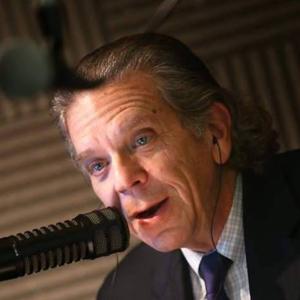


In this recentWhoWhatWhy podcast, I talk with John Lechner, author of Death Is Our Business. He details how private armies increasingly blur the lines between state power and mercenary force. The prospect of billionaires and politicians commanding their own military forces is no longer just a dystopian idea.
John Lechner’s five-year investigation into Russia’s notorious Wagner Group reveals a disturbing template for what privatized warfare could mean for America and the world.
Americans see Canada as that friendly neighbor up north. Canadians now see America as their greatest threat. How did we get here, and what does it mean for both nations?
Joining me on this week’s WhoWhatWhy podcast is veteran political analyst and Globe and Mail columnist Andrew Coyne. Trump’s talk of annexation and punitive tariffs has profoundly transformed Canada’s relationship with the US, creating a mixture of bewilderment, fear and, unexpectedly for Canadians, fierce national pride.
For Coyne, author of the upcoming book The Crisis of Canadian Democracy, the impact goes far beyond politics: It’s forcing Canadians to question basic assumptions about their sovereignty and security that have held firm since World War II. What was once unthinkable — the need to defend against US aggression — has become part of the national conversation.
For over two centuries, the American experiment has weathered crises that would have toppled lesser democracies — a resilience celebrated as uniquely American. But what if this story of perpetual reinvention through adaptation has reached its limits, our Constitution stretched too thin by the democratic achievements we cherish most?
In this WhoWhatWhy podcast, Yale professor Stephen Skowronek talks to me about his “adaptability paradox” theory: Our constitutional system functioned for centuries because it excluded many Americans, allowing a homogeneous elite to govern effectively. When the rights revolution of the ’60s and ’70s finally attempted to include everyone, the balancing act collapsed, leaving our institutions unable to manage diverse interests with competing demands.
Lili Anolik, author of the new book “Didion & Babitz,” delves into the complex and largely unexplored relationship between literary icons Joan Didion and Eve Babitz in 1960s Los Angeles.
Anolik explains how these contrasting personalities — Didion’s calculated reserve and Babitz’s uninhibited sensuality — shaped our understanding of them and the era. Their story illuminates broader themes about women’s voices in American letters, the nature of literary persona, and the price of artistic ambition.
For over two centuries, the American experiment has weathered crises that would have toppled lesser democracies — a resilience celebrated as uniquely American. But what if this story of perpetual reinvention through adaptation has reached its limits, our Constitution stretched too thin by the democratic achievements we cherish most?
In this WhoWhatWhy podcast, Yale professor Stephen Skowronek talks to me about his “adaptability paradox” theory: Our constitutional system functioned for centuries because it excluded many Americans, allowing a homogeneous elite to govern effectively. When the rights revolution of the ’60s and ’70s finally attempted to include everyone, the balancing act collapsed, leaving our institutions unable to manage diverse interests with competing demands.
There was a time when geographic mobility defined America — one-third of the population relocated each year, chasing better jobs and brighter futures. But today, historian and journalist Yoni Appelbaum argues in his new book, Stuck: How the Privileged and the Propertied Broke the Engine of American Opportunity, that America’s once-robust engine of upward mobility is grinding to a halt.
Appelbaum challenges the long-held belief that income alone dictates housing choices. Instead, he reveals how restrictive housing policies — exclusionary zoning, historical redlining, and modern NIMBYism — have dramatically limited the supply of new housing, effectively blocking the paths that families once took toward prosperity.
Today, affluent neighborhoods, often proudly progressive, tout diversity while quietly building invisible walls against newcomers, turning geographic mobility into a privilege reserved mainly for the wealthy.
The result is profound economic stagnation, deepening political polarization, and psychological harm — leaving millions trapped, angry, and increasingly cynical about the future. Yet despite the immense costs, estimated at $2 trillion annually, Appelbaum sees genuine hope.
What if Donald Trump’s strange fixation on William McKinley isn’t just historical trivia, but the key to understanding what happens next?
On this WhoWhatWhy podcast, long-time journalist and author Chris Lehmann argues we’re not necessarily headed for authoritarian collapse — we’re rewinding to the Gilded Age.
How might McKinley’s transformation from economic nationalist to global imperialist more than a century ago foreshadow Trump’s second term? Lehmann explores the forces that shaped McKinley’s presidency and how similar dynamics are at play today, from the influence of wealthy backers to the quest for historical legacy.
Elsa Devienne takes us behind the iconic beaches of Los Angeles to reveal a hidden history of transformation, conflict, and reinvention. The author of “Sand Rush,” Devienne talks to me about how L.A.’s shores went from eroding, polluted strips in the 1920s and ’30s to expansive public spaces that defined the city’s image and culture. It was a time when government could actually change a city.
With echoes of “Chinatown,” Devienne also offers insights into today’s wealth-driven fights over coastal access.
There was a time when geographic mobility defined America — one-third of the population relocated each year, chasing better jobs and brighter futures. But today, historian and journalist Yoni Appelbaum argues in his new book, Stuck: How the Privileged and the Propertied Broke the Engine of American Opportunity, that America’s once-robust engine of upward mobility is grinding to a halt.
Appelbaum challenges the long-held belief that income alone dictates housing choices. Instead, he reveals how restrictive housing policies — exclusionary zoning, historical redlining, and modern NIMBYism — have dramatically limited the supply of new housing, effectively blocking the paths that families once took toward prosperity.
Today, affluent neighborhoods, often proudly progressive, tout diversity while quietly building invisible walls against newcomers, turning geographic mobility into a privilege reserved mainly for the wealthy.
The result is profound economic stagnation, deepening political polarization, and psychological harm — leaving millions trapped, angry, and increasingly cynical about the future. Yet despite the immense costs, estimated at $2 trillion annually, Appelbaum sees genuine hope.
The sports betting explosion has unleashed a $500 billion monster that engulfs everything game its path. Since the Supreme Court opened the floodgates in 2018, betting and its betting apps bombard fans during every game, turning each play into another chance to wager. As millions will trade their paychecks for the dopamine hit of a winning bet during March Madness, the same leagues that banned Pete Rose now cozy up to sportsbooks. States hungrily eye their cut while young men are scientifically targeted. Few understand this transformation better than my guest Jonathan D. Cohen, whose new book "Losing Big: America's Reckless Bet on Sports Gambling" takes us deep inside this revolution that happened so fast we barely had time to understand its implications.
From the publisher's feed