
Sign up to save your podcasts
Or

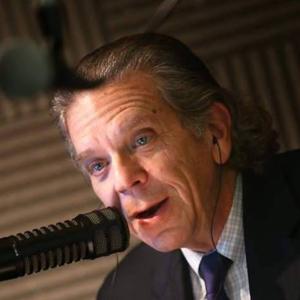


What if Donald Trump’s strange fixation on William McKinley isn’t just historical trivia, but the key to understanding what happens next?
On this WhoWhatWhy podcast, long-time journalist and author Chris Lehmann argues we’re not necessarily headed for authoritarian collapse — we’re rewinding to the Gilded Age.
How might McKinley’s transformation from economic nationalist to global imperialist more than a century ago foreshadow Trump’s second term? Lehmann explores the forces that shaped McKinley’s presidency and how similar dynamics are at play today, from the influence of wealthy backers to the quest for historical legacy.
The sports betting explosion has unleashed a $500 billion monster that engulfs everything game its path. Since the Supreme Court opened the floodgates in 2018, betting and its betting apps bombard fans during every game, turning each play into another chance to wager. As millions will trade their paychecks for the dopamine hit of a winning bet during March Madness, the same leagues that banned Pete Rose now cozy up to sportsbooks. States hungrily eye their cut while young men are scientifically targeted. Few understand this transformation better than my guest Jonathan D. Cohen, whose new book "Losing Big: America's Reckless Bet on Sports Gambling" takes us deep inside this revolution that happened so fast we barely had time to understand its implications.
Democrats once counted on the votes of blue-collar workers, but two rival teams of consultants saw change coming. Their fight over the party’s future still echoes today. Today, Democrats typically dominate America’s wealthiest zip codes while Republicans claim the mantle of the working class. What happened?
In this WhoWhatWhy podcast, historian Timothy Shenk — author of Left Adrift: What Happened to Liberal Politics — takes us behind the scenes of this historic realignment.
How did America transform from a nation of self-aware optimists to one of angry cynics in less than two decades?
In this recent WhoWhatWhy podcast I talk with political scientist Yascha Mounk, an associate professor at Johns Hopkins’s School of Advanced International Studies. He witnessed this cultural metamorphosis first hand after arriving in the US in 2005; his insights on this podcast paint a startling picture of how our society has fundamentally changed, and not for the better.
In a recent special WhoWhatWhy podcast, I spoke with Sam Ramani, an Oxford-trained geopolitical expert and associate fellow at the Royal United Services Institute. Ramani, one of the foremost analysts of Russian global strategy, has become a trusted adviser to policymakers on both sides of the Atlantic.
Unlike mainstream analysis with its simplistic narratives, Ramani offers granular understanding built from years of meticulous research and on-the-ground insights. He reveals the hidden forces reshaping global power—from Trump-Zelenskyy tensions to Russia and China's strategic calculus—illuminating the intricate power dynamics, economic pressures, and strategic calculations that actually drive international relations.
In this otherwise grim moment, I share a glimpse of what real heroism looks like. In this recent California Sun Podcast, I spoke with Dr. Shayan Rab, associate medical director at Los Angeles County Department of Mental Health,
He explains his revolutionary, if controversial, approach to helping mentally ill homeless individuals. As the county’s first street psychiatrist. His innovative program combines medical treatment, housing assistance, and human connection. While challenging conventional wisdom, Dr. Rab’s work has become a model for how to approach the intersection of mental health and homelessness.
David Pakman, host of his eponymous podcast and program, joins me to talk about his book "The Echo Machine" and how right-wing extremism has methodically undermined America's shared information ecosystem over decades. Pakman and I discuss the deliberate fragmentation of media from talk radio through social media, explaining how this has eroded critical thinking and created parallel realities in American politics.
Drawing from his position as both media practitioner and analyst, Pakman illuminates the economic and psychological forces that incentivize division. Our conversation explores the compelling case for changes in the way the left understands poltics and media in a post-truth environment.
On this recent WhoWhatWhy podcast I explore the tantalizing dream of an impenetrable missile defense and its sobering realities.
In an age of hypersonic weapons and artificial intelligence, can any nation truly build an impenetrable shield against missile attacks?
As President Donald Trump signs an executive order calling for an “Iron Dome for America,” I talk with Marion Messmer, senior research fellow at London’s Chatham House International Security Program. She lays bare the real problems behind the rhetorical hype of space-based defense systems.
From the publisher's feed