
Sign up to save your podcasts
Or

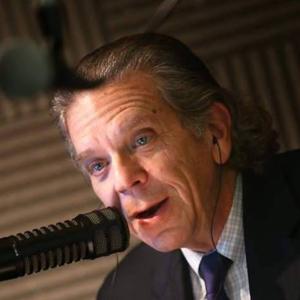


Renowned evolutionary biologist Neil Shubin joins me for an epic journey to Earth's most extreme polar frontiers.
The author of the new book 'Ends of the Earth, explains why scientists are willing to brave bone-chilling environments where flesh freezes in seconds. Shubin shares with me stories of daring historical expeditions, cutting-edge climate research, and how these frozen landscapes hold the keys to our planet's past and future. We discuss human courage, scientific discovery, and the urgent stories emerging from Earth's poles……and from Greenland.
Is China’s unstoppable rise actually a carefully constructed illusion?
In this recentWhoWhatWhy podcast, I talk with Timothy Heath, a senior international defense researcher at RAND Corporation who spent over 15 years in the US government analyzing military and political issues related to China.
Heath peels back layers of propaganda to reveal a surprisingly fragile superpower wrestling with existential challenges.
As the embers go cold, the smoke clears and the ashes are carted off in Los Angeles a stark reality emerges: not just winds but climate change played a significant role in this deadly and destructive event.
A new World Weather Attribution study found that human-caused climate change increased the likelihood of extreme fire conditions by 35 percent and intensified their severity.
In this recentWhoWhatWhy podcast, Daniel Swain, a leading climate scientist at UCLA and the University of California’s Agricultural and Natural Resources division, frames the January disaster not simply as a fire event, but as “an extreme weather event with fire embedded in it.” This distinction, he explains, is crucial for understanding how climate change is reshaping fire risks.
Dr. Mara Einstein takes us beyond the shopping cart to explore how brands have become modern-day tribes, offering comfort and connection in a fragmented world.
But are we shaping our brand choices, or are they shaping us—designed to appeal to our deepest needs? Drawing on insights from her book Hoodwinked: How Marketers Use the Same Tactics as Cults, reveals how cult-like marketing tactics, amplified by influencers and algorithms, now shape our identities, emotions, and communities. Together, we unpack the fine line between loyalty and manipulation.
On a recent WhoWhatWhy podcast, I spoke with Princeton historian Julian Zelizer who offers a provocative argument from his new book In Defense of Partisanship. At a time when nearly a third of Americans view both major parties with disgust and many blame partisan loyalty for our democratic decay, Zelizer says that strong, disciplined political parties — not feel-good Biden-style bipartisanship — have historically been crucial to America’s greatest achievements.
The problem isn’t that parties fight hard for their beliefs; it’s that we’ve lost the guardrails that once transformed partisan combat into incremental but lasting progress.
From their Venice Beach studio, Charles and Ray Eames revolutionized design in post-war Los Angeles, shaping the modernist ethos of California and beyond. Known for their groundbreaking Case Study House No. 8, furniture, and films, their work seamlessly blended art, science, and functionality.
In my California Sun conversation, Daniel Ostroff, editor of “An Eames Anthology,” he shares fresh insights into the couple’s philosophy and enduring relevance.
Note: The Eames House, which is located in Pacific Palisades, was undamaged by the recent fires
Brewster Kahle, founder of the Internet Archive, housed in a former San Francisco church with Greek columns that echo the ancient Library of Alexandria, discusses his three-decade mission to preserve humanity's digital knowledge and culture. Now facing unprecedented challenges, including a major cyberattack and legal battles with publishers over the site's distribution of copyrighted materials, Kahle reflects on the growing threats to digital preservation while reaffirming his commitment to universal access to all knowledge. We begin the year by looking back.
There has been a lot of talk this week about the futue of AI. But what if we’ve been asking the wrong question about AI and technology? Not “What can it do for us?” but “What is it doing to us?”
In this recent WhoWhatWhy podcast I talk with Chris Colbert, former managing director of the Harvard Innovation Labs, to explore a provocative idea: that technology as we know it may be dead — and that’s exactly what humanity needs to thrive.
Drawing from his new book, Technology is Dead: The Path to a More Human Future, Colbert talks about how our obsession with innovation and productivity has eroded our connections, amplified our vulnerabilities, and left us more isolated than ever.
Colbert’s insights will make us question not just where we’re going, but who we’ll be when we get there.
David Ulin, one of Los Angeles’s most perceptive chroniclers and an editor of Joan Didion’s collected works, reflects on the city’s unprecedented urban wildfires through the lens of history, identity, and belonging.
Ulin, in this California Sun podcast, talks to me about how disasters in Los Angeles paradoxically forge deeper connections between Angelenos and their landscape. Drawing parallels to 9/11 and the 1906 San Francisco earthquake, he explores how this watershed moment — with its destruction of thousands of structures across a burn area of roughly 60 square miles — may reshape Southern California’s future.
This post is FREE for everyone. Please spread it far and wide. And please consider becoming a paid subscriber to TalkCocktail. It’s $8 a month or just $80 for the entire year!
From the publisher's feed