
Sign up to save your podcasts
Or

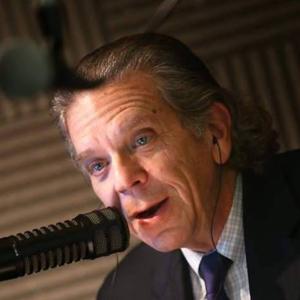


When LA’s hydrants failed during massive fires, misinformation spread. What really happened – and the hard truths about our urban water systems.
In my latest WhoWhatWhy podcast, I talk to one of California’s leading water experts who cuts through the noise to explain what really happened.
Gregory Pierce — director of the UCLA Luskin Center for Innovation and of the Human Rights to Water Solutions Lab — delivers a masterclass in understanding this infrastructure crisis.
The story that emerged about what led to this deadly failure has been animated by finger-pointing, misinformation, and political opportunism.
Oh, how the party has changed.
At a moment when the Republican Party has shifted dramatically from its Reaganite roots, I talk with Washington Post columnist Max Boot, whose definitive biography of Ronald Reagan arrives with particular resonance.
Through a decade of research, Boot reveals a pragmatic leader who would likely be puzzled by today's GOP—a president who supported immigration reform, worked with Gorbachev to reduce nuclear weapons, and prided himself on compromise, getting "80 percent of what he wanted" rather than demanding everything. Boot shares with me a fascinating exploration of Reagan's true legacy.
What if we’ve been asking the wrong question about technology all along? Not “What can it do for us?” but “What is it doing to us?”
In my recent WhoWhatWhy podcast we talk with Chris Colbert, former managing director of the Harvard Innovation Labs, to explore a provocative idea: that technology as we know it may be dead — and that’s exactly what humanity needs to thrive.
Drawing from his new book, Technology is Dead: The Path to a More Human Future, Colbert talks to me about how our obsession with innovation and productivity has eroded our connections, amplified our vulnerabilities, and left us more isolated than ever.
We begin the year by looking in the “Wayback Machine.”
Brewster Kahle, founder of the Internet Archive, housed in a former San Francisco church with Greek columns that echo the ancient Library of Alexandria, discusses his three-decade mission to preserve humanity’s digital knowledge and culture. Now facing unprecedented challenges, including a major cyberattack and legal battles with publishers over the site’s distribution of copyrighted materials. In this California Sun podcast Kahle talks to me about the growing threats to digital preservation while reaffirming his commitment to universal access to all knowledge.
Welcome back:
There are brilliant new voices speaking to California's fires, climate change, and ecology - what this ongoing tragedy means for Californians. But one of the most resonant voices comes from the past.
Mike Davis, author of "City of Quartz," "Ecology of Fear," and "Dead Cities," seems to be quoted almost daily in discussions of the current fires. His understanding of Southern California through the lens of its fires has become essential reading; whenever flames rage across the state, readers return to his prescient work, especially the controversial chapter "The Case for Letting Malibu Burn" from his 1998 book "Ecology of Fear."
Few voices have proven as prophetic in understanding California's complexities as Davis. His penetrating analysis of climate vulnerability, urban inequality, and social transformation reads like a blueprint for today's headlines.
In my 2019 California Sun conversation with Davis, recorded just three years before his death, Davis, a MacArthur Fellow and UC Riverside professor, brings his characteristic clear-eyed examination to California's role as America's crystal ball. His insights on everything from wildfire risk to social inequality not only predicted our current challenges but continue to offer wisdom for navigating them.
This interview is worth your time, as it stands as a testament to Davis's unique ability to see California both as it was and as it would become.
Six years later, his words could have been spoken today.
The last thing we need this week is another expression of alarm about events in Washington, or anywhere else for that matter. How about something positive about our companions.
In a recent California Sun podcast I talked with author Carol Mithers about her new book, “Rethinking Rescue,” which explores a groundbreaking approach to animal welfare pioneered by Lori Weise, the founder of L.A.’s Downtown Dog Rescue. Known as the “Dog Lady,” Weise focuses on preventing pets from entering shelters by addressing the root causes of surrender, particularly in underserved communities.
Mithers talks to me about the complex interplay between poverty, pet ownership, and animal welfare, challenging traditional rescue paradigms and emphasizing community support and education to keep pets with their loving owners. A more positive way to end the year.
In this recentWhoWhatWhy podcast, I talk with veteran journalist Sasha Abramsky who reveals a striking paradox: Progressives, long suspicious of states’ rights — once a reactionary battle cry against civil rights and federal reforms — are now embracing state power as their best defense against growing authoritarianism.
As the federal government tilts rightward, blue states are forming unprecedented coalitions to preserve democratic values and progressive policies. But could these defensive measures actually accelerate America’s political fracturing?
In this California Sun podcast I talk with architectural critic Aaron Betsky. He challenges conventional thinking about our built environment in his new book “Don’t Build, Rebuild,” in which he makes the case for transforming existing structures rather than constructing new ones.
From San Francisco’s empty offices to Los Angeles’s historic core, Betsky explores how this approach can not only address housing shortages and climate change but also preserve the soul and stories embedded in our buildings.
This post is FREE for everyone. Please spread it far and wide. And please consider becoming a paid subscriber to TalkCocktail. It’s $8 a month or just $80 for the entire year!
At a time when the Republican Party has shifted dramatically from its Reaganite roots, Washington Post columnist Max Boot's definitive biography of Ronald Reagan arrives with particular resonance. Through a decade of research, Boot reveals a pragmatic leader who would likely be puzzled by today's GOP—a president who supported immigration reform, worked with Gorbachev to reduce nuclear weapons, and prided himself on compromise, getting "80 percent of what he wanted" rather than demanding everything. Despite his conservative image, Reagan often worked across the aisle, painting a stark contrast to the current Republican Party's rightward shift and Trump's America-first isolationism. A fascinating exploration of Reagan's true legacy.
This post is FREE for everyone. Please spread it far and wide. And please consider becoming a paid subscriber to TalkCocktail. It’s $8 a month or just $80 for the entire year!
In a world drowning in misinformation, we keep pointing fingers at those who create and spread false narratives. But what if the real story isn’t about them — it’s about us?
In this recentWhoWhatWhy podcast I talk with professor Dannagal Goldthwaite Young, author of Wrong: How Media, Politics, and Identity Drive Our Appetite for Misinformation, we discover a surprising truth: Humans are naturally drawn to misinformation.
It’s not just about believing what we want to believe — it’s about satisfying our fundamental needs for what Young calls “comprehension, control, and community,” even if that means embracing falsehoods.
Thanks for listening to the Talk Cocktail Podcast! This post is public so feel free to share it.
From the publisher's feed