
Sign up to save your podcasts
Or



Oh.
Part of the process of releasing these podcast episodes, has me reading through the transcript of the conversation, picking out short parts that Caspian will then turn into raw snippets, that I listen to and verify their title, before he brands them.
Optimally, I do this just before I sit down to write the episode description, as it brings the conversation fresh into my mind, and that’s precisely where I am at right now.
And as I listened to Beverly musing on belief-systems, finding your own values, and recognizing humanity in self and others, I… had to listen again, and again. Finding it such an insightful and important musing on being, and becoming, human, that I wonder if this might be the snippet amongst snippets, my favorite from all the snippets from all the episodes.
What brought us to this piece of the meandering conversation was Beverly telling me of a course on professionalism she’s developing for med(icine) students. I read a tweet how med students seem to lack humanity, what are they actually taught during med school that takes it out of them? or something of the sort. This is the opposite of what my mom, an MD, specialized as a general practitioner, has heard from her patients throughout her career. Possibly on account of her going into medicine after already having gone to university obtaining a teachers degree, and working for a decade or so. Somehow, from the very beginning, this has given her an advantage over many med students who come to the profession straight out of school/college. And I think humanity might be the secret ingredient here. My mom had already lived life, had gotten a degree, married, had two kids, divorced before she went to med school. From that starting point, she met her patients.
Beverly says They need to find a center for themselves. In order to recognize humanity in others, they have to recognize it in themselves.
Yes.
Valid for future physicians for sure.
But more than that, right?
I mean, is there anyone, regardless what they do for a living, who would not be served by finding that center within themselves? That center where your values reside, enabling you to put words to them. Values are visible by how you are in the world, how you show up, but I don’t have to go further than to myself, to know that I’ve not always been in touch with them enough to be able to name them.
There's plenty of tankespjärn for all to be had here!
Links:
Episode 20 with Gary on connection
Nadia Bolz-Weber
The promise of a pencil by Adam Braun
The OnBeing episode I mentioned I’m not sure I found, but here’s two that are good and point to the same thing, the second possibly being ”the one":
https://onbeing.org/programs/sarah-bassin-and-abdullah-antepli-holy-envy-feb2018/
https://onbeing.org/programs/his-holiness-the-14th-dalai-lama-of-tibet-jonathan-sacks-katharine-jefferts-schori-seyyed-hossein-nasr-pursuing-happiness/
Having the fifth and final round of (recorded) conversations with my fellow explorers of this first season of meandering conversations, I vacillate in feelings. Elated at all I’ve learned through the process. Thrilled at getting to know these five souls better. Amazed at witnessing myself in the company of each and every one of them and how that me kind of shape shifts and stays very true to who I am, all at once. Sad at knowing the season is coming to an end. Curious as to what might become of the second season, where three of five slots have been filled so far. Reassured in the knowledge that each of these five people will remain in my life even if we won’t be recording our conversations (or perhaps we will?).
Fifth times a charm (well, no, it’s the third time, but hey, artistic freedom, right?!), and me and Frank just cannot help ourselves… so yeah. We do speak a lot about buildings and architecture. But even as we do that, during the conversation, it strikes me how our thoughts take flight into all sorts of weird and seemingly not-related topics.
Leadership and management
Life-cycle management and the notion of the seven generations
Those are only two of the many meanders we visited in this the-longest-of-them-all-conversation. There are plenty more awaiting you when you press play.
Now, there’s some tankespjärn for you!
Links:
Virginia Tech
Bauhaus
Frank Lloyd Wright
The Exploratorium, San Francisco
Robert and Frank Oppenheimer
Björn Lomberg
Gary (Breads, my meandering conversation-partner of this podcast episode) volunteers as an interfaith chaplain at a local hospital, something that has us diving deep into the concept (? Is that what it is?) of connection. When I did SuperCoach Academy in 2014, one of four weekends was dubbed connection weekend. The message from Michael Neil was that connection is already there. It’s not something we have to create, because it is the base, always and already there.
Gary gave me some tankespjärn when it comes to connection, because I’ve been confusing it with the pull of wanting connection. Now and again, Gary comes across a patient at the hospital who asks him to leave their room, they are not interested in his offering of presence, silence, prayer, conversation, or whatever it might be. The push of not wanting connection, in essence, and Gary said But that’s still connection. Regardless if it’s a pull towards or a push to put more distance between you, it’s still all about connection.
Huh!
I found that so interesting.
What Gary does when a patient is clear in asking him to leave again, is honor them. That’s the best way he can show respect to them, by honoring their wishes. Listening to Gary speak about what might happen within him when this occurs, makes me treasure him even more, as it’s so apparent that he does his homework. If someone asks him to leave, that’s all about them, but it might well be a trigger for something within Gary to open up. Being rejected. Not wanted. Perhaps feeling insignificant or without value. Tending to himself, not in that moment, because he’s there in a professional context (regardless of being a volunteer or not), but not pushing it to the side. It’s important to deal with our own stuff, also because it helps keep us resourced to manage similar situations in the future, possibly minimizing the trigger-effect.
As a professional coach, I always meet with potential clients before agreeing to work together. In essence, we are both auditioning for each other, because I want the pull to be there. For both of us. But not all professions have this opportunity. A teacher is to teach all the students placed in his or her class. A physician is faced with the patients that cross their path, and they are bound by the hippocratic oath to tend to them. Regardless if the connection, always and already present, gives off vibes that repels or draws closer. That’s where the professional floor, that me and Frank spoke about in episode 17, is so crucial. Where in your life are you faced with having to step up to this professional floor, regardless if you want to or not?
Now there’s some tankespjärn for you.
Links:
Supercoach Academy and Michael Neill
Episode 17 We don’t prepare, yet magic keeps happening
In August of 2020 I started a deep dive into shame, as shame was the Big Boss of the level of life that I’m currently at. I’d gotten through all the minor level-bosses, but had only circled the remaining one, and a year ago, I was done circling. It was time to dive deep into it, and many a conversation with Alison have touched upon the topic of shame and what I’ve found while exploring and playing around with the concept and my own reactions, responses and reveals…
One of them, have been my insight that I’ve been lax at honoring myself with saying Yes when I am a yes, and No when I am a no. All too many times I’ve done the opposite. Said yes when I really didn’t want to, and no when I really did. It’s kind of absurd to become aware of this pattern of mine, and especially so when I fully took in the fact that the more you mean to me, the harder it’s been for me to honor myself and my wishes, needs, desires.
In our fourth conversation, we speak a lot about this, me and Alison. She’s easy to talk to, and I love how her mind connects dots that take our meanderings further afield, which is the very backbone of these conversations. Not knowing where we’ll get to; not even having a defined starting point, besides showing up at the designated time and place.
Alison asks me how I will know when I’m done with my deep dive, and… she makes me think. I don’t know that I know what will make me say Done, but that piece about the Yeses and No’s feels significant. Perhaps, I will be done with Shame, the Big Boss of the level of life I am at, when it’s not my default to go against my own wishes, needs, desires? When the balance starts to shift, from a majority of Yes when no, No when yes, to more Yes when yes, No when no’s?
One of the dots Alison connects is a realization of the importance of knowing who you are for, or not. As a service provider, if you fumble and falter, going I’m probably not for you, you sure give off completely different vibes than when you state (because it is more of a statement, isn’t it?) I am not for you. Or for that matter, I am most definitely for you.
Clarity is kindness links these two threads, the Yes/No’s and Who I’m for, because the clearer I am, to me, to you, the kinder I also am. And the easier it is to honor not just me, and my time and energy, but yours as well.
This, and much more, in my fourth conversation with Alison, and surely, there will be some tankespjärn there for you as well.
Links:
Predictably irrational, book by Daniel Ariely
In the fourth conversation with Mayke we get real. Again. As always. Mayke is nervous, and wise as she is, she’s learned in life to start where she’s at. Real conversations. That’s what these conversations are, for me. Had a friend tell me he listened to the pod. He said he liked it, so I asked what it was he liked? That was his answer too. It’s real conversations.
Inspired by Seth Godin, I riff how going from the 12-set box of crayons to the 64-set the world becomes more nuanced, richer and of greater depth. He spoke about this in an AKIMBO-podcast episode, using the greater nuance of colors as vital to a painter as a well-stocked vocabulary of words is to a writer. With an increase in available words, or colors, the world is expanded.
Therapy is helping me do the same, as I (re-)discover characters within, or aspects of me. What makes it discoveries such as these more valuable for me is writing it down as well as speaking it through. So having conversations like these is definitely of great help for me, as I ”become human again”, to use the words of Mayke. It’s a way to flesh out those inner characters and aspects, in ways that bring me away from the dichotomy of Good or Bad, more into a state of Yin and Yang. How things within contains a drop of, or a portal into, something else, seemingly opposite, but perhaps rather complementary. Of use at times, where the ability to use discernment is key.
The more I get to know myself, the less afraid I am of all of me, be it light- or shadow-sides, the more I can see, and understand, and honor, all sides of others. It’s kind of like going from the 12-color crayon set to the box of 64, I get better at deciphering more nuances of humanity, more aspects of being human. That’s an outcome, but not an intentional one. It just so happens, when I dive deeper into me, understanding, discovering, exploring ever more, it simultaneously becomes easier to see others. Perhaps it’s as if the resonance box that I am, in relation to others, is increased? Making it possible to pick up more vibrations, other frequencies than before.
And that’s just the bonus of diving deep within.
Quite a fantastic side-effect, don’t you think?
(There’s some tankespjärn for you!)
Links:
AKIMBO: A billion dollars worth of words
Today is another day.
What worked yesterday, was a thrill last week, made me feel on top of the world last month.. might not work at all, make me shrug my shoulders or feel at the bottom of the barrel today.
Because today is another day.
And it all depends.
On my state of mind. How much sleep I’ve gotten lately. What food I’ve ingested, and how much or little. Whether or not there’s a cold lurking in the bushes, I’ve had a fight with my kids or there’s a massive headwind.
It all depends.
So comparing my performance of today, with that of tomorrow, should be done with a gentleness, taking heed of factors that might have an impact.
This.
But one of many meanders of mine and Frank’s in this episode, which, just as every conversation has been, neither one of us comes ”prepared for”. And the beauty of it is, that ”it happens” anyway. Starting with a hello, passing over the hot weather end June/beginning July, 2021, relocating in childhood, the strategic airlift command of the United States Air Force, flying in the era of Covid-19, landing in whether or not it’s common that people do life reviews.
Frank thinks No, it’s not common. I am prone to agree.
Perhaps because I’m not sure I’ve ever truly done one myself, even though in one sense I probably live a continuous life review, being an avid Observer with a lot of reflecting going on.
Some questions to ponder might be:
These past years, what’s it been like? Looking forward x years, what do I want? Where do I want to go? How do I want to feel? Who do I want to surround myself with? Are there experiences that I want to experience and how can I plan for that? Are there experiences I really don't want to have happen again? And how do I ensure that? Generally, as well as in specific areas of life, what takes my energy? What gives me energy?
Add/Subtract and play around with other questions, remember to be gentle with yourself in the process and have fun. That is, if you’re willing to take on the tankespjärn of actually sitting with this for a while?
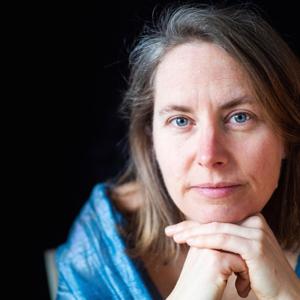
My fourth conversation with Beverly Delidow of Here’s a Quarter takes place after she’s returned from a two-week photographic journey to Iceland and Grimsö.
An intended 24-hr-visit to Iceland for me and my family, upon returning from Seattle/Vancouver in 2016, was cut short to 6 hours during which we managed to visit The Blue Lagoon, because I’d botched the time zone-differences upon booking our flights. Oops…
Beverly, on the other hand, have been to Iceland twice, on trips specifically designed to photograph birds, and as she leans into the vista she uses as a background on Zoom, we agree to being women of wide spaces. This was something I discovered, physically, upon a visit to New York in 2014. After a few days in the city, this city of vertical buildings and lines, I came to Central Park, saw the horizon and felt, literally, my entire body relax.
Upon arriving to the island, before having a chance to actually rest after the travels, Beverly was asked if she wanted to join the rest of the gang to go visit an active volcano. However travel-weary one would be, that definitely is a really hard question to turn down. So she didn’t!
People were generally respectful of the power of the stuff and they're already making plans. It's like, okay, we need to rebuild some roads. And you know, they just take it in stride. This is what our land does. This is what we're doing to respond to it.
Sense of place.
How much of that sense of place, the ability to know where you live and what the appropriate response is, is lost when we move hither and dither, across countries or even borders, shifting habitats, and possibly loosing our grounding to a place, our place?
When you have a history and a sense of place, having lived your entire life there, a place where your family has been rooted for hundreds of years, your response to what happens in that place is likely really different than that of someone who’s lived there a year and a half.
Looking around me, at our modern, globetrotting ex-pat-filled world, I wonder at that. How much of the distancing from what is not manmade can be impacted by this rootlessness?
Now there’s some tankespjärn for you!
Links:
Cows, pigs, wars and witches by Marvin Harris
The Mythic Masculine podcast episode 42 with Maya Luna and episode 43 with Zhenevere Sophia Dao
Michael Pollan The Botany of Desire
The first time I am conscious of having met Gary was in an Open Mic-session in The Creative’s Workshop, when he read a piece (oh. what. a. piece!) that somehow gave me a permission slip to read a post I’d written a few years earlier, entitled Bliss. I’d never attended Open Mic before, and was a bit concerned that Bliss would be too much.
Turned out.
It wasn’t.
Being in conversation with Gary is, for me, like I’m given an ongoing permission slip. One where I, we, are just a thought away from to the intimacy and sensuality of everyday life. Like the sensuality in my garden, when the giant poppies start to bloom, and I cannot step foot there without being overwhelmed by the lusciousness and sensuality of them.
When the first bud opens, revealing its red, floppy, crêpe-like petals… there, in all its splendor! The next day, there's ten. The next day, there's twenty. A week later they're all gone. All that remains are the seed-pods, as gorgeous as the actual flowers, with a totally different character to them.
Allowing myself to dive into the experience of them…. ah!
I share that.
In one of our meanders.
But we pass through a lot more, as we walk together, hand in hand, metaphorically, me and Gary.
One of the more meaningful ones, having both me and Gary go silent for a bit, feeling into it, centered on a place to land. How, sometimes, when you speak to someone, what you say, has a place to land in them. How that feels. The ease of it, within me, experiencing how my words lands in someone else. And the pain if/when they don’t. When what I am speaking cannot land, it’s as if they go homeless. Lost. Nowhere to perch, nowhere to rest.
Growing up, I oftentimes kept things within. I did not even give myself the opportunity to have it land in another person. But when my first marriage fell apart, for the wellbeing of myself as well as my unborn child, I made a conscious decision to shift. I would no longer keep everything within, because if I did, I knew we’d not survive, me and my child.
Not everything can –or even should– land in everyone.
You might have words you need to speak, that I am not capable of receiving. And vice versa.
But oh how vital it is to have enough people around you that your words, your needs, your wants, have at least one or two places to land!
Luckily, I did, when my life as I knew it fell apart. I’m hoping you do too. And if you don’t… Every journey starts with a single step, so what’s one step you can take today towards surrounding yourself with people where you can have a place to land when needed?
Now. There’s some tankespjärn for you, spoken with utmost gentleness and care.
Links:
Bliss
The erotic mind by Jack Morin
Brida by Paolo Coehlo
In a (non-recorded) conversation with Alison, she mentioned how uncomfortable she was with being recorded, having our conversations ”put out there” in the world. At the time, I asked if we could have this discussion on the pod.
What would you write if you were to write a hope-will? That is, a will that you leave behind when you die, containing your hopes.
From the publisher's feed