
Sign up to save your podcasts
Or

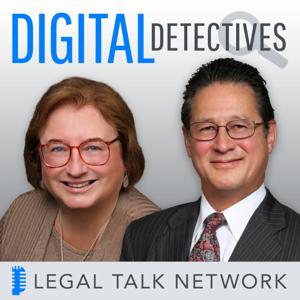

Technology Assisted Review (TAR), also known as Computer Assisted Review, Predictive Coding, Computer Assisted Coding, and Predictive Ranking, has been around for 50 years, but is now becoming incredibly useful in the legal field. This technology can speed up cases of all kinds and greatly reduce discovery costs for their clients. But how do lawyers learn about TAR? After all, we’re not dummies.
In this episode of Digital Detectives, Sharon Nelson and John Simek interview John Tredennick, the CEO of Catalyst Repository Systems, about his new book “TAR for Smart People,” what exactly TAR includes, and specific ways it has helped companies reduce discovery costs. Tredennick begins by explaining the three elements of TAR: teaching the computer algorithm, the algorithm orders review documents by estimated relevance, the lawyers decide what to do when the algorithm presents no more relevant documents. In other words, the computer algorithm continues to learn which documents are relevant to the case based on the current reviewers, and puts potentially important ones on the top of the pile, as it were. Tune in to hear Tredennick describe how this works using a Pandora metaphor, explain each project’s process, and discuss the increased effectiveness of what he termed TAR 2.0.
John Tredennick is CEO of Catalyst Repository Systems, which offers the world’s fastest and most powerful document repositories for large-scale discovery and regulatory compliance. Before founding Catalyst, he spent over twenty years as a nationally-known trial lawyer and litigation partner at a major national firm. He is the author or editor of five legal technology books including his latest, "Tar for Smart People," which he co-authored with Bob Ambrogi.
Learn more about your ad choices. Visit megaphone.fm/adchoices
 View all episodes
 By Legal Talk Network

4.5
2222 ratings
Technology Assisted Review (TAR), also known as Computer Assisted Review, Predictive Coding, Computer Assisted Coding, and Predictive Ranking, has been around for 50 years, but is now becoming incredibly useful in the legal field. This technology can speed up cases of all kinds and greatly reduce discovery costs for their clients. But how do lawyers learn about TAR? After all, we’re not dummies.
In this episode of Digital Detectives, Sharon Nelson and John Simek interview John Tredennick, the CEO of Catalyst Repository Systems, about his new book “TAR for Smart People,” what exactly TAR includes, and specific ways it has helped companies reduce discovery costs. Tredennick begins by explaining the three elements of TAR: teaching the computer algorithm, the algorithm orders review documents by estimated relevance, the lawyers decide what to do when the algorithm presents no more relevant documents. In other words, the computer algorithm continues to learn which documents are relevant to the case based on the current reviewers, and puts potentially important ones on the top of the pile, as it were. Tune in to hear Tredennick describe how this works using a Pandora metaphor, explain each project’s process, and discuss the increased effectiveness of what he termed TAR 2.0.
John Tredennick is CEO of Catalyst Repository Systems, which offers the world’s fastest and most powerful document repositories for large-scale discovery and regulatory compliance. Before founding Catalyst, he spent over twenty years as a nationally-known trial lawyer and litigation partner at a major national firm. He is the author or editor of five legal technology books including his latest, "Tar for Smart People," which he co-authored with Bob Ambrogi.
Learn more about your ad choices. Visit megaphone.fm/adchoices

484 Listeners
14 Listeners
11 Listeners

116 Listeners

8 Listeners
9 Listeners

38 Listeners

54 Listeners

32 Listeners
26 Listeners

9 Listeners

34 Listeners

60 Listeners

639 Listeners

47 Listeners

32 Listeners

5 Listeners

51 Listeners

8 Listeners