That Shakespeare Life

That Shakespeare Life

By Cassidy CashSociety & CultureHistory
Download on the App Store

That Shakespeare Life episodes

  • Morocco the Dancing Horse

    It wasn't only people who served as performers in Shakespeare's lifetime, animals, too were often trained to perform in street demonstrations, and one very unique animal captured the hearts of the popular entertainment word as a famous dancing horse named Morocco. Morocco was famous during Shakespeare's lifetime, with over 70 woodcuts published showcasing his talents at entertaining crowds of all sizes. He and his owner traveled across England and even internationally displaying circus feats, tricks, and even magic. Here today to share with us the history of Morocco the horse, including where his story overlaps with that of William Shakespeare, is our guest, Natalia Pikli.

    Hosted on Acast. See acast.com/privacy for more information.

    27 min
  • Listening to Broadside Ballads from the 17th Century
    When Shakespeare mentions ballads in his plays, he uses adjectives like odious and woeful, mentioning both the ballad makers in Coriolanus, and the people who sell them, known as the ballad mongers, in Henry IV Part 1. Shakespeare's has over 20 references to ballads throughout his works, all of which tell us that these songs were written in ink, published by printers, and performed in songs that not only rhymed, but that could be just as merry as it was painful, particularly if the ballad was sung out of tune, as Cleopatra complains in Antony and Cleopatra. Here today to share with us some of the exact ballads that were popular for Shakespeare's lifetime, as well as the history of how they were created, and performed, is our guests, and masterminds behind the 100 Ballads Project that seeks to recreate and preserve ballads from the 17th century, Angela McShane, Chris Marsh, and Andy Watts.

    Hosted on Acast. See acast.com/privacy for more information.

    46 min
  • Math History, Figures, Numbers, and Shakespeare
    Throughout his works, Shakespeare references math terminology that goes well beyond the artithmetic education we expect him to have received at grammar school. There's history behind the references that shares not only where Shakespeare would have learned about higher mathematics, but Shakespeare's choices for specific math terms reflect major changes in England for the numerals that were being used to record data, as well as official acts of parliament that were being passed to define and standardize lengths and measures for the very first time. Here today to share with us some of the history behind a few of Shakespeare's mathematical terms is our guest and author of the book Much ADo ABout Numbers, Rob Eastaway.

    Hosted on Acast. See acast.com/privacy for more information.

    33 min
  • Buttons on Clothing and Elsewhere in the 16-17th Century
    Shakespeare talks about unbuttoning your sleeve in As You Like It, King Lear undoes a button in Act V of that play, and Moth talks about making a buttonhole lower in Love's Labour's Lost. We've talked about clothes here on the show previously, but what about the buttons that hold things like sleeves together, and various buttonholes. What were buttons like for Shakespeare's lifetime, who was making them, and what material was used? How are 16th century buttons different from the ones we have today, and would we find buttons in the expected places, or were there unusual ways to use buttons in Shakespeare's lifetime? To find out the answers to these questions, we are talking with the Renaissance Tailor, who specializes in recreating 16-17th century clothing, Tammie Dupuis.

    Hosted on Acast. See acast.com/privacy for more information.

    21 min
  • Poison, Unicorns, and Toadstones
    From Hamlet's father being murdered by poison, to Romeo killing himself when he drinks poison, and several instances of hemlock, dragon's scales, hebenon and others in between, Shakespeare utilizes poison as a dramatic device in several of his works. The use of poison was not just an easy tool for a plot twist, however, since poison was both a pervasive fear at all levels of society as well as a convenient and readily available method to dispatch someone, given that poison was incredibly hard to trace back to the criminal that administered it. The fear of poison was exacerbated by a broad ignorance of chemistry, resulting in many of the accepted treatments for illness being, in themselves, poison (Syphilis was routinely treated with mercury, for example, which is toxic.) Doctors, as well as monarchs, developed elaborate and unusual tactics for prevention and cure for poison, while those seeking to overthrow a monarch, or take out their enemy, used poison to come up with some sophisticated and complex designs for murder. Here today to share with us the history of real poisons from Shakespeare's lifetime used for medical and criminal application, as well as some ordinary items no one knew was trying to kill them, is our guest and author of The Royal Art of Poison: Filthy Palaces, Fatal Cosmetics, Deadly Medicine, and Murder Most Foul. We're delighted to welcome Eleanor Herman to the show today.

    Hosted on Acast. See acast.com/privacy for more information.

    35 min
  • Glass and Glass Making
    In Shakespeare's plays, he uses the word "glass" over 80 times, including to talk about specific kinds of glass like a pilot's glass in Alls Well That Ends Well, and "the glasses of my sight" in Coriolanus. We can see from the surviving building of Shakespeare's Birthplace in Stratford Upon Avon, that window glass existed, and there was even an old glass house in the Blackfriars where the Blackfriars theater was located, but how was all this glass made? What materials were used? What other products might have been made from glass, and what colors of glass were available or even most popular? To find out the answers to these questions and explore the history of glass for Shakespeare's lifetime, we are delighted to welcome Allen Loomis to the show today.

    Hosted on Acast. See acast.com/privacy for more information.

    25 min
  • The Elizabethan Mind

    Throughout Shakespeare's plays, he references the mind over 400 times including talking about having a quick mind, an unclean mind, and even being out of your mind. Understanding how your brain worked, and what you as an individual could do to control it, and respond to it, was a hot topic for Shakespeare's lifetime. The rise in books meant that works by authors exploring this topic of the mind, melancholy, and reason were widely available, even directly influencing the works of playwrights like William Shakespeare. Here today to help us understand what the 16th century minds understood about neurology, dreams, and the imagnation is our guest, and author of the book, The Elizabethan Mind, Helen Hackett.

    Hosted on Acast. See acast.com/privacy for more information.

    35 min
  • Sign Language and Deaf Culture in 16th Century England
    British sign language has existed in some form among deaf communities at least since the 15th century, when some of the earliest records of sign language reveal descriptions of specific signs, many of which are still in use today. However, for Shakespeare's lifetime, sign language was far from formalized among the Deaf, and certainly not widely accepted by the hearing community. Similarly, education of the deaf, in terms of schools established to educate the Deaf, Mute, or otherwise alternatively abled, would not take root in England until after Shakespeare's lifetime, and that wasn't until well into the 18th century. To help us understand what life was like for a deaf person in Shakespeare's lifetime, as well as what signs existed, and what records we have from the late 16th and early 17th century for deaf people, sign language, and the deaf community for Shakespeare's lifetime is our guest, Mary Lutze.

    Hosted on Acast. See acast.com/privacy for more information.

    38 min
  • Anne Hathaway, her life and her legacy
    Before William Shakespeare was the great playwright of the age, he was "just Will" fromStratford Upon Avon. The one person in the world who not only loved him before he wasfamous, but walkedbeside him for the entire journey from young man with nothing but relentlessoptimism to successful playwright patronized by the monarchy of England, was his wife, AnneHathaway. Anne married William in 1582, and by the time Shakespeare was skyrocketing tofame in the 1590s with plays like his Henry VI series, Two Gentlemen of Verona, and Romeoand Juliet, the couple were parents to three children, including one set of twins. In honor of theperson who quite literally kept the home fires burning so that theman who conquered the worldwith his work would have somewhere, and someone, to come home to, our guests this weekhave compiled a poetic tribute to Anne Hathaway called the Anne-thology. The collectionfeatures poetry and sonnets by modern scholars of Anne Hathaway as well as a few written byAnne's children. In our first ever group interview here on That Shakespeare Life, we are pleasedto welcome our friends Chris Laoutaris, Katherine Scheil, Aaron Kent, and Paul Edmondson tothe show to tell us more about Anne Hathaway and the making of this memorial poetrycollection

    Hosted on Acast. See acast.com/privacy for more information.

    45 min

About That Shakespeare Life

From the publisher's feed

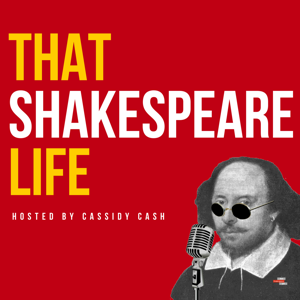
Hosted by Cassidy Cash, That Shakespeare Life takes you behind the curtain and into the real life of William Shakespeare.

More shows like That Shakespeare Life

HistoryExtra podcast by Immediate

HistoryExtra podcast

3,175 Listeners

Gardeners' Corner by BBC Radio Ulster

Gardeners' Corner

103 Listeners

Folger Shakespeare Library: Shakespeare Unlimited by Folger Shakespeare Library

Folger Shakespeare Library: Shakespeare Unlimited

823 Listeners

Sidedoor by Smithsonian Institution

Sidedoor

2,229 Listeners

The English Heritage Podcast by English Heritage

The English Heritage Podcast

230 Listeners

Tudors Dynasty & Beyond by RedTop Media / Rebecca Larson

Tudors Dynasty & Beyond

748 Listeners

Historic Royal Palaces Podcast by Historic Royal Palaces

Historic Royal Palaces Podcast

470 Listeners

The Ancients by History Hit

The Ancients

3,351 Listeners

The Rest Is History by Goalhanger

The Rest Is History

15,608 Listeners

Gone Medieval by History Hit

Gone Medieval

1,886 Listeners

Not Just the Tudors by History Hit

Not Just the Tudors

2,051 Listeners

Lexicon Valley by Lexicon Valley

Lexicon Valley

577 Listeners

Short History Of... by NOISER

Short History Of...

2,830 Listeners

Betwixt The Sheets: The History of Sex, Scandal & Society by History Hit

Betwixt The Sheets: The History of Sex, Scandal & Society

1,384 Listeners

What Did You Do Yesterday? with Max Rushden & David O'Doherty by Keep It Light Media

What Did You Do Yesterday? with Max Rushden & David O'Doherty

215 Listeners