That Shakespeare Life

That Shakespeare Life

By Cassidy CashSociety & CultureHistory
Download on the App Store

That Shakespeare Life episodes

  • 16th Century Romance Fiction
    Did you know there were romantic fiction publications in Shakespeare's lifetime? Of course they weren't romance novels, because the novel as a format was not invented, but the romance genre was a live and well. You may recognize chivalric romances, which include knights in shining armor, fighting dragons, overcoming giants, and other quest-worthy elements. In Shakespeare's lifetime, there were romantic tales as well, but as you might expect from the Renaissance era, 16-17th century romance stories had their own unique spin on things. Surprisingly, Shakespeare never uses the word itself, "romance," in his plays despite featuring a myriad of love stories. To help us sort out what "romance" meant for the 16th century, and exactly what we should know about the romance genre when it comes to prose fiction in Shakespeare's lifetime, is our guest, and expert in 16-17th century literature, Helen Hackett.

    Hosted on Acast. See acast.com/privacy for more information.

    42 min
  • Declension of Pronouns with David Crystal
    In the play, The Merry Wives of Windsor, as well as Hamlet and Richard III, the phrase "declension of pronouns" that comes up as a description of language. That's not a phrase that I remember being taught in English class, and instead relates to Latin, the language of education for Shakespeare's lifetime, and indeed across Europe. Here today to explain for us exactly what a "declension" might be, how to use them, and what it helps to understand about things like nouns, pronouns, and spelling for 16th century English when you explore Shakespeare's plays, is our friend, and returning guest here to That Shakespeare Life, Professor David Crystal

    Hosted on Acast. See acast.com/privacy for more information.

    28 min
  • The Life of Mary Frith, known as Moll Cutpurse
    One of the most famous criminals of Shakespeare's lifetime was Mary Frith, known as MollCutpurse. Her character is featured in several plays contemporary to Shakespeare, and itseems her real life persona was even more flamboyant than those represented onstage. MollCutpurse was a notorious pickpocket who made a name for herself in early modern England asa thief and an entertainer, who stood out from the crowd because she liked to dress, and act,like a man. Challenging cultural norms was Moll's bread and butter. She wore men's clothing,smoked a pipe, and operated as both a thief and a pimp, being hired to find lovers for men andwomen among London's middle class. Here today to share with us the colorful real life history ofa woman whose shock value continues to impress those that learn about her, is historian andauthor ofMary Frith, Moll Cutpurse and the Development of an Early Modern Criminal CelebrityFor the Journal of Early Modern Studies, Lauren Liebe.

    Hosted on Acast. See acast.com/privacy for more information.

    28 min
  • 16th Century Plague, Diagnosis, Treatment, and Microbiology
    Plague is the horrible sickness that reoccurs throughout the life of William Shakespeare, and many listeners will know that plague is to blame for several closings of playhouses around London throughout the 16-17th century. However, what does that word mean, precisely? What symptoms did people have when afflicted with plague, and how was it transmitted from person to person? The play Romeo and Juliet offers some evidence of plague responses when we see the messenger detained by confinement in a plague house, but our guest this week shares that there were some much more surprising—and dangerous--- remedies utilized in cities like London, including canon fire, to try and prevent spread of plague. To better understand what plague is, how it was treated in the 16-17th century, what the medical community understood (and didn't) about microorganisms, and why in the world shooting off canons in the city was considered an essential part of plague prevention, we have invited our guest, and author of "Medicine and Society in Early Modern Europe" for Cambridge University Press, Dr. Mary Lindemann to the show today, to answer these questions.

    Hosted on Acast. See acast.com/privacy for more information.

    47 min
  • Reporting on Scottish News in England
    Mary Queen of Scots and her son, James VI of Scotland, brought an urgency to England for sharing news about what was happening in Scotland. From 1580 onwards, the same years Shakespeare was writing about Scotland in plays like Henry VI Part 1 and later Macbeth, which features Scotland prominently, the rate of news about events in Scotland being published in England skyrocketed. This increase can be attributed to an expansion in news publications over a broader landscape, but events involving Mary Queen of Scots and her son future James VI, including rumors that Elizabeth I of England wanted to kidnap the baby James and England sending an army to Scotland, all added fuel to the fire of political relationships between the two countries that was written about furiously in this period. Shakespeare's works reflect this cultural moment when we see Lepidus in Antony and Cleopatra is saying, "Here's more news" from Act I Scene 4, in the early 1600s, along with over 300 additional references to "new" in Shakespeare's plays. Here with us today to share with us what news stories were the biggest headlines for this period, as well as what the surviving printed works of news tell us about the relationship between Scotland and England for the late 16th and early 17th century is our guest and author of "Newes from Scotland" in England, 1559–1602 for the Huntington Library Quarterly, Amy Blakeway.

    Hosted on Acast. See acast.com/privacy for more information.

    50 min
  • Childbirth, Midwives, and Pregnancy in the 16-17th Century
    "Pregnant" is a word Shakespeare uses in his plays, but it always appears in connection with ideas, grief, or even trauma, but never as a word to describe a woman that is carrying an unborn baby. Instead, whenever a woman is carrying a child in her uterus in Shakespeare's works, the phrase used is "with child." This divergence between Shakespeare's language and how we are accustomed to using the word "pregnant" today is just one way Shakespeare's plays help shed light on the surprising world of pregnancy and childbirth for Shakespeare's lifetime. During the 16-17th century, there were many unusual beliefs about how a woman could become pregnant, the right way to prepare for giving birth, and details on the process of labor. Here today to help us explore the history of pregnancy, childbirth, and midwives from Shakespeare's lifetime are our guests, Michelle Ephraim and Caroline Bicks.

    Hosted on Acast. See acast.com/privacy for more information.

    46 min
  • The Marian Civil War

    William Shakespeare was just two years old when Mary Queen of Scots was removed from power in 1567. The Queen was put under confinement in Lochleven Castle and forced to abdicate the throne in favor of her young son, James VI, the future James I of England. Mary and her supporters, however, did not go quietly. Mary would escape from prison one year later and incite her followers to confront their enemies in a vicious civil war known as the Marian Civil War. Mary herself left Scotland after the Battle of Langside in 1568, seeking refuge from her cousin, Elizabeth I. Mary would be placed under confinement in England for 19 years, until she was finally executed in 1587, when William Shakespeare was 23 years old, and just starting to make a name for himself in London. Mary was a powerful figure, and her story from Queen to executed criminal played a prominent role in the cultural backdrop of William Shakespeare's formative years, making it an important event to understand when you're trying to get to know what life was like for William Shakespeare. Our guest this week is the author of an article on the Marian Civil War history for the Centre for Scottish Culture at the University of Dundee, Dr. Allan Kennedy.

    Hosted on Acast. See acast.com/privacy for more information.

    41 min
  • What Would We Have Seen at a Country House Entertainment?
    For Shakespeare's lifetime, the concept of welcoming hospitality was considered a uniquely English virtue. We see this opinion reflected in the play, As You Like It, when Shakespeare's character Corin suggests that doing deeds of hospitality was one way to get to heaven. Nowhere was hospitality reflected more clearly, or extended more often, than at the country house estate. Now before you think of a small cottage in the countryside, when I say it was a Country House Estate, an example of a famous one is Kenilworth Castle where Queen Elizabeth was welcomed and entertained by Robert Dudley in 1575. In homes like this one, nobility were expected to keep the grounds and the interior rooms in prime condition with supplies on hand to provide accommodation, meals, and entertainment for both travelers as well as visiting dignitaries who visited as a part of official negotiations for both local and national politics. Here today to help us understand the world of Country House Estates and the sorts of entertainments that were offered there by the hosts, is our guest and author of the award-winning book, The Elizabethan Country House Entertainment, Elizabeth Kolkovich.

    Hosted on Acast. See acast.com/privacy for more information.

    35 min
  • Christmas Gifts in Shakespeare's England
    Merry Christmas! I am thrilled you are spending a piece of your Christmas holiday here with us today. That's a lovely gift in and of itself to have you on the other side of the speakers today as we explore the Christmas tradition of gift giving in 17th century England, and exactly what Shakespeare would have received as a Christmas gift in December over 400 years ago. We are also going to explore what kinds of gifts were popular to be given throughout society for the Christmas holidays from the peasants all the way to the Queen. We are delighted to be speaking with an expert in gift giving for Shakespeare's lifetime, and the author of The Power of Gifts: Gift-exchange in Early Modern England, Dr. Felicity Heal.

    Hosted on Acast. See acast.com/privacy for more information.

    24 min
  • Holiday Ghost Stories
    This Christmas season we are celebrating the holidays Shakespeare style by bringing out some traditional Tudor ghosts tories. For the 16-17th century, one popular time to tell ghost stories was during the Christmas holidays. A more accurate term for these stories might be "ghost narratives" because they are different than the stories we think of today as "ghost stories"Instead of being fictional tales for the purpose of entertainment, ghost narratives fromShakespeare's lifetime were factual tales (or at least witness accounts) people would tell about encountering ghosts or other supernatural beings. Our guest, Dr. Francis Young, is here thisweek to tell us about these stories, their association with Christmas, and the details surrounding some evidence that suggests Mamillius might be about to tell one of these ghost narratives in Shakespeare's play,The Winter's Tale

    Hosted on Acast. See acast.com/privacy for more information.

    35 min

About That Shakespeare Life

From the publisher's feed

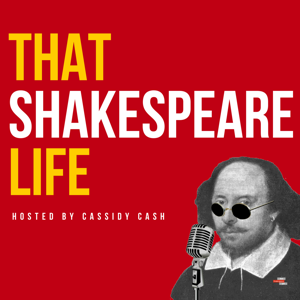
Hosted by Cassidy Cash, That Shakespeare Life takes you behind the curtain and into the real life of William Shakespeare.

More shows like That Shakespeare Life

HistoryExtra podcast by Immediate

HistoryExtra podcast

3,178 Listeners

Gardeners' Corner by BBC Radio Ulster

Gardeners' Corner

102 Listeners

Folger Shakespeare Library: Shakespeare Unlimited by Folger Shakespeare Library

Folger Shakespeare Library: Shakespeare Unlimited

823 Listeners

Sidedoor by Smithsonian Institution

Sidedoor

2,228 Listeners

The English Heritage Podcast by English Heritage

The English Heritage Podcast

229 Listeners

Tudors Dynasty & Beyond by RedTop Media / Rebecca Larson

Tudors Dynasty & Beyond

749 Listeners

Historic Royal Palaces Podcast by Historic Royal Palaces

Historic Royal Palaces Podcast

470 Listeners

The Ancients by History Hit

The Ancients

3,346 Listeners

The Rest Is History by Goalhanger

The Rest Is History

15,575 Listeners

Gone Medieval by History Hit

Gone Medieval

1,889 Listeners

Not Just the Tudors by History Hit

Not Just the Tudors

2,050 Listeners

Lexicon Valley by Lexicon Valley

Lexicon Valley

577 Listeners

Short History Of... by NOISER

Short History Of...

2,829 Listeners

Betwixt The Sheets: The History of Sex, Scandal & Society by History Hit

Betwixt The Sheets: The History of Sex, Scandal & Society

1,384 Listeners

What Did You Do Yesterday? with Max Rushden & David O'Doherty by Keep It Light Media

What Did You Do Yesterday? with Max Rushden & David O'Doherty

215 Listeners