That Shakespeare Life

That Shakespeare Life

By Cassidy CashSociety & CultureHistory
Download on the App Store

That Shakespeare Life episodes

  • Maria on Board the Golden Hind

    During his voyage around the world in 1577-1580, Sir Francis Drake captained a ship named the Golden Hinde. On this ship lived a woman named Maria, whose plight we only know about because of a record kept by an anonymous sailor who mentions her in one line of a manuscript currently housed at the British Museum in London. The line is short, but the history it references is immense. The line reads ""Drake tooke… a proper negro wench called Maria, which was afterward gotten with child between the captaine and his men pirates, and sett on a small iland to take her adventure." Some historians believe that Shakespeare was inspired by this report to write the character Sycorax in his play The Tempest, since Sycorax is also an African woman, abandoned by sailors on an island while heavily pregnant. Here today to share with us the history of Maria, her story, and how much we can learn about whether her plight overlaps that of Shakespeare's play, is our. Guest, and author of On Wilder Seas, the book that imagines what Maria's story might have been based on the history we can know about her.

    Hosted on Acast. See acast.com/privacy for more information.

    45 min
  • The History of English Apples
    Shakespeare uses the word "apple" in his works a total of 9 times, including references to crab apples, rotten apples, and the apple of your eye, among others. The word apple was used to describe the round, edible, fruit we know today, but could also apply to other fruits. In fact, some 16-17th century references use "apple" as a generic term for any fruit that included a nut. There's even one expression from the Middle ages called "appel of paradis" which refers to a banana. The apple fruit features prominently in religious artwork for the 16th century, as well as being useful for cooking, apple cider, and of course, the famous Christmas beverage enjoyed in Shakespeare's lifetime, Apple Wassail. To explore the history of apples in England, we are excited to welcome Nigel Deacon to show today, who will be sharing with us not only how apples are cooked for Shakespeare's lifetime, but other more surprising places you might find them in the 16-17th century as well.

    Hosted on Acast. See acast.com/privacy for more information.

    42 min
  • The Science of a 16th Century Football Found at Stirling Castle
    In Shakespeare's lifetime, the game we call soccer today, known as football in Europe, was a popular in Shakespeare's lifetime. In fact, some sources say the game of football was invented in England during the Middle Ages. These original forms of football were called "mob football" and would be played in towns and villages, involving two opposing teams, that would struggle by any means possible to drag an inflated pig's bladder to markers at each end of town. Shakespeare mentions this game twice in his plays. In Comedy of Errors, Dromio says "Am I so round with you as you with me, That like a football you do spurn me thus?" Then in King Lear, the Earl of Kent references football again saying, "Nor tripp'd neither, you base football player?" One of these inflated pig's bladders was actually found, in tact, in the rafters of Stirling Castle. This surviving football dates to the 16th century, and could have belonged to Mary Queen of Scots. Here today to tell us more about 16th century football, the artifact discovered at Stirling Castle, and to share the results if his own scientific experiments comparing ancient football artifacts to modern soccer balls, is our guest, historian, and scientist, Henry Hanson.

    Hosted on Acast. See acast.com/privacy for more information.

    28 min
  • The 16th Century Bed That Sleeps 12 People
    In Shakespeare's Twelfth Night, Act III, Sir Toby Belch uses the Great Bed of Ware in England as a measuring stick for something that is impossibly large. The Great Bed of Ware is a real bed, as it was in Shakespeare's lifetime, that was made for travelers to use when staying at an inn. The bed itself is, as Sir Toby suggests, impossibly large, with sleeping capacity for up to 9 people! Here today to tell us about the history and importance of The Great Bed of Ware, is our guest and Curator, Furniture and Woodwork 1300-1700 at the Victoria and Albert Museum where the Great Bed of Ware is part of the collections, Nick Humphrey.

    Hosted on Acast. See acast.com/privacy for more information.

    49 min
  • What Was Shakespeare Really Like?
    When we look back at the study of Shakespeare's plays, the question always come to mind about how much can we know about the actual William Shakespeare from the pieces of artwork, plays, and even legal documents that survive about his life. No one has done more study of the plays of William Shakespeare nor understands more about his life in turn of the 17th century England than our guest today, Stanley Wells, President of Shakespeare Birthplace Trust, who joins us to share about his latest book answering the question "What was Shakespeare Really Like"

    Hosted on Acast. See acast.com/privacy for more information.

    21 min
  • Expletives: Exploring 16th Century Curse Words
    A short notice for you ahead of today's episode, I apologize for the general gruff sounding voice today, I am recovering from a cold and struggling through a horrible cough that threatens to take my voice completely. But never fear! As a true performance professional, the show must go on! Therefore, I am armed with three cups of chamomile tea, a large bottle of water, and an excellent audio editor who will remove any coughs. Therefore, without more ado, let's dive in to the history. Profanity is a term we use to describe naughty words, but as a definition, profanity is anything that happens when specific religious terms get stolen from their original intent and applied with manipulated meaning. Think of words like damn or hell. They are appropriate when used in context of their biblical meaning, but offensive when you hear them in an action movie, for example. When it comes to the origin of curse words, the Latin term "profanus" actually meant "outside the temple" to signify terms that desecrated what was held sacred. If you've watched the tv show, Becoming Elizabeth, which is set in 16th century England, the f-word gets used liberally on that show, which surprised me and made me wonder if the f-word was, in fact, historically accurate, or if that had been added for modern flare. To find out exactly what words were expletives for Shakespeare's lifetime, and which ones were normal for him but highly offensive to us today, we are sitting down with our guest, Jesse Sheidlower to explore the colorful world of Elizabethan language and profanities.

    Hosted on Acast. See acast.com/privacy for more information.

    22 min
  • Potatoes First Arrived in England in the 16th Century
    In the play, Merry Wives of Windsor, Falstaff declares "Let the sky rain potatoes!" what's unique about this quote, despite Falstaff calling for root vegetables to rain down from the sky which is of course, weird on its' own, but potatoes on the whole were brand new to England at the exact time Shakespeare was including this quote in his play. Merry Wives of Windsor was written towards the end of the 16th century—between 1597 and 1601. Potatoes are thought to have arrived in the late 1580s or early 1590s. Once the potato arrived in Europe it was used for medicine, grown by some gardeners for their flowers, and in 1597, the same time frame we think Merry Wives of Windsor was writtne, John Gerard added the first printed picture of the potato to Herball (although he thought that the potato was native to Virginia). Here today to help us sort through what it was like to see a potatoe for the first time, as well as how potatoes were used in Shakespeare's lifetime is our guest and expert in the history of plants, Sally Cunningham.

    Hosted on Acast. See acast.com/privacy for more information.

    26 min
  • The Wadlow Portrait of Shakespeare
    After we published our episode here on That Shakespeare Life about the Duncan portrait of William Shakespeare, I received an email from Steve Wadlow, telling me about the history of a portrait that had been hanging in his family home for years that a visiting Shakespeare scholar indicated might be William Shakespeare, and suggested Steve look into the provenance further. With no prior experience in Shakespeare history or indeed even the art world, Steve dove headlong into finding out where this painting had come from originally and exactly who the person in the picture was, since the image was strikingly similar to the Cobbe portrait of William Shakespeare. Here today to tell us what he found out and whether or not this painting is of William Shakespeare is our guest, and newly minted art historian, Steve Wadlow.

    Hosted on Acast. See acast.com/privacy for more information.

    30 min
  • Tewskbury Mustard from Shakespeare's Henry IV Part 2
    In Shakespeare's in Henry IV, Part 2, Falstaff has the line: "his wit's as thick as Tewkesbury Mustard" (Act 2, Scene 4). Falstaff is describing his friend Ned Poins, but it presents the question of what was Tewkesbury Mustard? Turns out this particular mustard developed in a small town of England called Tewkesbury, and it was not only popular in Shakespeare's lifetime, but during the 17th century it was considered a staple condiment in kitchens of this time period. Amazingly, the mustard has not only survived the centuries but is still being made exactly the way it was for Shakespeare's lifetime right in Tewkesbury at the Tewkesbury Mustard Company. We are delighted to have Robin Ritchie who is founder and Mustard Master Emeritus at the Tewkesbury Mustard Company to share with us the history of this mustard, how it is made, and how you can enjoy some for yourself.

    Hosted on Acast. See acast.com/privacy for more information.

    23 min
  • Real 17thC Canon Law in Measure for Measure
    In Shakespeare's play, Measure for Measure, there's a fictional court case against Claudio for extra-marital misconduct. The play separately asks the audience to pass judgement on Angelo regarding a marriage pre-contract that was known as a "Spousal" contract for Shakespeare's lifetime. In 1604, when Measure for Measure was first performed, these cases of immoral behavior were being tried in real life in what were known as "ecclesiastical courts," or colloquially, the "Bawdy Courts." Many of the real people that had been brought up on charges in these bawdy court cases were members of the audience being addressed by the play's fictional court portrayal. It was this same year that church courts started cracking down on engaged couples who were becoming secretly engaged or "bethrothed" to one another without witnesses or parental consent. Here today to tell us about the battle between civil and canon law that governed couples intending to get married and the specific changes to the canonical law that occured in 1604, is our guest and theatrical historican, Cynthia Greenwood.

    Hosted on Acast. See acast.com/privacy for more information.

    29 min

About That Shakespeare Life

From the publisher's feed

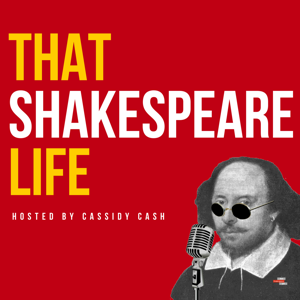
Hosted by Cassidy Cash, That Shakespeare Life takes you behind the curtain and into the real life of William Shakespeare.

More shows like That Shakespeare Life

HistoryExtra podcast by Immediate

HistoryExtra podcast

3,178 Listeners

Gardeners' Corner by BBC Radio Ulster

Gardeners' Corner

102 Listeners

Folger Shakespeare Library: Shakespeare Unlimited by Folger Shakespeare Library

Folger Shakespeare Library: Shakespeare Unlimited

823 Listeners

Sidedoor by Smithsonian Institution

Sidedoor

2,228 Listeners

The English Heritage Podcast by English Heritage

The English Heritage Podcast

229 Listeners

Tudors Dynasty & Beyond by RedTop Media / Rebecca Larson

Tudors Dynasty & Beyond

749 Listeners

Historic Royal Palaces Podcast by Historic Royal Palaces

Historic Royal Palaces Podcast

470 Listeners

The Ancients by History Hit

The Ancients

3,346 Listeners

The Rest Is History by Goalhanger

The Rest Is History

15,575 Listeners

Gone Medieval by History Hit

Gone Medieval

1,889 Listeners

Not Just the Tudors by History Hit

Not Just the Tudors

2,050 Listeners

Lexicon Valley by Lexicon Valley

Lexicon Valley

577 Listeners

Short History Of... by NOISER

Short History Of...

2,829 Listeners

Betwixt The Sheets: The History of Sex, Scandal & Society by History Hit

Betwixt The Sheets: The History of Sex, Scandal & Society

1,384 Listeners

What Did You Do Yesterday? with Max Rushden & David O'Doherty by Keep It Light Media

What Did You Do Yesterday? with Max Rushden & David O'Doherty

215 Listeners